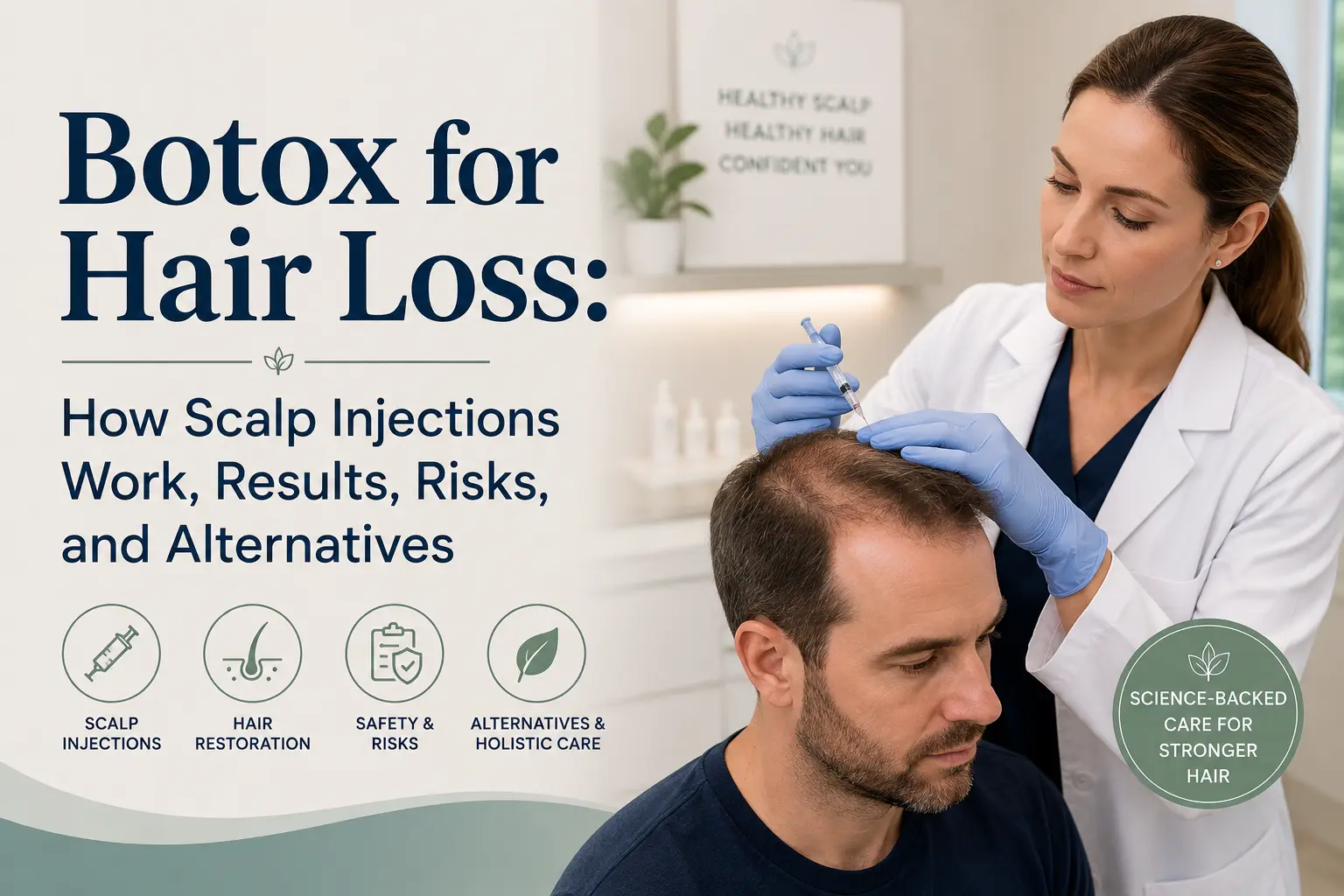
Botox for hair loss is an emerging treatment that involves injecting botulinum toxin into selected areas of the scalp.
Some early studies have reported reduced shedding, thicker strands, or improved hair counts in people with pattern hair loss.
However, the research is limited, and more rigorous studies have produced mixed results.
Scalp Botox is also different from “hair Botox,” a salon conditioning treatment that does not contain botulinum toxin or stimulate new follicle growth.
Key Takeaways
- Scalp Botox and salon hair Botox are two completely different treatments.
- Small studies suggest scalp injections may help certain people with pattern hair loss, but results are inconsistent.
- Botox cannot create new follicles or reliably restore areas that have been completely bald for years.
- The cause of hair loss should be evaluated before choosing any treatment.
- Other non-surgical options, including PRP, microneedling, and laser therapy, have a larger body of supporting evidence.
What Is Botox Treatment for Hair?
The phrase “Botox treatment for hair” can describe either injectable scalp treatment or a topical salon service.
Understanding the difference is the first step.
Scalp Botox
Scalp Botox uses injections of botulinum toxin type A in or around areas affected by thinning.
Researchers have primarily studied it in people with androgenetic alopecia, better known as male or female pattern hair loss.
The proposed goal is not to treat the hair shaft itself.
Instead, the injections may influence the muscles, blood vessels, nerve signals, sweat glands, and oil glands around active hair follicles.
Hair Botox
Hair Botox is a salon conditioning treatment applied to the strands.
Despite the name, it usually contains no botulinum toxin and does not involve injections.
The product may contain proteins, oils, vitamins, collagen, keratin-like ingredients, or conditioning agents that temporarily coat damaged hair.
It can make the strands appear smoother, shinier, and fuller, but it does not reactivate follicles or regrow lost hair.
Scalp Botox vs. Hair Botox
| Scalp Botox | Hair Botox |
| Contains botulinum toxin | Usually contains no botulinum toxin |
| Injected into selected areas of the scalp | Applied directly to the hair |
| Studied for certain forms of hair loss | Used to condition dry or damaged strands |
| May affect the environment around active follicles | Temporarily smooths and coats existing hair |
| Performed as a medical procedure | Usually performed in a salon |
| Hair-growth evidence is limited and mixed | Does not cause new follicle growth |
Someone researching Botox for thinning hair is usually looking for information about scalp injections rather than the salon service.
How Does Scalp Botox for Hair Growth Work?
Researchers do not yet know whether scalp Botox reliably promotes hair growth or which mechanism would be responsible.
Several theories have been proposed.
Reduced Scalp Muscle Tension
Botulinum toxin temporarily reduces the nerve signals that cause muscles to contract.
Muscles around the forehead, temples, ears, and back of the head may place tension on the scalp.
One theory is that relaxing these muscles could reduce pressure around small blood vessels that supply the upper scalp.
This may create a more supportive environment for follicles that are still active but producing thinner strands.
Changes in Blood Flow and Oxygen Delivery
Some researchers believe that reducing muscle tension may allow more oxygenated blood to reach areas affected by pattern thinning.
This theory is partly based on the idea that low-oxygen conditions could influence biological processes involved in follicle miniaturization.
However, the relationship between scalp tension, circulation, hormones, and hair growth has not been conclusively established.
Reduced Sweating and Oil Production
Botulinum toxin can reduce signals sent to sweat and oil glands.
For someone with excessive scalp sweating or oiliness, this may improve comfort or reduce how quickly the hair appears greasy.
Some studies have also reported improvements in scalp itching or dandruff.
These changes do not necessarily mean that the treatment will increase hair density.
Possible Effects on Follicle Signaling
Researchers have also explored whether botulinum toxin affects inflammation, nerve-related signaling, blood-vessel activity, or other biological pathways around the follicle.
These theories remain under investigation.
There is no single confirmed explanation for why some participants in small studies appeared to respond while others did not.
Does Botox for Hair Loss Work?
Scalp Botox may help some people, but there is not enough consistent evidence to predict who will respond or how much improvement they might experience.
Earlier uncontrolled studies often reported encouraging changes in hair count, thickness, or shedding.
Which Types of Hair Loss Have Been Studied?
Most research has focused on pattern hair loss, although botulinum toxin has also been explored for a small number of other scalp conditions.
Androgenetic Alopecia
Androgenetic alopecia is the medical term for male and female pattern hair loss.
It gradually causes genetically susceptible follicles to produce shorter and finer strands.
Most scalp Botox studies have involved men with mild or moderate thinning.
A smaller amount of research has included women.
Because the treatment is intended to support follicles that are still present, it may have more potential in areas containing miniaturized hair than in areas that have been smooth and completely bald for years.
Alopecia Areata
Alopecia areata is an autoimmune condition that commonly causes round or patchy areas of hair loss.
Botulinum toxin has been described in limited reports involving alopecia areata, but the evidence is not strong enough to draw firm conclusions.
Results from male pattern hair-loss studies should not be assumed to apply to autoimmune hair loss.
Telogen Effluvium
Telogen effluvium causes increased shedding after a trigger disrupts the normal growth cycle.
Possible triggers include:
- Illness
- Major stress
- Surgery
- Rapid weight changes
- Hormonal changes
- Nutritional deficiencies
- Certain medications
Only a small amount of research has examined Botox for telogen effluvium.
Identifying and addressing the underlying trigger is usually more relevant than treating the scalp alone.
Scarring or Inflammatory Hair Loss
Botulinum toxin has been explored in isolated reports involving inflammatory scalp conditions, excessive sweating, scalp pain, and excessive oil production.
Painful, scaly, inflamed, or scarred areas should be evaluated before any cosmetic hair-restoration procedure.
Some forms of inflammatory hair loss can permanently damage follicles when treatment is delayed.
Who May Be a Candidate for Scalp Botox?
There is no universally accepted candidate profile because treatment methods and study results vary.
Someone may be more likely to discuss scalp-based treatments when they have:
- Early or moderate pattern thinning
- Gradual loss of density
- Miniaturized follicles that still produce fine strands
- Realistic expectations
- No infection, open wound, or active irritation in the treatment area
- A clear understanding of the likely cause of the hair loss
Scalp Botox is less likely to produce meaningful improvement in smooth areas where follicles are no longer active.
The evaluation should also look beyond the visible thinning.
Hair loss may be related to genetics, hormones, thyroid function, nutrition, stress, medications, illness, inflammation, or a combination of factors.
At Gard Wellness Solutions, the goal of a hair-loss assessment is to understand the pattern, stage, and possible causes of thinning before discussing treatment options.
This helps avoid using a one-size-fits-all approach for conditions that may require very different care.
What Happens During a Scalp Botox Treatment?
Published studies have used different injection patterns, doses, and treatment schedules.
There is no single standardized method proven to work for every patient.
A scalp Botox appointment may include:
- A review of the pattern, duration, and possible triggers of hair loss
- An examination of the scalp and remaining follicles
- Cleansing and marking the treatment area
- A series of small injections across selected scalp or muscle areas
- Aftercare instructions and follow-up photography
Some researchers have placed injections directly within thinning areas.
Others have targeted muscles around the forehead, temples, ears, or back of the head.
Several protocols have used a combination of locations.
Because these methods differ substantially, treatment details should be determined by a qualified provider rather than copied from a general online injection map.
How Long Does Botox for Hair Loss Take to Work?
Any possible hair-growth changes would take several months rather than days.
Hair follicles follow a slow growth cycle.
Studies have generally measured results at approximately 12 weeks or later, with some following participants for six to 12 months.
When changes occur, they may include:
- Less hair appearing in the shower
- Reduced shedding during brushing
- Improved scalp coverage
- Thicker-looking strands
- Gradual changes in measured hair diameter
- A modest increase in density
Some people may not notice a meaningful difference.
Standardized photographs and scalp measurements are more reliable than checking the mirror every day.
Hair length, styling, lighting, and camera angle can make density appear different even when growth has not changed.
Botox for Hair Loss Before and After: What Results Are Realistic?
Realistic results would generally involve reduced shedding, thicker existing strands, or a modest improvement in scalp coverage.
Scalp Botox should not be expected to:
- Restore a full head of hair
- Create brand-new follicles
- Reverse every type of hair loss
- Permanently stop genetic thinning
- Produce the same outcome for every patient
Results may depend on:
- The cause of hair loss
- How long thinning has been present
- Whether follicles remain active
- The degree of follicle miniaturization
- Age and overall health
- Other treatments being used
- The injection method
- Individual biological response
Before-and-after photographs should be taken with the same lighting, hair length, styling, camera distance, and scalp position.
Otherwise, even small changes in presentation can make the result appear better or worse than it is.
How Long Do Scalp Botox Results Last?
Botulinum toxin produces temporary effects.
Nerve and muscle activity gradually returns as the body forms new signaling connections.
Research protocols have repeated scalp treatments at intervals ranging from approximately three to six months.
However, there is no established maintenance schedule for hair loss.
The 2010 pilot study used two treatment sessions approximately 24 weeks apart.
Another study provided treatment every three months for one year.
The ideal number of sessions, long-term safety, and durability of any hair-growth benefit remain uncertain.
What Are the Side Effects of Scalp Botox?
Scalp botulinum toxin injections have generally been described as well tolerated in small studies, but side effects are possible.
Potential effects include:
- Injection-site pain
- Redness
- Swelling
- Bruising
- Headache
- Temporary scalp tenderness
- Itching
- Temporary weakness in nearby muscles
- Uneven muscle effects
- Infection at an injection site
- Nausea
- Rare effects beyond the treatment area
In one study of 63 men, reported effects included injection-site discomfort, redness or swelling, headache, nausea, and mild shortness of breath.
No severe complications were reported in that study.
Risk can vary based on the amount used, injection depth, treatment area, product, provider technique, and individual medical history.
Can Botox Cause Hair Loss?
Hair loss is not considered a typical effect of routine cosmetic Botox injections, but isolated reports have described temporary thinning or shedding near treated areas.
This does not always prove that Botox was the cause.
Hair shedding can begin weeks or months after:
- Illness
- Major stress
- Hormonal changes
- Rapid weight loss
- Nutritional deficiencies
- Medication changes
- Surgery
- Changes in thyroid function
Because shedding is often delayed, someone may associate it with a recent cosmetic treatment even when another trigger is responsible.
Temporary irritation or inflammation near an injection site could also contribute to localized shedding in rare situations.
Persistent or worsening hair loss should be evaluated rather than assumed to be a normal reaction.
Can Botox Regrow a Receding Hairline?
Scalp Botox cannot reliably rebuild a receding hairline.
It may have more potential in areas where miniaturized follicles still produce fine hairs.
If the skin is smooth and follicles are no longer active, injections are unlikely to recreate them.
The location and cause of thinning also matter.
Hairline recession, temple thinning, crown loss, and diffuse shedding can respond differently to the same treatment.
Is Botox Good for Female Hair Loss?
Botulinum toxin has been studied in women, but there is less research on female pattern hair loss than on male pattern hair loss.
Women may experience thinning related to:
- Menopause
- Pregnancy or postpartum changes
- Thyroid conditions
- Low iron
- Stress
- Autoimmune conditions
- Tight hairstyles
- Medications
- Genetic pattern hair loss
A treatment intended for pattern thinning may not help hair loss caused by another condition.
An evaluation is especially valuable when shedding is sudden, diffuse, or accompanied by fatigue, menstrual changes, scalp irritation, or other symptoms.
Botox vs. Other Hair Restoration Treatments
There is no single treatment that works for every form of hair loss.
Options should be compared based on the diagnosis, remaining follicles, medical history, stage of thinning, and individual goals.
| Treatment | How it may support hair | Research support | Main considerations |
| Scalp Botox | May reduce muscle tension and influence circulation or scalp signaling | Limited and mixed | Temporary effects and no standardized protocol |
| PRP | Uses concentrated platelets and growth factors from the patient’s blood | Encouraging evidence for some cases of pattern hair loss | Usually requires a series of sessions |
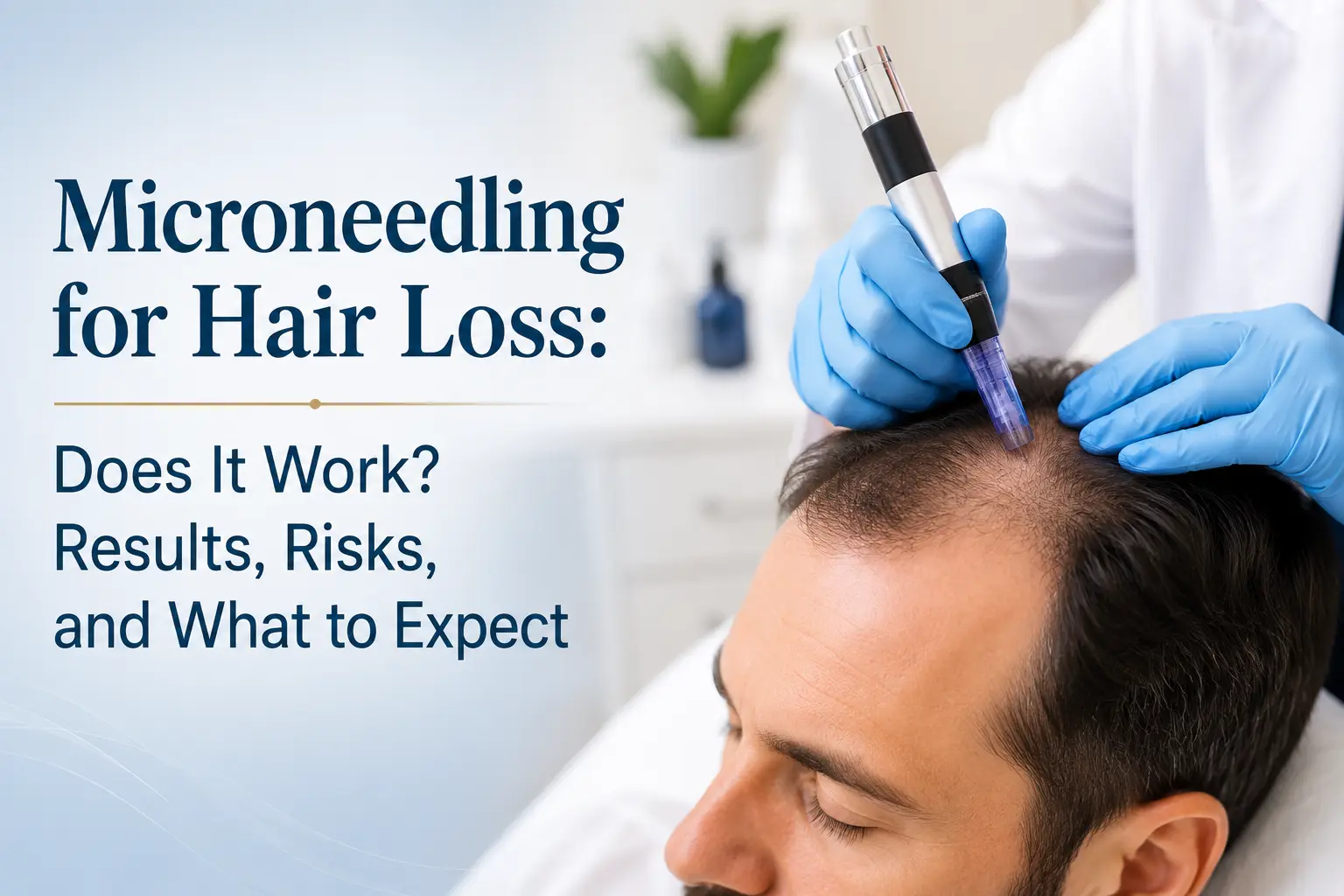
| Microneedling | Creates controlled microchannels that stimulate a repair response | May help alone or in combination with other treatments | Temporary redness or tenderness |
| Low-level laser therapy | Uses light energy to support cellular activity around follicles | Supported by controlled studies, though results vary | Requires consistent ongoing use |
| Regenerative scalp treatments | Deliver compounds intended to support follicle and scalp health | Evidence depends on the specific treatment | Protocols and results vary |
| Hair transplant | Moves follicles from a denser donor area into areas of loss | Can provide lasting coverage in suitable candidates | Surgical treatment with recovery and donor-hair limits |
SEE WHICH OPTION IS RIGHT FOR YOUR HAIR
Is Botox or PRP Better for Hair Loss?
PRP currently has a larger body of supporting evidence for pattern hair loss than scalp Botox.
PRP uses a concentrated portion of the patient’s own blood to deliver platelets and growth factors into thinning areas.
Scalp Botox is thought to work through muscle relaxation, nerve signaling, circulation, or changes in gland activity.
Neither treatment is appropriate for every diagnosis.
PRP may be considered when active follicles need regenerative support, while scalp Botox remains a less established option with inconsistent findings.
In some cases, a provider may recommend combining compatible treatments rather than relying on one method alone.
When Should You Seek a Hair-Loss Evaluation?
Earlier assessment may provide more opportunities to support follicles before they become severely miniaturized.
Consider scheduling an evaluation if you notice:
- A widening part
- A receding hairline
- Increasing scalp visibility
- More shedding than usual
- Thinning at the crown
- Sudden or patchy hair loss
- Scalp itching, pain, redness, or scaling
- Broken hairs
- Areas that appear scarred
- Hair changes after illness, stress, or hormonal shifts
Sudden patchy loss, significant inflammation, painful scalp symptoms, or rapidly progressing shedding may require evaluation by a dermatologist or another qualified medical professional.
Explore Personalized Hair Restoration at Gard Wellness Solutions
Hair loss can have several overlapping causes.
A personalized assessment helps determine whether the thinning is related to genetics, hormones, scalp health, nutrition, stress, or another factor.
Gard Wellness Solutions offers personalized, non-surgical hair restoration in Lantana, Florida.
Depending on the patient’s needs, treatment options may include PRP, microneedling, laser hair restoration, regenerative scalp treatments, or a customized combination.
Schedule a consultation with Gard Wellness Solutions to discuss the cause and stage of your hair loss and learn which treatment options may be appropriate for your goals.
FAQs: Botox for Hair Loss
What is Botox treatment for hair?
Botox treatment for hair may refer to injectable scalp Botox or a salon treatment called hair Botox. Scalp Botox uses botulinum toxin injections and is being studied for certain types of hair loss. Salon hair Botox is a topical conditioning treatment that smooths existing strands but does not regrow hair.
How long do scalp Botox results last?
The effects of botulinum toxin are temporary. Research protocols have repeated treatments every three to six months, but there is no standardized maintenance schedule for using Botox to address hair loss.
Is Botox or PRP better for hair loss?
PRP currently has a larger body of supporting evidence for pattern hair loss. Scalp Botox remains an emerging option with mixed findings. The better approach depends on the cause, pattern, severity, and stage of thinning.
What is the best peptide for hair restoration?
There is no single peptide proven to be the best for every type of hair loss. Copper peptides such as GHK-Cu and AHK-Cu have more direct laboratory research involving hair follicles than BPC-157, but clinical evidence remains limited. The most appropriate option depends on the cause of the hair loss, the condition of the follicles, and whether other treatments are being used.
What is the best treatment for hair loss?
The best treatment depends on what is causing the hair loss. Pattern hair loss, sudden shedding, hormonal changes, nutrient deficiencies, autoimmune conditions, and scarring alopecia require different approaches. A personalized plan may include topical or prescription treatments, microneedling, PRP, low-level laser therapy, nutritional support, hormone evaluation, or a combination of options.