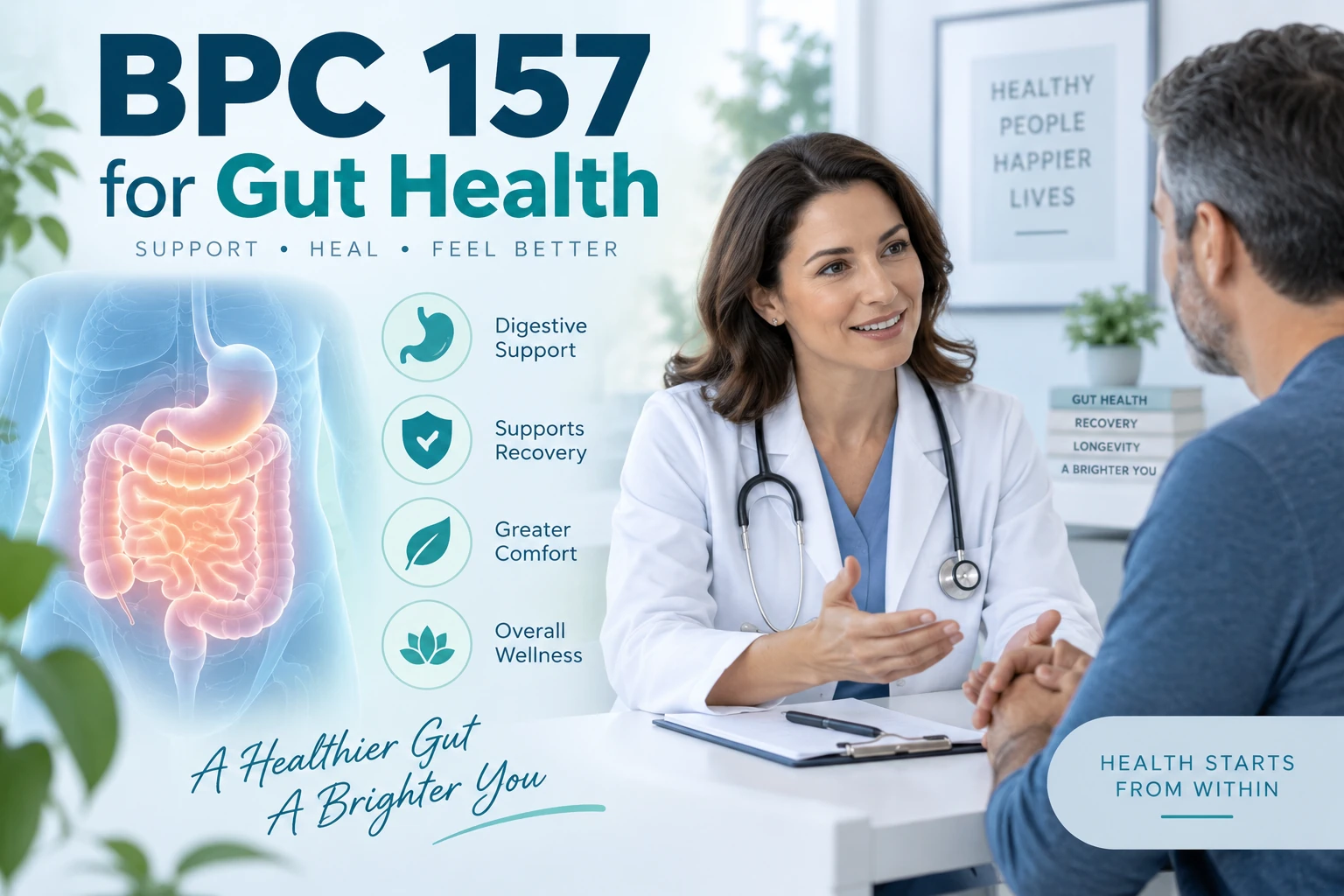
BPC-157 is a peptide studied for its ability to help repair the gut lining and calm gut inflammation, with most human use happening off-label through licensed compounding providers.
Research is promising but still largely preclinical, dosing is actively evolving, and it should only be considered under medical supervision.
If you have been dealing with bloating, gut pain, or a digestive system that never quite feels settled, you have probably come across BPC-157 in your research.
It shows up constantly in conversations about gut healing, and for good reason.
This peptide was originally isolated from a protective protein in human gastric juice, which is part of why researchers have focused so much attention on what it might do for the digestive tract.
This guide walks through what BPC-157 for gut health actually means, what the science supports, how it is typically used, and what the current safety picture looks like in 2026.
We will also cover BPC-157 for gut inflammation specifically, since that is one of the most common reasons people ask about it.
SEE IF BPC-157 IS RIGHT FOR YOU
What Is BPC-157?
BPC-157, short for Body Protection Compound 157, is a synthetic peptide made up of 15 amino acids modeled after a naturally occurring protective protein found in human gastric juice.
It was developed by researchers studying how the stomach protects itself from damage caused by acid, stress, and injury.
Because of where it comes from, most of the early research on BPC-157 focused on the digestive system before expanding into joint, muscle, and tendon recovery.
If you want the fuller picture of everything this peptide has been studied for, our overview of BPC-157’s broader benefits covers those additional applications in more depth.
BPC-157 is not a hormone and it does not work like a typical medication that blocks a single receptor.
Instead, researchers believe it acts more like a signal that tells damaged tissue to start repairing itself faster than it normally would.
How Does BPC-157 Support Gut Health?
BPC-157 appears to support gut health by protecting the stomach and intestinal lining from damage, reducing local inflammation, and encouraging new blood vessel growth so injured tissue heals faster.
These three mechanisms work together, which is why researchers describe it as a “cytoprotective” compound rather than a simple anti-inflammatory.
Repairing the Intestinal Lining
Your gut lining is a single layer of cells that separates your bloodstream from everything passing through your digestive tract.
When that layer gets damaged, whether from chronic stress, alcohol, NSAIDs, or an infection, it can lead to the kind of gut irritation that never seems to fully resolve.
Early research found that BPC-157 helped counteract damage to the stomach, intestine, and even the esophagus caused by alcohol and anti-inflammatory drugs, while also supporting the healing of surgical connections in the intestine after bowel procedures.
Calming Gut Inflammation
One of the more specific areas of interest is BPC-157 for gut inflammation.
Researchers have studied it in models of inflammatory bowel conditions and found that it helped maintain the integrity of the gut lining, described in the scientific literature as acting like a mediator of the gut’s natural cytoprotective response, without producing toxic effects in the animal models tested.
That distinction matters.
A lot of anti-inflammatory approaches work by broadly suppressing the immune system.
BPC-157 instead seems to support the tissue itself so it can better withstand inflammatory stress in the first place.
Supporting Blood Flow to Damaged Tissue
Healing tissue needs a steady blood supply to deliver oxygen and nutrients.
Some of the research on BPC-157 points to it supporting the formation of new blood vessels around injured tissue, which is one proposed reason it has also been studied for muscle, tendon, and vascular recovery outside the gut.
Can BPC-157 Help With Gut Inflammation Specifically?
BPC-157 for gut inflammation is one of the most studied applications of this peptide, with preclinical research showing it can protect the gut lining from NSAID and alcohol-induced damage while supporting the body’s own anti-inflammatory response.
Most of this evidence comes from animal studies rather than large human trials.
People dealing with ongoing gut inflammation, whether tied to a diagnosed condition or just a digestive system that reacts to nearly everything, are often the ones most interested in this peptide.
The appeal is straightforward: instead of just quieting symptoms, BPC-157 is thought to work on the underlying tissue damage that keeps triggering inflammation in the first place.
Still, it is worth being direct about where the evidence currently stands, which is exactly what the next section covers.
What Does the Research Say About BPC-157 and Gut Health?
A widely cited 2016 review in Current Neuropharmacology detailed how BPC-157 was studied across esophagus, stomach, duodenum, intestine, liver, and pancreas injury models, describing it as a stable peptide that supports mucosal integrity without the toxic effects seen with many other compounds.
A more recent 2023 review in Pharmaceuticals went further, examining how BPC-157 may influence the connection between the gut and the brain, sometimes called the gut-brain axis.
That same review noted that toxicology studies have not identified a lethal dose, which is part of why researchers consider its safety profile favorable even though human trial data remains limited.
Separately, gastroenterology researchers have documented how a damaged intestinal barrier, often called a “leaky gut,” plays a direct role in driving inflammatory bowel disease, which helps explain why a peptide that targets barrier repair has drawn so much interest from people managing chronic gut symptoms.
A broader review of BPC-157’s role in wound healing reinforces the same theme: the strongest evidence right now comes from lab and animal research, not large-scale human clinical trials.
That does not mean the compound is ineffective.
It means the research is still catching up to the interest, which is exactly why working with a provider who follows the evidence closely matters.
What Does a BPC-157 Dosage for Gut Health Look Like?
When BPC-157 is prescribed for gut-related concerns, it is typically given as a daily subcutaneous injection, with the exact amount, timing, and length of the course determined individually based on the condition being treated, body weight, and how a patient responds.
Clinical peptide providers commonly report protocols in the range of 250 to 500 micrograms per day, often run for a course of several weeks, though this is a general reference point rather than a number anyone should use to self-dose.
A provider will typically start conservatively and adjust based on tolerance and progress.
Factors like whether the goal is calming acute gut inflammation versus supporting longer-term barrier repair, and whether other medications or conditions are in play, all shape the plan.
This is not a supplement you take off a label.
It is a compounded medication that needs the same oversight as any other injectable therapy.
How Long Does BPC-157 Take to Work for Gut Issues?
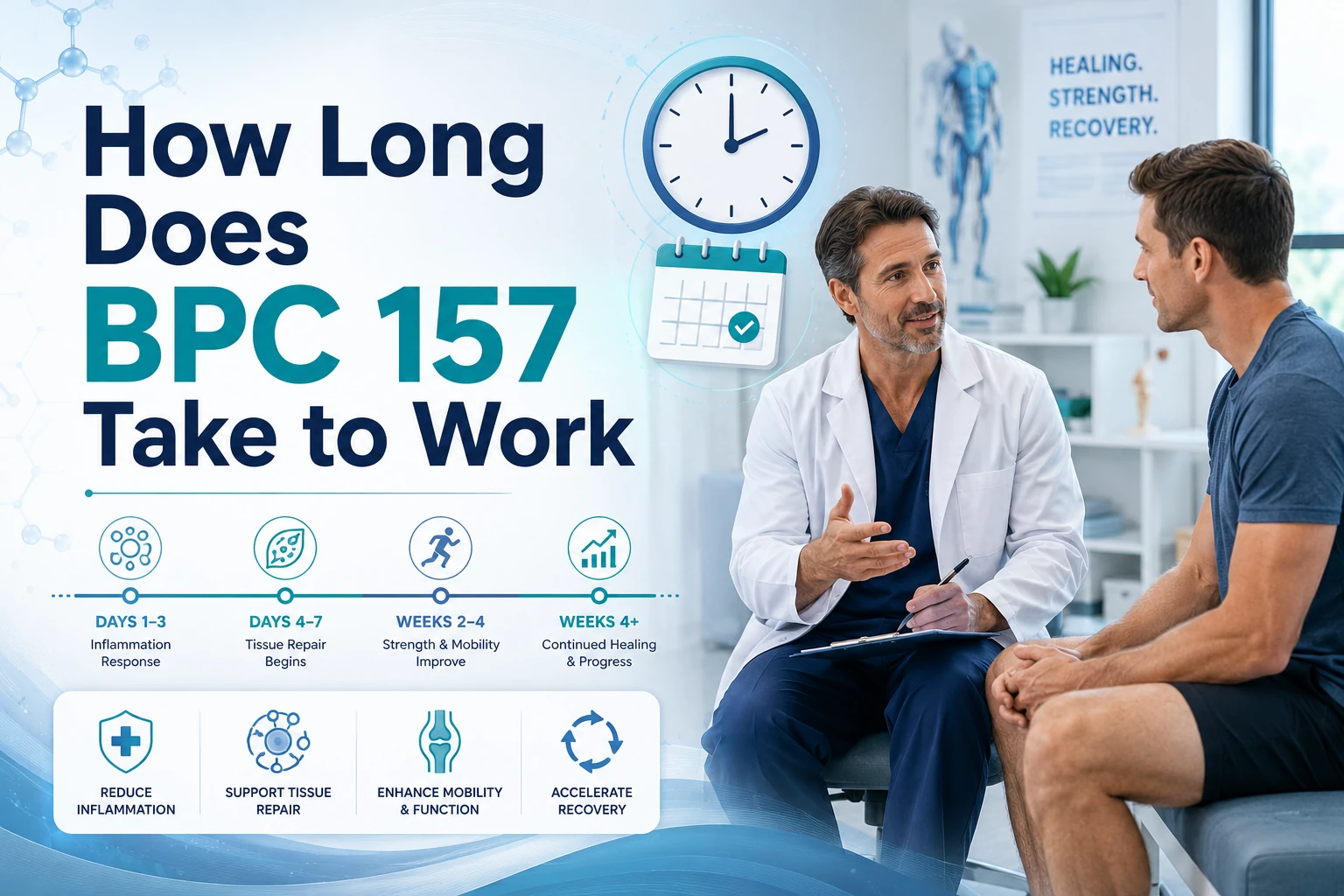
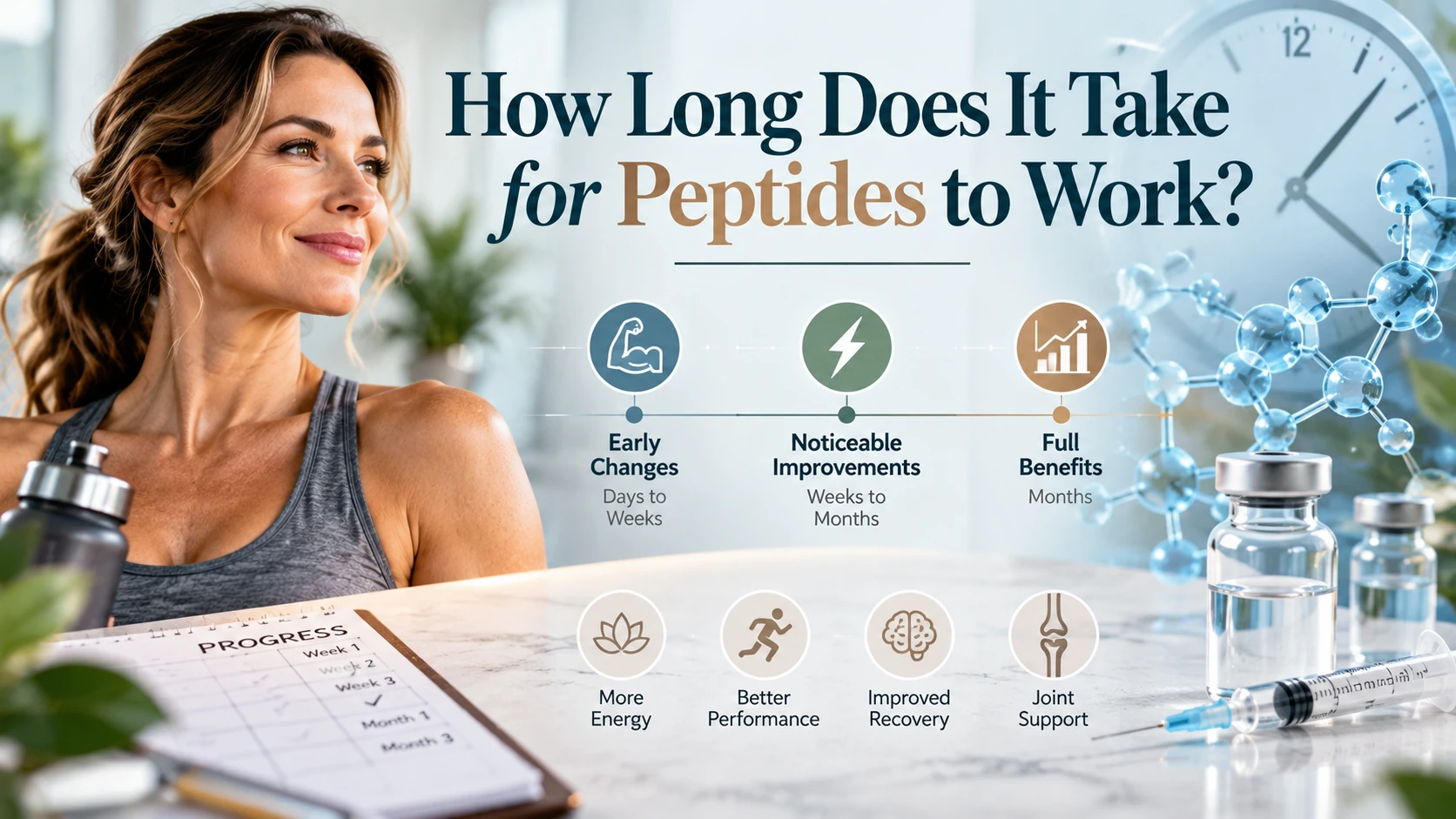
Most people using BPC-157 begin noticing changes within two to four weeks, though gut-specific healing often takes longer than the timelines reported for musculoskeletal recovery, since intestinal tissue repairs on its own schedule.
We break down the full range of how long BPC-157 takes to work across different uses in more detail, but for gut health specifically, providers generally recommend giving a full course, often eight to twelve weeks, before judging whether it is helping.
Patience matters here.
Gut tissue that has been irritated for months or years did not get that way overnight, and it is not realistic to expect a full reversal in a week or two.
Who Might Be a Candidate for BPC-157?
People most commonly considered for BPC-157 include those with ongoing gut inflammation that has not responded well to standard approaches, a history of NSAID-related stomach or intestinal irritation, symptoms consistent with leaky gut, or recovery needs following a GI procedure or illness.
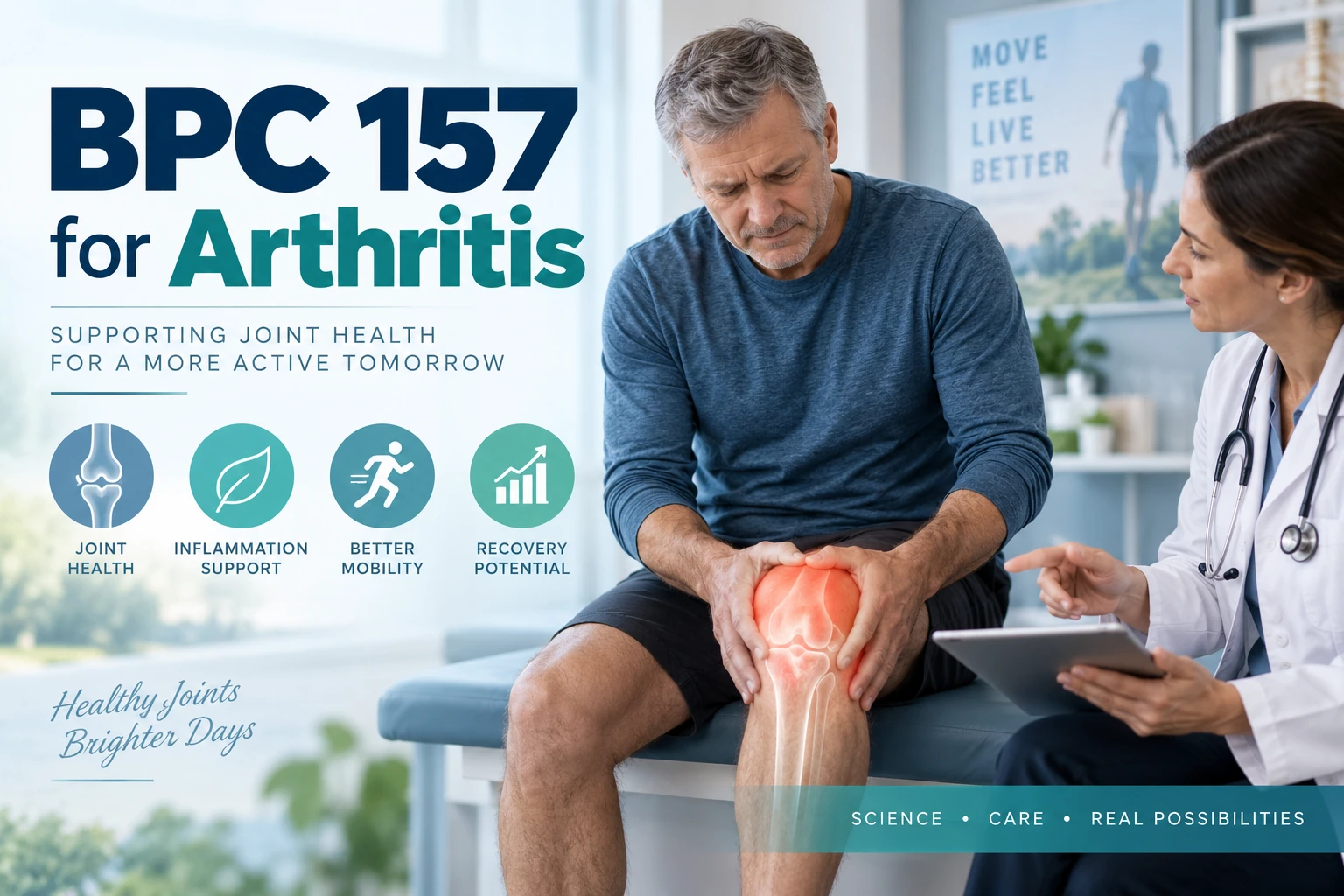
It is also sometimes considered alongside other regenerative treatments for joint conditions like arthritis, since the same anti-inflammatory and tissue-repair mechanisms apply to joints as well as the gut.
Before anyone starts BPC-157, though, it is important to actually understand what is causing the gut symptoms in the first place.
Persistent bloating, pain, or irregularity can point to several different underlying issues, and a proper workup through a general medicine evaluation is the right starting point before adding any peptide therapy to the picture.
BPC-157 is generally not appropriate during pregnancy or breastfeeding, and anyone with an active infection, cancer history, or other significant medical condition should discuss those factors openly with a provider before starting.
SEE IF BPC-157 IS RIGHT FOR YOU
Safety, Side Effects, and Sourcing Risks
BPC-157 has shown a favorable safety profile in the research conducted so far, with toxicology studies finding no lethal dose across the routes tested, though reported side effects can include mild injection site irritation, nausea, or headache in some patients.
Because human trials remain limited, long-term safety data is still incomplete.
The bigger safety concern for most people is not the peptide itself but where it comes from.
Products sold online without a prescription are not verified for purity, sterility, or accurate dosing, and there is no way to confirm what is actually in the vial.
This is exactly why the legal and sourcing questions covered earlier in this article matter as much as the science does.
A legitimate compounding pharmacy working from a provider’s prescription is the only way to know what you are actually injecting.
How Gard Wellness Solutions Approaches Peptide Therapy for Gut Health
At Gard Wellness Solutions, we see a lot of patients across West Palm Beach, Boynton Beach, and Lantana who have spent months trying to get their gut symptoms under control without much progress.
Our approach starts with a real evaluation, not a peptide prescription on demand.
For patients who are good candidates, BPC-157 is available through our peptide therapy program, where dosing and duration are set individually and monitored throughout treatment rather than handed over as a one-size-fits-all protocol.
Because gut inflammation rarely exists in isolation from the rest of a patient’s health, we often pair this with our broader functional medicine health optimization plan, which looks at nutrition, stress, and hormone balance alongside the gut itself.
We source every compounded peptide through licensed pharmacies and keep our protocols current as the regulatory landscape continues to shift, so patients are never left guessing about what they are receiving or whether it is being handled properly.
If chronic gut inflammation has been affecting your daily life, Gard Wellness Solutions can walk you through whether BPC-157 makes sense for your situation and what a supervised, physician-guided plan would actually look like.
FAQs: BPC-157 for Gut Health
Can BPC-157 help with IBS or IBD?
Research suggests BPC-157 may support gut lining repair and reduce inflammation in ways that could be relevant to IBS and IBD, but most of this evidence comes from animal studies rather than large human clinical trials. It should be discussed as part of a broader treatment plan with a provider familiar with your diagnosis, not used as a standalone cure.
How is BPC-157 for gut health administered?
It is most commonly given as a daily subcutaneous injection, with the dose, timing, and length of the treatment course set individually by a licensed provider based on the condition being treated and how the patient responds.
Are there side effects to BPC-157?
Reported side effects are generally mild and can include injection site irritation, nausea, or headache. Toxicology research has not identified a lethal dose, but because long-term human data is still limited, treatment should always be supervised by a licensed provider.
How much does BPC-157 peptide therapy cost?
Cost depends on the dose, course length, and whether it is combined with other services like functional medicine or health optimization support. The best way to get an accurate estimate is through a consultation, since pricing is based on your specific treatment plan.
Can I buy BPC-157 online without a prescription?
You can find it sold online, but it is not recommended. Unregulated products are not verified for purity, sterility, or accurate dosing, and there is no way to confirm what is actually in the product. BPC-157 should only be obtained through a licensed provider and a legitimate compounding pharmacy.