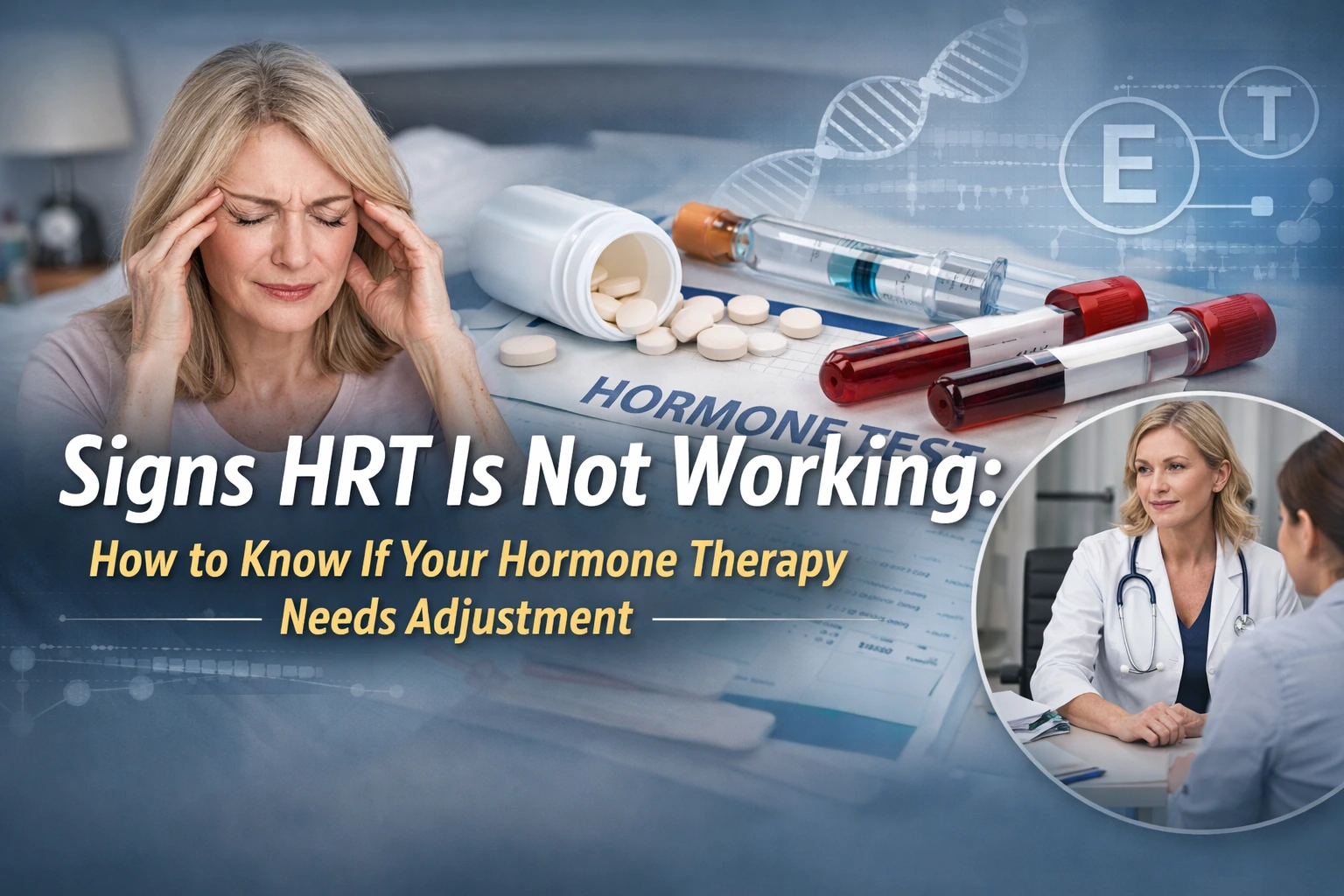
Signs HRT is not working include persistent hot flashes, fatigue, brain fog, poor sleep, mood changes, and lack of symptom improvement after 3–6 months.
These symptoms may indicate your hormone dose is too low, poorly absorbed, or needs adjustment.
With proper lab testing and personalized treatment, hormone therapy can often be optimized to restore symptom relief.
Hormone replacement therapy (HRT) can significantly improve energy, sleep, mental clarity, metabolism, and overall quality of life.
However, not everyone experiences immediate or complete relief.
If your symptoms continue despite treatment, your hormone therapy may need adjustment rather than abandonment.
Understanding the signs HRT is not working can help you identify when changes are needed to achieve the best results.
SEE HOW HORMONE THERAPY CAN HELP YOU
How Long Does HRT Take to Work?
One of the most common concerns is whether hormone therapy simply needs more time.
Most people experience improvement gradually.
HRT Timeline: What to Expect
| Time on HRT | What Typically Happens |
| Weeks 1–2 | Early improvements in sleep, mood, or energy |
| Weeks 3–6 | Reduction in hot flashes and night sweats |
| Months 2–3 | Noticeable improvement in multiple symptoms |
| Months 3–6 | Full therapeutic effects typically appear |
| After 6 months | Hormones should be stable and symptoms significantly improved |
If symptoms persist beyond 3–6 months, it may indicate your HRT dose, type, or delivery method needs adjustment.
Quick Checklist: Signs Your HRT Is Not Working
You may need your hormone therapy reassessed if you experience:
- Persistent hot flashes or night sweats
- Continued fatigue or low energy
- Brain fog or difficulty concentrating
- Poor sleep or insomnia
- Mood swings, anxiety, or depression
- Weight gain or difficulty losing weight
- Low libido
- Hair thinning or dry skin
- Joint pain or muscle weakness
- No improvement after 3–6 months
If multiple symptoms remain unchanged, your hormone levels may still be imbalanced.
10 Common Signs HRT Is Not Working
Let’s look at some of the signs your HRT may need adjusting:
1. Persistent Hot Flashes and Night Sweats
Hot flashes and night sweats are among the most common symptoms treated with HRT.
If these symptoms continue after several months, your estrogen dose may be too low or not absorbed properly.
2. Continued Fatigue or Low Energy
Hormones regulate energy production, metabolism, and muscle function.
If you still feel constantly tired, your hormone therapy may not yet be optimized.
Fatigue is one of the most common signs of incomplete hormone balance.
3. Brain Fog and Poor Mental Clarity
Hormones directly affect brain function.
If you experience:
- Memory problems
- Poor concentration
- Mental fog
It may indicate your hormone levels remain suboptimal.
4. Mood Swings, Anxiety, or Depression
Hormones influence neurotransmitters that regulate mood.
Persistent symptoms such as:
- Anxiety
- Irritability
- Mood instability
- Depression
may signal hormone imbalance.
5. Poor Sleep or Insomnia
Hormone therapy often improves sleep quality.
If you still experience:
- Difficulty falling asleep
- Frequent waking
- Unrestful sleep
your hormone therapy may need adjustment.
6. Weight Gain or Difficulty Losing Weight
Hormones regulate fat storage, metabolism, and muscle mass.
Signs your HRT may not be working include:
- Increased belly fat
- Difficulty losing weight
- Slower metabolism
This may indicate hormone imbalance remains unresolved.
7. Low Libido
Hormones such as estrogen and testosterone play a major role in sexual health.
Persistent low libido may signal hormone levels are still insufficient.
8. Hair Thinning and Skin Changes
Hormones support hair growth and skin health.
Continued hair thinning, dry skin, or loss of skin elasticity may indicate inadequate hormone levels.
9. Joint Pain or Muscle Weakness
Hormones support muscle and joint health.
Persistent joint discomfort or muscle fatigue may indicate hormone imbalance.
10. No Overall Symptom Improvement
The clearest sign HRT is not working is lack of noticeable improvement after several months.
Properly optimized hormone therapy should improve multiple symptoms.
How to Tell If Your HRT Dose Is Too Low
Low hormone doses are one of the most common reasons HRT is not working.
Signs your HRT dose may be too low include:
- Persistent hot flashes
- Continued fatigue
- Poor sleep
- Brain fog
- Low libido
- Mood instability
These symptoms indicate hormone levels may still be insufficient.
Signs Your HRT Dose May Be Too High
Excess hormone levels can also cause symptoms.
Signs your HRT dose may be too high include:
- Breast tenderness
- Mood swings
- Anxiety
- Bloating
- Headaches
- Irritability
Both insufficient and excessive doses require adjustment.
Why Your Hormone Replacement Therapy Is Not Working
Several underlying factors may prevent HRT from working properly.
Incorrect Hormone Dose
Hormone requirements vary significantly between individuals.
Standard doses may not provide optimal symptom relief.
Poor Hormone Absorption
Some individuals do not absorb hormones effectively from creams, patches, or gels.
Switching delivery methods may improve results.
Wrong Hormone Delivery Method
Available methods include:
- Creams
- Injections
- Pellets
- Oral medications
Some people respond better to specific forms.
Hormone Imbalance Beyond Estrogen
Optimal hormone therapy often requires balancing multiple hormones, including:
- Estrogen
- Progesterone
- Testosterone
Addressing only one hormone may not fully resolve symptoms.
Thyroid or Metabolic Issues
Other conditions may interfere with hormone therapy effectiveness, including:
- Thyroid dysfunction
- Insulin resistance
- Chronic stress
- Adrenal imbalance
Addressing these issues can improve results.
Why HRT May Stop Working Over Time
Some people experience improvement initially, but symptoms later return.
This can happen because:
- Hormone needs change over time
- Aging affects hormone metabolism
- Hormone absorption changes
- Dose adjustments may be required
Regular monitoring helps maintain optimal results.
Blood Tests That Help Confirm Whether HRT Is Working
Lab testing helps evaluate hormone therapy effectiveness.
Important tests include:
- Estradiol
- Progesterone
- Testosterone
- Thyroid panel
- SHBG
Testing helps determine whether hormone levels are optimal.
When to Adjust Your Hormone Therapy
You should consider reassessment if:
- Symptoms persist after 3–6 months
- Symptoms worsen
- New symptoms develop
- You experience side effects
- You do not feel improvement
Hormone adjustments often significantly improve outcomes.
What Happens When Hormone Therapy Is Optimized
When properly optimized, hormone therapy can improve:
- Energy levels
- Sleep quality
- Mood stability
- Mental clarity
- Metabolism
- Libido
- Overall quality of life
Most people experience substantial improvement when hormone therapy is personalized.
How Gard Wellness Solutions Helps Optimize Hormone Therapy in Florida
At Gard Wellness Solutions in Florida, hormone therapy is carefully personalized based on your symptoms, lab testing, and individual physiology.
Their approach includes:
- Comprehensive hormone testing
- Personalized dosing
- Bioidentical hormone therapy options
- Ongoing monitoring and adjustments
- Individualized treatment plans
With proper evaluation and expert care, hormone therapy can be optimized to restore balance and improve your overall well-being.
FAQs: Signs HRT Is Not Working
How do you know if your HRT needs adjusting?
Your HRT may need adjusting if symptoms such as hot flashes, fatigue, brain fog, poor sleep, mood swings, or low libido persist after 3–6 months. New side effects like headaches, bloating, or breast tenderness can also indicate your hormone dose or delivery method needs modification.
What are signs of too much estrogen in HRT?
Too much estrogen can cause symptoms such as breast tenderness, bloating, mood swings, irritability, headaches, nausea, and fluid retention. Some people may also experience anxiety or heavier bleeding. These symptoms may indicate your estrogen dose is too high.
Can HRT become less effective?
Yes, HRT can become less effective over time if your hormone needs change. Aging, metabolism, absorption changes, or underlying health conditions may require dose adjustments to maintain optimal results.
How to tell if HRT is too strong?
Signs your HRT may be too strong include breast tenderness, bloating, irritability, anxiety, headaches, mood swings, or sleep disturbances. These symptoms often improve after adjusting your hormone dose.
What does an estrogen imbalance feel like?
Estrogen imbalance can cause fatigue, mood swings, brain fog, poor sleep, weight changes, hot flashes, and low libido. Symptoms may vary depending on whether estrogen levels are too high or too low.
What are signs of too little estrogen in HRT?
Signs of low estrogen while on HRT include persistent hot flashes, night sweats, fatigue, brain fog, poor sleep, vaginal dryness, low libido, and mood changes. These symptoms may indicate your estrogen dose needs adjustment.
How do I know if my progesterone is too high on HRT?
High progesterone levels may cause fatigue, dizziness, mood changes, depression, bloating, or excessive sleepiness. If these symptoms occur, your provider may need to adjust your progesterone dose.
Will I age faster if I stop HRT?
Stopping HRT does not necessarily cause faster aging, but hormone levels will decline naturally, which may lead to symptoms such as reduced skin elasticity, lower energy, poor sleep, and other age-related changes.
How to maximize HRT effectiveness?
You can maximize HRT effectiveness by working with a qualified provider, monitoring hormone levels regularly, adjusting doses as needed, maintaining a healthy lifestyle, managing stress, and ensuring proper hormone absorption.