Interest in BPC-157 for hair growth has increased as more people explore peptides for thinning hair, excessive shedding, and scalp health.
BPC-157 is most often associated with tissue repair and recovery, which has led to claims that it may also support hair regrowth.
But does BPC-157 actually grow hair?
The direct answer: BPC-157 has not been proven to regrow hair in human clinical trials.
Its possible hair benefits are based on indirect effects involving tissue repair, inflammation, and blood-vessel formation.
These mechanisms may support the environment around existing follicles, but they do not prove that BPC-157 increases hair density, restores a receding hairline, or reverses pattern hair loss.
SEE IF BPC-157 IS RIGHT FOR YOU
Key Takeaways
- Reliable human studies have not established BPC-157 as a hair-loss treatment.
- BPC-157 may theoretically support scalp tissue, inflammatory balance, and circulation.
- Supporting scalp health is not the same as stimulating new hair growth.
- There is no clinically established BPC-157 hair-growth dosage or timeline.
- GHK-Cu has more direct hair- and follicle-related research than BPC-157.
- Identifying the cause of hair loss is more important than choosing a peptide based on online claims.
BPC-157 Hair Growth at a Glance
| Question | Current Evidence |
| Does BPC-157 regrow hair? | Human clinical research has not established that it regrows hair. |
| Can BPC-157 support scalp health? | It may theoretically affect tissue repair, inflammation, and blood-vessel formation. |
| Can it treat pattern hair loss? | It has not been shown to stop hormone-related follicle miniaturization. |
| Are BPC-157 before-and-after photos reliable? | Most are personal reports that may involve other treatments, lighting differences, or natural hair-cycle changes. |
| How long does BPC-157 take to work for hair growth? | No validated BPC-157 hair-growth timeline exists. |
| Is BPC-157 better than GHK-Cu? | GHK-Cu has more direct follicle- and skin-related research, although neither guarantees regrowth. |
What Is BPC-157?
BPC-157, short for Body Protection Compound 157, is a synthetic peptide consisting of 15 amino acids.
It is based on a sequence found within a protein associated with gastric juice.
Most research involving BPC-157 has examined experimental models of tissue repair.
Researchers have studied its possible effects on:
- Tendons and ligaments
- Muscles
- Wounds
- Blood vessels
- Gastrointestinal tissue
- Inflammatory responses
Laboratory and animal research has found that BPC-157 may influence cell migration, tissue repair, blood-vessel formation, and cell survival under certain conditions.
Those findings help explain why BPC-157 is frequently discussed as a recovery peptide.
However, research involving injured tendons, muscles, or digestive tissue cannot automatically be applied to human hair follicles.
A peptide may help one type of tissue respond to injury without increasing hair count, thickness, or density.
Does BPC-157 Help Hair Growth?
There is not enough evidence to conclude that BPC-157 reliably improves human hair growth.
The proposed connection between BPC-157 and hair regrowth is based primarily on biological theories.
These theories suggest that supporting tissue health, circulation, or inflammatory balance could create a more favorable environment around existing follicles.
That possibility is different from showing that BPC-157 can:
- Increase the number of hairs per square centimetre
- Make individual hair shafts thicker
- Reverse follicle miniaturization
- Restore a receding hairline
- Restart permanently inactive follicles
- Prevent genetically driven hair loss
- Stop hormone-related thinning
Healthy scalp tissue can support normal follicle function, but scalp health is only one part of the hair-growth process.
Hair loss can be driven by genetics, hormones, nutrition, autoimmune activity, illness, medication, stress, or direct follicle damage.
BPC-157 has not been shown to correct all, or even most, of those causes.
Why Is BPC-157 Associated With Hair Growth?
Three proposed mechanisms are usually used to explain the interest in BPC-157 for hair loss.
BPC-157 May Influence Tissue Repair
BPC-157 has been studied for possible effects on cell migration, connective-tissue repair, and wound healing.
The scalp contains skin, connective tissue, blood vessels, nerves, and hair follicles.
Supporting damaged or irritated scalp tissue could theoretically improve the environment surrounding viable follicles.
However, helping scalp tissue recover does not necessarily reactivate follicles affected by genetics, hormones, autoimmunity, or scarring.
A healthier scalp may support the hair that is capable of growing.
It does not mean a peptide can create new follicles or revive follicles that have been permanently destroyed.
BPC-157 May Affect Inflammatory Processes
Inflammation can contribute to certain scalp conditions and forms of hair loss.
BPC-157 is often discussed for potential effects on inflammatory signaling observed in experimental research.
This could be relevant when inflammation is affecting the tissue around a follicle.
However, not every case of thinning hair is caused by inflammation.
Male and female pattern hair loss, iron deficiency, thyroid problems, traction damage, and stress-related shedding have different underlying mechanisms.
Inflammation can also be a sign of an infection, autoimmune condition, or scarring disorder.
Treating inflammation without identifying its cause could delay appropriate care.
BPC-157 May Influence Blood-Vessel Formation
BPC-157 has demonstrated effects involving angiogenesis, the formation of new blood vessels, in experimental healing models.
Hair follicles depend on nearby blood vessels for oxygen and nutrients, which has led to theories that BPC-157 could support scalp circulation.
But improved vascular activity in an animal wound or injured tendon does not prove that BPC-157 increases human hair density.
Blood supply matters, but it is only one part of follicle biology.
Hormones, genetics, immune activity, nutrient status, and the condition of the follicle itself also influence growth.
What Do BPC-157 Hair Growth Studies Actually Show?
Current research does not establish BPC-157 as an effective treatment for human hair loss.
| Type of Evidence | What It May Show | What It Does Not Establish |
| Laboratory research | Possible effects on cell movement, survival, and tissue-repair pathways | Regrowth of human scalp hair |
| Animal research | Potential healing, vascular, and inflammatory effects | Improved hair density in people |
| Human research | Limited information involving BPC-157 overall | A proven hair-loss protocol, dosage, or success rate |
| Personal reports | Individual experiences and observations | Whether BPC-157 caused the reported improvement |
This distinction matters because many BPC-157 hair claims are created by extending findings from unrelated tissues.
For example, a study showing improved tendon repair does not prove that the same peptide reverses androgen-driven follicle miniaturization.
Each proposed use requires research involving the relevant tissue, condition, dosage, and delivery method.
BPC-157 Hair Growth Before and After Results
People searching for BPC-157 hair growth before-and-after results should interpret individual photographs carefully.
Hair photos can look significantly different because of:
- Lighting
- Camera angle
- Wet versus dry hair
- Hair length
- Styling
- Scalp concealers or fibers
- Changes in the width of the part
- Camera distance
- Haircut differences
It is also common for people experimenting with BPC-157 to use other treatments at the same time.
These may include topical hair products, prescription medications, copper peptides, microneedling, PRP, supplements, hormone treatment, or dietary changes.
When several variables change together, a photograph cannot show which treatment caused the result.
Natural hair-cycle changes may also be mistaken for a treatment effect.
Someone recovering from telogen effluvium may begin seeing regrowth several months after the original trigger has resolved, regardless of whether BPC-157 was used.
Reliable progress tracking should use consistent lighting, positioning, styling, hair length, and camera distance.
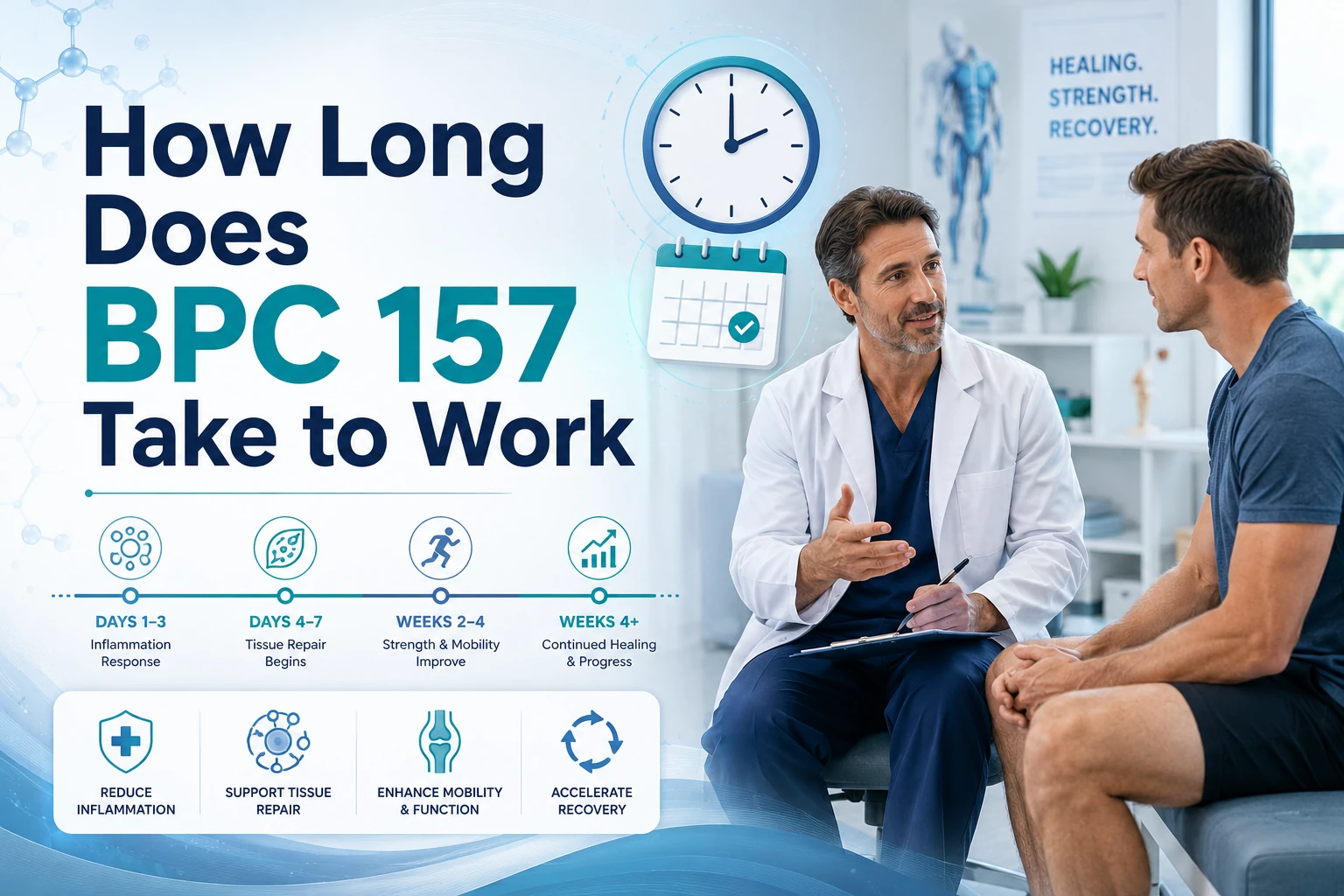
How Long Does BPC-157 Take to Work for Hair Growth?
There is no established BPC-157 hair-growth timeline.
Claims that BPC-157 produces visible hair changes within a few weeks are not supported by strong hair-specific clinical evidence.
Hair grows in cycles, so even an effective treatment usually requires time before meaningful changes can be assessed.
Early changes may involve reduced shedding, while improvements in thickness or density generally take longer to observe.
That general timeline does not mean BPC-157 will produce results after three, four, or six months.
A provider may track progress using:
- Standardized scalp photographs
- Hair-density measurements
- Changes in part width
- Daily shedding patterns
- Hair-shaft thickness
- Changes in scalp irritation or redness
Without consistent monitoring, normal fluctuations can easily be mistaken for improvement or worsening.
Topical BPC-157 vs BPC-157 Injections for Hair Growth
BPC-157 is discussed online in topical products, oral forms, and injections.
No delivery method has been established as the most effective option for growing hair.
Topical BPC-157 for Hair Growth
Topical products are intended to place BPC-157 directly on the scalp.
This may sound appealing because the peptide is applied near the target area.
However, the skin is designed to act as a barrier.
A topical formula must remain stable, penetrate the outer layers of the scalp, and reach the intended tissue in a usable amount.
The presence of BPC-157 on an ingredient label does not prove that it reaches the follicle or produces a measurable effect.
Many topical formulas also combine BPC-157 with GHK-Cu, biotin peptides, growth factors, or other ingredients.
When a combination formula produces an improvement, the result cannot automatically be attributed to BPC-157.
BPC-157 Injections for Hair Growth
Some people consider systemic or scalp injections because they assume injections provide stronger absorption.
However, no standardized BPC-157 injection protocol has been established for hair loss.
Research has not determined:
- A validated hair-growth dose
- The most appropriate injection location
- The ideal treatment frequency
- The necessary treatment duration
- Whether scalp injections outperform other routes
Self-injecting products obtained online also raises concerns involving sterility, contamination, concentration, storage, and product identity.
Injection instructions shared through online forums should not replace an individualized medical evaluation.
Is There a Recommended BPC-157 Dosage for Hair Growth?
There is no standardized or clinically validated BPC-157 dosage for hair growth.
Dosages discussed online are often adapted from experimental studies, injury-recovery protocols, personal experiences, or unrelated uses.
They have not been confirmed as safe and effective hair-loss protocols.
A peptide dosage also cannot correct an underlying condition such as:
- Iron deficiency
- Thyroid dysfunction
- Autoimmune hair loss
- Hormonal imbalance
- Medication-related shedding
- Scarring alopecia
- Inadequate protein or calorie intake
The first step should be determining why the hair is thinning or shedding.
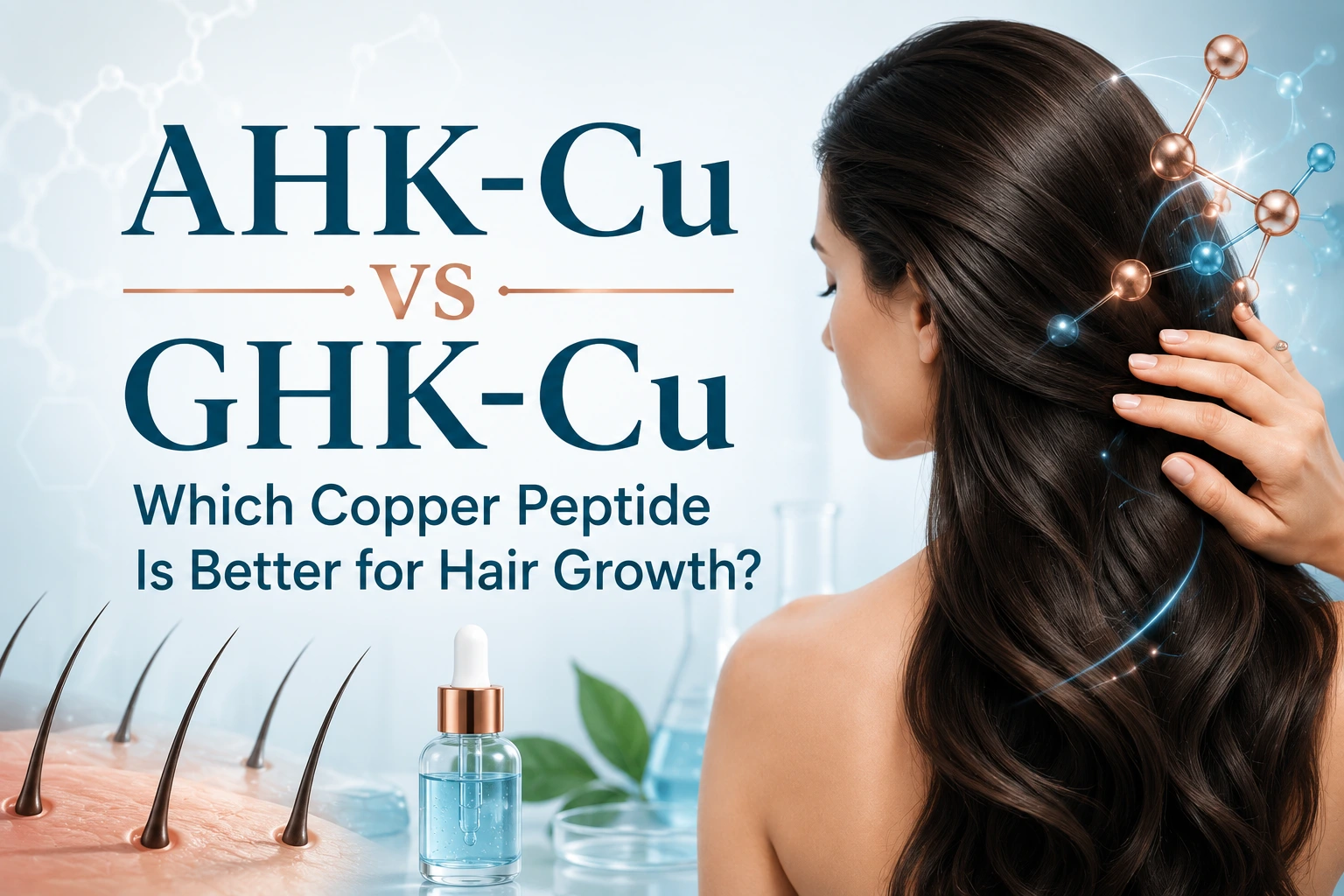
BPC-157 vs GHK-Cu for Hair Growth
GHK-Cu has more direct hair- and follicle-related research than BPC-157, although neither peptide should be presented as a guaranteed treatment for hair loss.
| Factor | BPC-157 | GHK-Cu |
| Main research focus | Experimental tissue repair and healing | Skin remodeling, wound repair, and follicle-related signaling |
| Direct hair research | Very limited | More direct laboratory and follicle-related research |
| Proposed role | May indirectly support the scalp environment | May influence tissue and signaling around follicles |
| Proven to reverse pattern hair loss | No | No |
| Common forms discussed for hair | Topical blends and injections | Topical serums, scalp treatments, and injections |
Which Peptide Has More Hair-Specific Evidence?
GHK-Cu and related copper peptides have been studied more directly in connection with skin remodeling, dermal papilla cells, and hair-follicle biology.
BPC-157 research is focused more heavily on tissue repair in other parts of the body.
Its proposed hair benefits are therefore more indirect.
Can BPC-157 and GHK-Cu Be Used Together?
Some topical formulas combine BPC-157 and GHK-Cu.
The theory is that BPC-157 may support tissue recovery while GHK-Cu provides more direct follicle-related signaling.
However, combination products make it difficult to determine which ingredient is responsible for any change.
There is also not enough clinical research to establish that using the two together produces better hair growth than using either one separately.
Is Either Peptide Proven to Reverse Pattern Hair Loss?
No.
Neither BPC-157 nor GHK-Cu has been proven to reliably reverse androgenetic alopecia.
Copper peptides may have more relevant biological research, but treatment decisions should still be based on the cause and stage of hair loss.
SEE WHICH OPTION IS RIGHT FOR YOU
Can BPC-157 Stop Hair Shedding?
BPC-157 has not been proven to stop hair shedding.
Shedding is a symptom, not a diagnosis.
It can occur because of:
- Illness or surgery
- Emotional stress
- Rapid weight changes
- Pregnancy or childbirth
- Hormonal changes
- Iron or nutrient deficiencies
- Thyroid dysfunction
- Certain medications
- Scalp inflammation
- Autoimmune activity
Telogen effluvium, for example, occurs when a larger number of hairs enter the resting and shedding phase.
The shedding may begin several months after the original trigger, making the connection difficult to recognize.
A treatment focused on scalp healing will not necessarily stop shedding if the original trigger remains unresolved.
What Types of Hair Loss May Not Respond to BPC-157?
BPC-157 should not be treated as a universal solution because different hair-loss conditions affect follicles in different ways.
Androgenetic Alopecia
Male and female pattern hair loss involves progressive follicle miniaturization.
BPC-157 has not been shown to stop the hormonal and genetic process driving this condition.
Telogen Effluvium
This type of diffuse shedding commonly follows illness, stress, childbirth, surgery, rapid weight changes, or nutritional disruption.
Improvement usually depends on identifying and correcting the trigger.
Alopecia Areata
Alopecia areata is an autoimmune condition in which the immune system attacks hair follicles.
It may cause round patches, diffuse thinning, or more extensive hair loss.
Nutrient-Related Hair Loss
Low iron, inadequate protein intake, restrictive diets, and other nutritional problems can contribute to hair shedding.
Supporting tissue repair does not replace a missing nutrient.
Thyroid- or Hormone-Related Hair Loss
Changes in thyroid function, estrogen, testosterone, and other hormones can affect the hair cycle.
Testing may be appropriate when hair changes occur alongside fatigue, menstrual changes, temperature sensitivity, or other symptoms.
Traction and Chemical Damage
Tight hairstyles, extensions, frequent bleaching, harsh chemical treatments, and repeated heat exposure can damage hair or place stress on follicles.
Removing the source of damage is an important part of recovery.
Scarring Alopecia
Scarring hair-loss conditions damage follicles and replace them with scar tissue.
Prompt evaluation matters because hair loss may become permanent once follicles are destroyed.
What Should You Consider Instead of Relying on BPC-157 Alone?
The right approach depends on the cause of the hair loss.
For Pattern Hair Loss
A provider may evaluate the extent of follicle miniaturization, family history, hormones, and the progression of thinning.
Early treatment may help preserve follicles that are still active.
For Sudden or Excessive Shedding
Evaluation may include recent illness, stress, surgery, weight changes, medication use, thyroid function, iron status, nutrition, and hormonal changes.
For Scalp Inflammation
Redness, itching, scaling, tenderness, or burning may point to a scalp condition that needs to be identified before choosing a hair-growth treatment.
For Hormonal Hair Changes
Hair thinning that occurs alongside menopause symptoms, menstrual changes, fatigue, or other hormonal concerns may warrant a broader hormone evaluation.
For General Hair-Restoration Support
Depending on the diagnosis, a personalized plan may include:
- Scalp-focused treatments
- Microneedling
- Platelet-rich plasma
- Copper peptides
- Low-level laser therapy
- Nutritional support
- Hormone evaluation
- Lifestyle changes
- Other provider-recommended options
The goal is not simply to stimulate the scalp.
It is to match the treatment to the process causing the hair loss.
Is BPC-157 Worth Considering for Hair Growth?
BPC-157 should not be viewed as a proven standalone treatment for hair loss.
Its possible effects on tissue repair, inflammatory signaling, and blood-vessel formation provide reasons for continued research.
They do not yet establish that BPC-157 can increase hair count, reverse a receding hairline, or stop pattern hair loss.
Before considering BPC-157 or another peptide, ask:
- What is causing the hair loss?
- Does the proposed treatment address that cause?
- What evidence supports the treatment?
- How will progress be measured?
- How will side effects be monitored?
A diagnosis-based plan is more useful than choosing a peptide based only on trends, personal testimonials, or before-and-after photographs.
SEE IF BPC-157 IS RIGHT FOR YOU
Personalized Hair-Loss Support at Gard Wellness Solutions in Florida
At Gard Wellness Solutions in Florida, hair restoration begins with understanding why your hair is thinning or shedding.
Our team can review your symptoms, health history, scalp condition, lifestyle, nutritional factors, hormones, medications, and treatment goals.
When appropriate, testing may help identify issues contributing to hair changes.
Rather than assuming one peptide or procedure is appropriate for everyone, Gard Wellness Solutions takes a personalized approach.
Depending on the cause of hair loss, a plan may include scalp treatments, regenerative approaches, hormone evaluation, nutritional support, lifestyle changes, or a combination of options.
Schedule a consultation with Gard Wellness Solutions to discuss your hair concerns and explore which approaches may be appropriate for your needs.
FAQs: BPC-157 for Hair Growth
Does BPC-157 help hair growth?
BPC-157 has not been proven to increase human hair growth in reliable clinical trials. Its proposed benefits are based on indirect effects involving tissue repair, inflammatory signaling, and blood-vessel formation. More hair-specific research is needed.
Which peptide is best for hair regrowth?
No single peptide is proven to be the best choice for hair regrowth. Copper peptides such as GHK-Cu and AHK-Cu have more direct laboratory research involving human hair follicles than BPC-157, but the evidence remains limited. The most appropriate option depends on the type of hair loss, whether the follicles are still active, and what other factors are contributing to thinning.
Can you combine treatment for hair loss?
Yes, hair-loss treatments are often combined when they address different parts of the condition. A personalized plan might include a topical treatment, microneedling, PRP, low-level laser therapy, hormone evaluation, nutritional support, or another provider-recommended option. The right combination depends on the cause of the hair loss, and combining more treatments does not always produce better results.
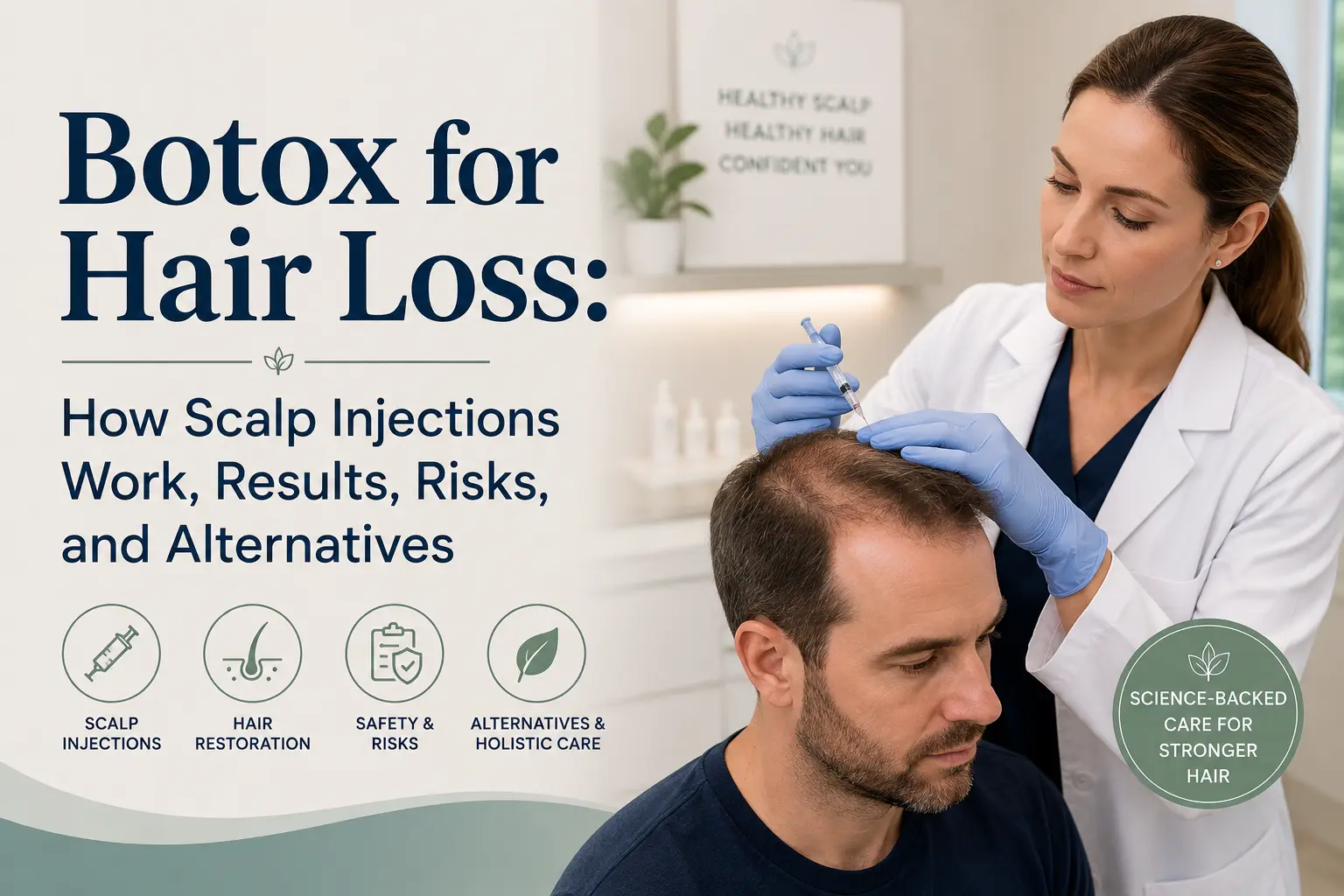
Can Botox help with hair loss?
Botox has been studied as an emerging treatment for androgenetic alopecia, and early research suggests it may improve hair count in some patients. However, the available studies are relatively small, treatment methods vary, and more high-quality research is needed. Botox is not considered a universal or established first-line treatment for hair loss.
What is the best treatment for hair loss?
The best treatment depends on the cause of the hair loss. Pattern hair loss, sudden shedding, autoimmune alopecia, nutrient deficiencies, hormonal changes, and scarring conditions require different approaches. An evaluation can help identify the underlying cause and determine whether topical treatments, prescription medications, procedures, nutritional support, or a combination of options is appropriate.
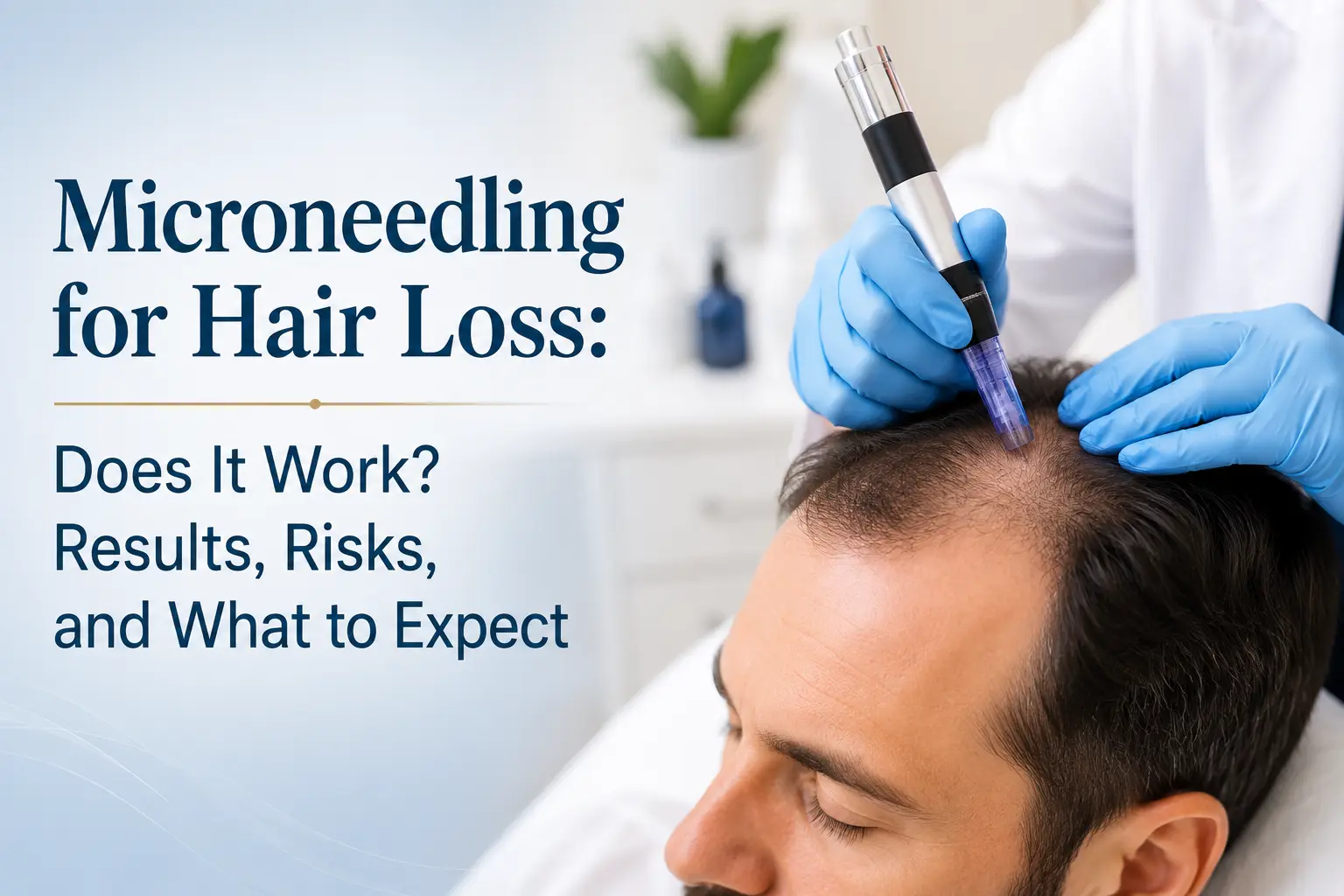
Can microneedling help with hair loss?
Microneedling may help some people with androgenetic alopecia, particularly when it is combined with a treatment such as topical minoxidil. Research has found that combination therapy may improve hair density and hair-shaft diameter more than a single treatment alone. Results depend on the cause of hair loss, and professional treatment reduces the risk of scalp injury, infection, and improper technique.