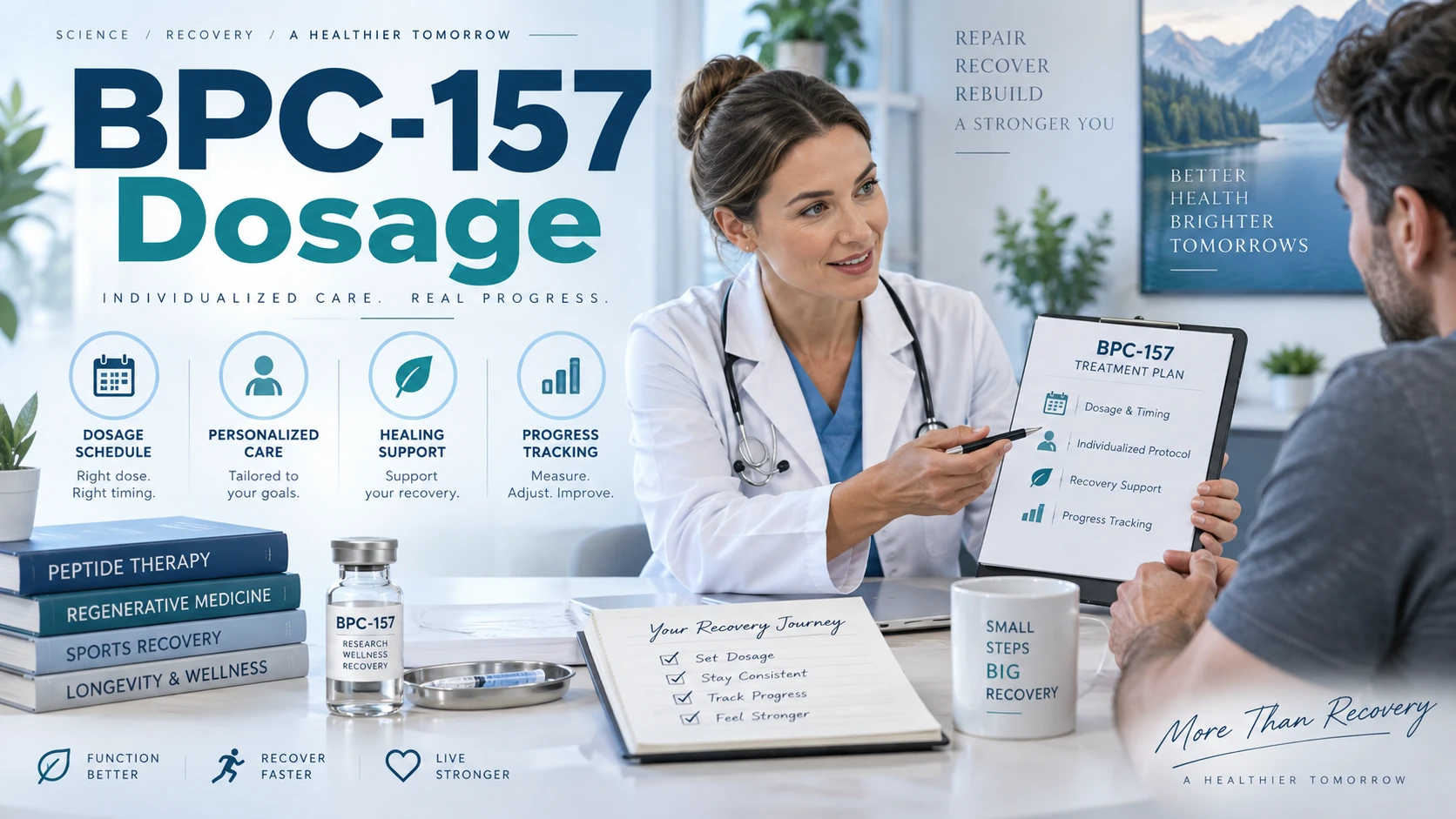
BPC-157 dosage typically falls between 200 and 500 mcg per day, most often injected subcutaneously near the area you’re treating, in cycles that run 4 to 8 weeks.
The right amount depends on your body weight, what you’re treating, and how you respond, which is why providers usually adjust it rather than using one fixed number.
This guide covers real dosage ranges, cycle timing, safety data, and the regulatory and research updates from 2026.
If you’ve spent any time researching BPC-157, you’ve probably noticed that dosage advice online is all over the place.
Some sources recommend 200 mcg a day, others suggest 1,000 mcg, and almost none of them explain why the number changes so much from one source to the next.
That gap matters.
BPC-157 dosage isn’t a single fixed number.
It shifts based on your body weight, what you’re treating, how you’re taking it, and how your body responds over time.
This guide walks through the ranges most commonly cited in research and clinical use, how cycle length works, what the newest 2026 data shows, and why getting the dose right usually means working with someone who can adjust it, not guessing from a forum post.
SEE IF BPC-157 IS RIGHT FOR YOU
What Is BPC-157 and Why Does Dosage Matter So Much?
BPC-157 is a synthetic peptide based on a protein fragment naturally found in human gastric juice, studied mainly for its role in tissue repair, gut healing, and reducing inflammation.
Because it isn’t FDA-approved and human dosing data is still limited, getting the amount, timing, and delivery method right matters more than it would with an approved medication.
Researchers believe BPC-157 works largely by activating collateral blood vessels around damaged tissue, which restores blood flow to areas that would otherwise heal slowly.
That same review notes the peptide is active in a very small microgram-to-nanogram dose range, which is part of why even small changes in dosing can matter.
Most of what’s known about BPC-157 comes from animal studies, though it’s also drawn interest for its wider healing benefits, from joint and muscle recovery to gut lining support.
Because human trials are still catching up to decades of animal research, dosage guidance is built from a mix of those animal models, small human pilot studies, and real-world clinical use rather than a single approved standard.
SEE IF BPC-157 IS RIGHT FOR YOU
What Is the Standard BPC-157 Dosage?
Most commonly cited protocols fall between 200 and 500 mcg per day, with subcutaneous injection near the treatment site being the most studied delivery method.
Oral and sublingual forms typically use similar or slightly higher amounts to account for lower absorption.
These ranges come from a mix of clinical use and extrapolation from animal research, not a single approved human dose.
Subcutaneous Injection Dosage
For subcutaneous injection, the most frequently cited range is 250 to 500 mcg, taken once or twice a day.
Many protocols start at the lower end for the first week or two, then increase if needed and well tolerated.
Injecting close to the site of injury, such as near a strained tendon or sore joint, is a common approach, since the peptide’s effects appear to be strongest locally.
Oral and Sublingual Dosage
Oral capsules and sublingual troches typically use a slightly wider range, often 200 to 500 mcg once or twice daily.
BPC-157’s unusual stability in stomach acid is what makes oral dosing possible in the first place, but oral bioavailability is still considered less predictable than injection, which is why some protocols lean toward the higher end of the range for oral forms.
Weight-Based Dosage Considerations
Body weight is one of the most common adjustments made to a starting dose.
The table below reflects general reference ranges seen across clinical protocols, not a fixed prescription.
| Body weight | Typical daily range (subcutaneous) |
|---|---|
| 120 to 150 lbs | 200 to 300 mcg |
| 150 to 180 lbs | 250 to 400 mcg |
| 180 to 220 lbs | 300 to 500 mcg |
| 220+ lbs | 400 to 500 mcg (upper end, provider-guided) |
These figures are starting points, not targets to reach as quickly as possible.
A provider will typically factor in your weight alongside the specific injury or condition being treated before settling on a dose.
How Long Should a BPC-157 Cycle Last?
Most BPC-157 protocols run for 4 to 8 weeks, followed by a rest period of 2 to 4 weeks before considering another cycle.
Shorter, more acute injuries tend to use the shorter end of that range, while deeper tissue repair, like tendon or ligament healing, often runs closer to 8 weeks.
Continuous daily use without any break isn’t generally recommended, mainly because long-term human safety data doesn’t exist yet to support it.
Building in a rest period also gives you and your provider a natural checkpoint to reassess how much progress you’re actually seeing.
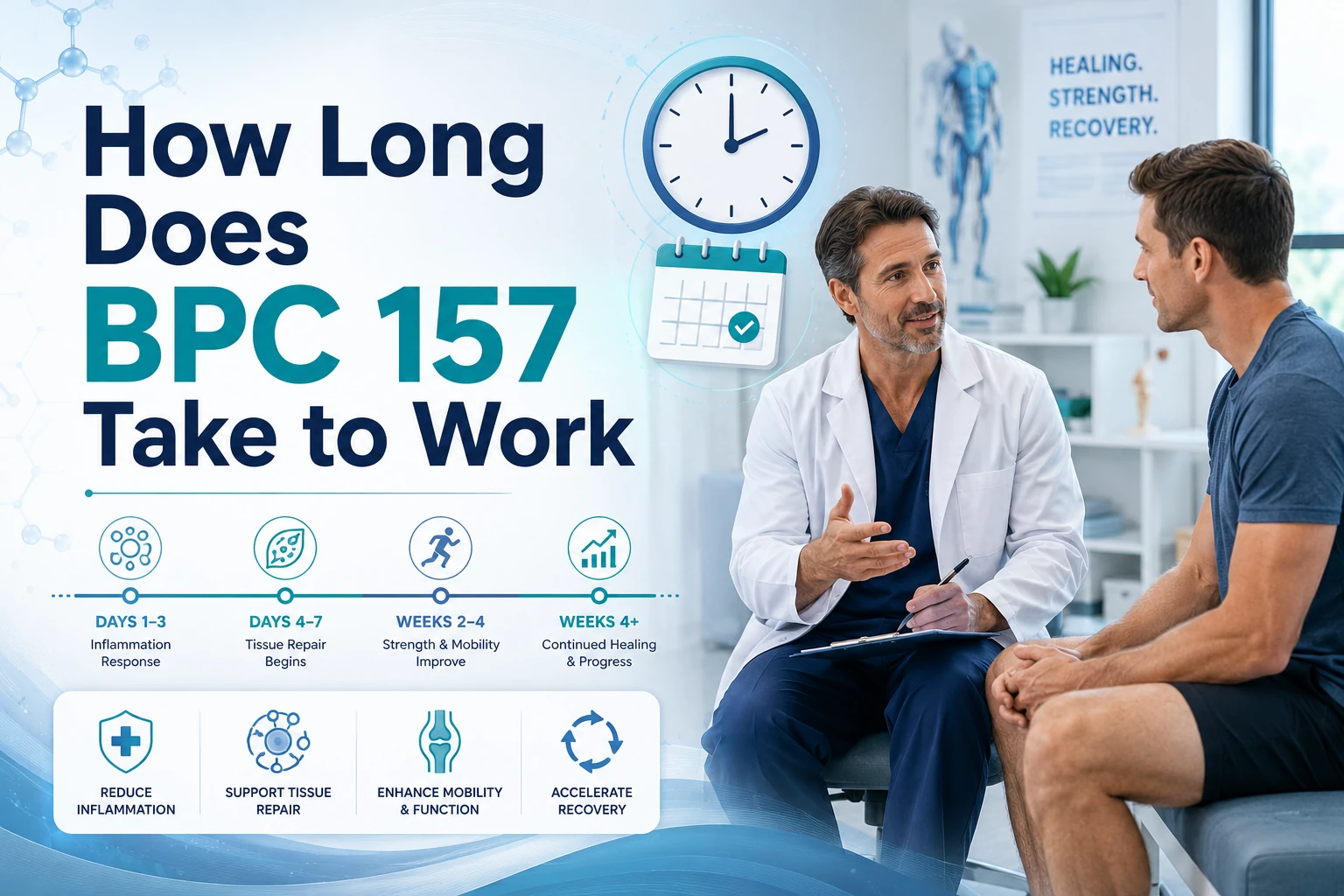
If you’re wondering when you’ll actually notice a difference, the realistic recovery timeline tends to unfold in phases, with early changes like reduced soreness showing up in the first couple of weeks and deeper repair taking longer.
Does BPC-157 Dosage Change Based on What You’re Treating?
Yes.
While the overall 200 to 500 mcg range stays fairly consistent, where you inject, how often, and for how long often shifts depending on whether you’re treating a joint, a muscle, your gut, or something else entirely.
Tendon, Ligament, and Joint Injuries
For tendon, ligament, and joint issues, many protocols use 250 to 500 mcg per day, injected as close to the affected area as reasonably possible, for a 4 to 8 week cycle.
This is also where BPC-157 is most frequently paired with a broader recovery plan, including physical therapy and a structured pain and inflammation management program.
Arthritis-related inflammation tends to respond a bit differently than an acute sports injury, which is why joint-specific BPC-157 protocols often run longer and at a steadier daily dose.
Muscle Strains and Post-Surgical Recovery
Muscle strains and post-surgical recovery often use doses in the 300 to 500 mcg range, sometimes split into two smaller doses across the day rather than one larger dose.
Cycles here tend to run shorter, often 4 to 6 weeks, since muscle tissue generally heals faster than tendons or ligaments.
Gut and Digestive Health
For gut-related use, both oral and subcutaneous forms are common, typically in the 250 to 500 mcg range.
BPC-157’s stability in gastric acid is a big part of why oral dosing gets used here more than it does for joint or muscle applications.
Dosing timing around meals matters for digestive symptoms specifically, which is a big part of what makes gut healing protocols a bit different from a standard injury protocol.
Some people also explore BPC-157 for hair and scalp applications, usually at similar daily doses, though this use case has less research behind it than joint or gut applications.
What Does the Research Actually Say About These Doses in 2026?
The regulatory and research picture around BPC-157 has actually shifted quite a bit in 2026, and most existing guides online haven’t caught up.
In April 2026, the FDA removed BPC-157 from its restricted Category 2 bulk substances list, which had flagged it over impurity concerns.
That doesn’t mean it’s approved.
It hasn’t been added to Category 1, the list of substances cleared for compounding, and a further regulatory review was scheduled for mid-2026 to decide its final status.
On the research side, 2026 also brought something BPC-157 has never had before: a properly controlled human trial.
A double-blind, placebo-controlled Phase 2 study began recruiting 120 participants with acute hamstring strains, following more than 30 years of animal research and over 200 preclinical studies without a single controlled human trial to confirm the dosing extrapolated from them.
Results are expected in 2027.
Until that data comes in, every dosage range in this guide reflects animal research, small pilot studies, and real-world clinical use, not a dose confirmed through large-scale human trials the way an FDA-approved drug would be.
Is BPC-157 Safe at These Doses?
Within the commonly cited 200 to 500 mcg range, reported side effects tend to be mild, most often temporary redness or soreness at the injection site, occasional nausea, or brief lightheadedness.
No serious adverse events have been documented in published human research so far, but that research base is still small.
A 2025 review in Current Reviews in Musculoskeletal Medicine looked at the handful of published human trials, including intra-articular knee injections and intravenous infusions of up to 20 mg, and found no adverse effects reported in any of them.
The same review was careful to note that human data is still exceedingly limited, and that BPC-157 should be treated as investigational until larger trials are completed.
That review also flagged theoretical, unproven concerns worth knowing about, including the possibility that BPC-157’s blood vessel-growing effects could theoretically support tumor growth in someone who already has cancer, even though no such cases have actually been reported.
If you have a personal or family history of cancer, that’s a conversation worth having with a provider before starting.
It’s also worth knowing that BPC-157 is banned at all times under the World Anti-Doping Agency’s prohibited list, along with related peptide growth factors.
Competitive athletes and military service members should factor that in regardless of dose, since even a small amount can trigger a positive test.
Why Sourcing and Quality Control Matter Just as Much as Dosage
Getting the dose right doesn’t help much if what’s in the vial isn’t actually what the label says.
This is one of the biggest gaps in most BPC-157 guides, and it’s arguably more important than the exact mcg number.
An investigation covered by the Center for Science in the Public Interest found that roughly 30 percent of peptide products tested from one supplier were mislabeled, under or over dosed, or contaminated with toxins or foreign bacteria.
Products sold online as “research chemicals not for human consumption” sit almost entirely outside of any quality testing requirement.
Even compounded peptides aren’t automatically risk-free, since compounded drugs have accounted for a disproportionate share of U.S. drug recalls relative to how often they’re actually prescribed.
That said, sourcing through a licensed provider and a compounding pharmacy that tests for purity and potency is a meaningfully safer path than ordering a research chemical off a website with no quality controls at all.
Can You Take BPC-157 With Other Peptides?
Yes, BPC-157 is commonly used alongside other peptides, particularly when the goal is broader recovery rather than treating a single injury.
Doses of BPC-157 itself usually don’t need to change much when it’s stacked, though your provider may space out timing between peptides.
For general recovery and fatigue, it’s often paired with systemic fatigue recovery protocols, and for muscle and tissue building alongside repair, it’s sometimes combined with growth hormone peptides like ipamorelin and CJC-1295.
Combining peptides adds another layer of complexity, which is another reason a provider-guided approach tends to work better than self-directed stacking.
SEE WHICH PEPTIDE THERAPY IS RIGHT FOR YOU
How Gard Wellness Solutions Approaches Peptide Therapy Dosing
At Gard Wellness Solutions, peptide therapy starts with a conversation, not a fixed number pulled from a chart.
We look at your health history, the specific injury or condition you’re dealing with, your weight, and your goals before recommending a starting dose.
Our personalized peptide therapy program is built around ongoing check-ins, so your protocol can be adjusted up, down, or paired with other treatments as you respond, rather than staying locked into whatever dose you started with.
For patients dealing with joint pain or an ongoing injury, peptide therapy is often layered into a broader pain and inflammation management program for a more complete recovery plan.
We also source through licensed compounding channels rather than unregulated online sellers, which matters just as much as the dose itself.
If you’re in West Palm Beach, Lantana, or anywhere else in South Florida, our team can walk you through whether BPC-157 makes sense for what you’re dealing with.
FAQs: BPC-157 Dosage
Is BPC-157 dosage based on body weight?
Yes, in general. Heavier individuals often use doses toward the higher end of the 200 to 500 mcg range, while lighter individuals typically stay closer to the lower end. Weight is only one factor though, since what you’re treating and how you respond matter just as much.
How long does it take to feel BPC-157 working at a standard dose?
Many people notice early changes, like less soreness or stiffness, within the first one to two weeks. Deeper tissue repair, especially for tendons and ligaments, usually takes longer, often four to eight weeks of consistent dosing.
Can you take too much BPC-157?
Taking more than your provider recommends doesn’t appear to speed up healing and may increase the chance of injection site irritation or other mild side effects. Because long-term human safety data is still limited, staying within commonly cited ranges and provider guidance is the safer approach.
Is oral BPC-157 as effective as injectable at the same dose?
BPC-157 is unusually stable in stomach acid, which is why oral versions exist, but most human-relevant research and reported clinical use centers on subcutaneous injection. Oral doses are often set a bit higher, around 200 to 500 mcg, to help account for lower absorption.