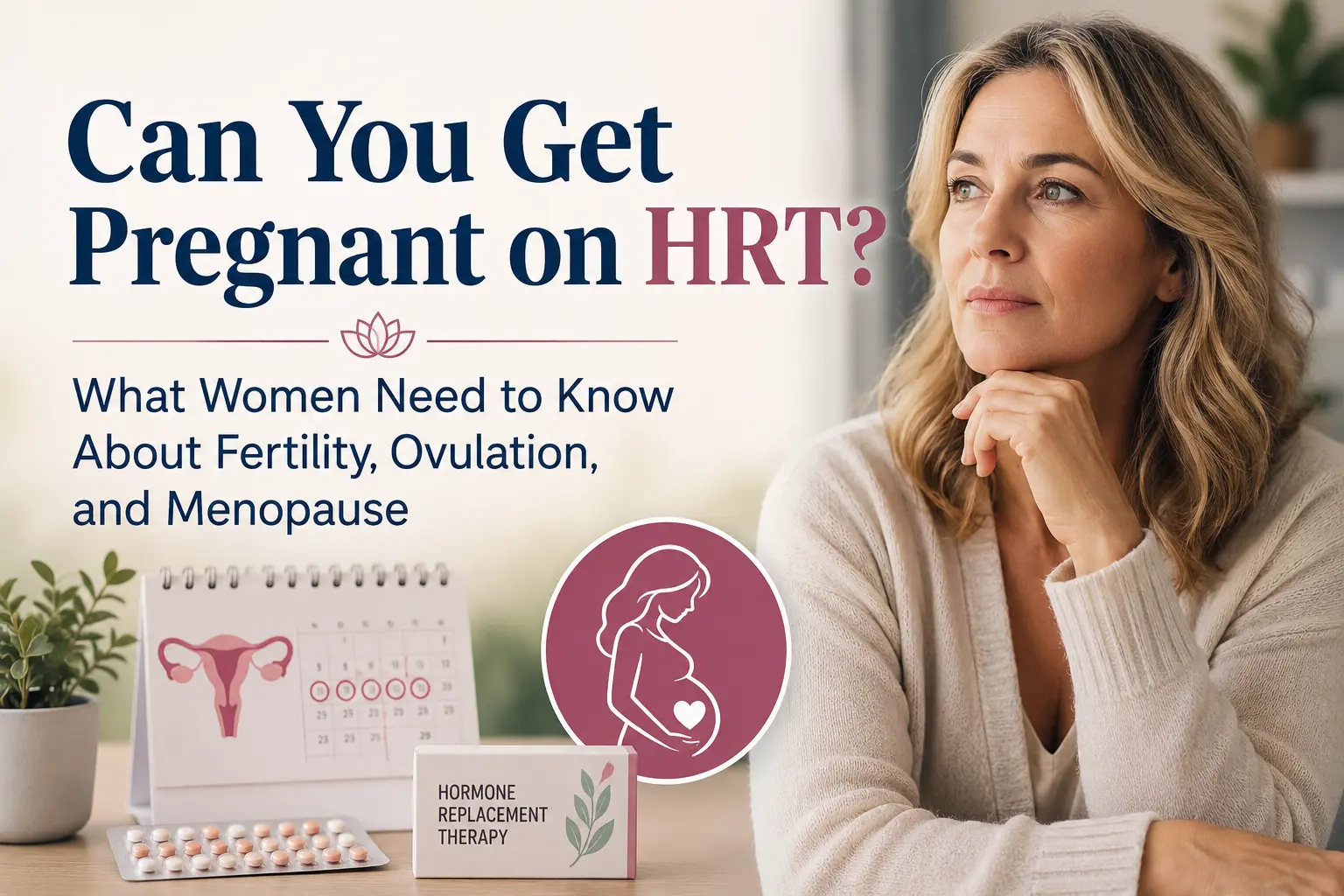
Many women wonder whether pregnancy is still possible after starting hormone replacement therapy (HRT).
It is a common question, especially during perimenopause when periods become irregular and hormone levels begin to change.
The short answer is yes, you can get pregnant on HRT in some situations.
Hormone replacement therapy is not designed to prevent pregnancy.
If you are still ovulating, even occasionally, there is still a chance of conception.
This is why understanding the difference between menopause, perimenopause, fertility, and hormone therapy is so important.
For many women, the confusion comes from the fact that menopause symptoms and pregnancy symptoms can sometimes feel very similar.
Missed periods, mood swings, fatigue, sleep changes, and breast tenderness can happen in both situations.
Knowing how HRT affects your body can help you make informed decisions about your reproductive health, hormone balance, and whether birth control may still be necessary.
What Is Hormone Replacement Therapy (HRT)?
Hormone replacement therapy is a treatment used to help balance declining hormone levels during perimenopause and menopause.
As estrogen and progesterone levels begin to decrease naturally with age, many women experience symptoms that affect their physical and emotional well-being.
HRT helps replace some of these hormones to reduce discomfort and improve quality of life.
Common types of HRT include:
- Estrogen therapy
- Progesterone or progestin therapy
- Combination hormone therapy
- Bioidentical hormone replacement therapy (BHRT)
Women may use HRT to help manage symptoms such as:
- Hot flashes
- Night sweats
- Mood swings
- Brain fog
- Vaginal dryness
- Sleep disturbances
- Fatigue
- Weight changes
- Low libido
Although HRT can help relieve menopause symptoms, it does not automatically stop fertility.
Can You Get Pregnant on HRT?
Yes, you can get pregnant on HRT.
This is most likely to happen during perimenopause, which is the transitional stage leading up to menopause.
During this time, hormone levels fluctuate unpredictably, and ovulation may still occur even if menstrual cycles become irregular.
Many women assume that once periods become inconsistent or menopause symptoms begin, pregnancy is no longer possible.
In reality, fertility declines gradually over time rather than stopping suddenly.
As long as your ovaries are still releasing eggs occasionally, pregnancy can still happen.
This is why healthcare providers often recommend continuing contraception until menopause has officially been confirmed.
Does HRT Prevent Pregnancy?
No, HRT does not prevent pregnancy.
This is one of the biggest misconceptions surrounding hormone replacement therapy.
HRT is not the same thing as hormonal birth control.
Birth control pills and contraceptive devices are specifically designed to stop ovulation, block fertilization, or prevent implantation.
Hormone replacement therapy works differently.
Its main purpose is to help replace hormones that naturally decline during menopause and reduce related symptoms.
Because standard HRT doses do not consistently suppress ovulation, women may still be fertile while taking it.
If you are sexually active and pregnancy is not desired, you may still need contraception while using HRT.
Can I Get Pregnant on HRT During Perimenopause?
Yes, pregnancy is still possible during perimenopause while taking HRT.
Perimenopause can last several years before menopause officially occurs.
During this stage, hormone production becomes less predictable.
Some months you may ovulate normally, while other months you may not ovulate at all.
This inconsistency can make it difficult to know whether you are still fertile.
Common symptoms of perimenopause include:
- Irregular periods
- Hot flashes
- Mood changes
- Anxiety
- Sleep problems
- Weight gain
- Vaginal dryness
- Fatigue
- Brain fog
Even if these symptoms are present, ovulation may still happen occasionally.
Because fertility naturally declines with age, pregnancy may become less likely, but it is not impossible until menopause is complete.
Can You Still Ovulate While on HRT?
In many cases, yes.
Most forms of hormone replacement therapy do not completely stop ovarian function.
Women in perimenopause may continue releasing eggs intermittently while taking HRT.
Ovulation may still occur even if:
- Periods are lighter
- Cycles are irregular
- Menopause symptoms are severe
- Bleeding becomes unpredictable
Some women are surprised to learn they are still ovulating because their menstrual cycles have changed so much.
This is one reason why accidental pregnancy can still happen during perimenopause.
Signs You May Still Be Fertile While on HRT
Many women are unsure whether they can still conceive while taking hormone replacement therapy.
Although fertility naturally decreases over time, there may still be signs that ovulation is occurring.
Possible signs of ongoing fertility include:
- Irregular menstrual cycles
- Spotting
- PMS symptoms
- Breast tenderness
- Ovulation cramping
- Cervical mucus changes
- Occasional periods
However, not everyone experiences obvious ovulation symptoms.
Some women may still release eggs without noticeable physical signs.
What Happens If You Get Pregnant While on HRT?
If you think you may be pregnant while taking HRT, contact your healthcare provider as soon as possible.
Some hormones used in hormone replacement therapy may not be recommended during pregnancy.
Your provider can help determine:
- Whether you are pregnant
- Which medications should be continued or stopped
- Whether hormone adjustments are necessary
It is important not to stop prescription medications suddenly without medical guidance.
Pregnancy symptoms and menopause symptoms can overlap in many ways, which may make things confusing at first.
Both may cause:
- Fatigue
- Mood swings
- Breast tenderness
- Sleep disturbances
- Nausea
- Missed periods
If pregnancy is possible, taking a pregnancy test and scheduling a medical evaluation is important.
Can HRT Help You Get Pregnant?
HRT is not considered a fertility treatment.
While hormone replacement therapy may help address symptoms caused by changing hormone levels, it is not designed to improve fertility or increase the chances of natural conception.
Fertility treatments use different hormone protocols that specifically support ovulation, egg production, or implantation.
Women who are trying to become pregnant should speak with a qualified healthcare provider about fertility-focused treatment options instead of relying on menopause HRT.
Do You Need Birth Control While Taking HRT?
Possibly.
If you are still in perimenopause and do not want to become pregnant, contraception may still be recommended while taking HRT.
The need for birth control depends on several factors, including:
- Your age
- Hormone levels
- Menstrual history
- Whether ovulation may still be occurring
Menopause is generally defined as going 12 consecutive months without a menstrual period.
Until menopause is officially confirmed, pregnancy may still be possible.
Many healthcare providers recommend continuing contraception:
- For at least 2 years after the last period if under age 50
- For at least 1 year after the last period if over age 50
Recommendations may vary depending on your personal health history.
Can You Get Pregnant After Menopause?
Natural pregnancy is no longer possible after menopause because ovulation permanently stops.
However, many women confuse menopause with perimenopause.
Perimenopause is the transition leading up to menopause when hormone levels fluctuate and fertility gradually declines.
During this stage, pregnancy may still occur even if periods become irregular or infrequent.
Once menopause is complete and ovulation has permanently stopped, natural conception is no longer possible.
HRT, Fertility, and Hormone Health
Hormonal changes during perimenopause and menopause can feel overwhelming, especially when symptoms, fertility concerns, and treatment decisions overlap.
Understanding how hormone replacement therapy affects fertility can help women make more informed choices about:
- Pregnancy prevention
- Menopause symptom relief
- Hormone balance
- Reproductive health
- Overall wellness
For women experiencing symptoms like fatigue, low libido, weight gain, hot flashes, sleep problems, or mood changes, personalized hormone care may help provide answers and support.
At Gard Wellness Solutions Lantana, Florida, treatment plans are tailored to each individual’s needs, helping patients better understand their hormones and overall wellness goals.
Final Thoughts: Can You Get Pregnant on HRT
So, can you get pregnant on HRT?
Yes, pregnancy is still possible while taking hormone replacement therapy, particularly during perimenopause.
HRT does not prevent pregnancy, and some women may continue ovulating while using it.
If pregnancy is not desired, it is important to speak with your healthcare provider about whether contraception is still necessary.
Understanding the relationship between HRT, ovulation, fertility, and menopause can help you make confident and informed decisions about your health during this stage of life.
FAQs: Can You Get Pregnant on HRT
Do you still ovulate while on HRT?
Yes, some women still ovulate while taking HRT, especially during perimenopause. Hormone replacement therapy is not intended to consistently stop ovulation the way hormonal birth control does. Even if periods become irregular or lighter, ovulation may still happen occasionally, which means pregnancy can still be possible.
Has anyone ever got pregnant on HRT?
Yes, some women have become pregnant while taking HRT, particularly during perimenopause. Because hormone replacement therapy does not function as birth control, women who are still ovulating may still conceive unexpectedly. This is why healthcare providers may recommend contraception until menopause is officially confirmed.
Does HRT make it hard to get pregnant?
HRT itself is not typically designed to prevent pregnancy, but it also is not considered a fertility treatment. Fertility naturally declines with age during perimenopause and menopause, which is often the main reason conception becomes more difficult. Women trying to conceive should speak with a healthcare provider about treatment options that are specifically focused on fertility support.
Can hormone replacement therapy make you more fertile?
Hormone replacement therapy is not intended to increase fertility. However, balancing hormone levels may help some women feel better overall and improve symptoms related to hormone imbalance. Fertility depends on many factors, including ovulation, egg quality, age, and reproductive health, so HRT should not be viewed as a treatment to improve conception chances.
Should you stop HRT if trying to conceive?
Women who are actively trying to conceive should discuss their medications and hormone therapy with their healthcare provider. Some forms of HRT may not be appropriate during pregnancy or while attempting conception. A provider can help determine whether hormone adjustments or fertility-focused treatments may be more suitable.
Does HRT increase libido?
For some women, HRT may help improve libido by addressing hormone-related symptoms such as vaginal dryness, fatigue, mood changes, and low energy. Hormonal changes during perimenopause and menopause can affect sexual desire, and balancing hormone levels may help improve overall sexual wellness in certain cases.
What are the symptoms of low estrogen?
Low estrogen can cause a wide range of symptoms that often appear during perimenopause and menopause. Common symptoms include hot flashes, night sweats, mood swings, vaginal dryness, sleep problems, brain fog, fatigue, low libido, weight changes, and irregular periods. Some women may also experience joint discomfort, headaches, or changes in skin and hair health.