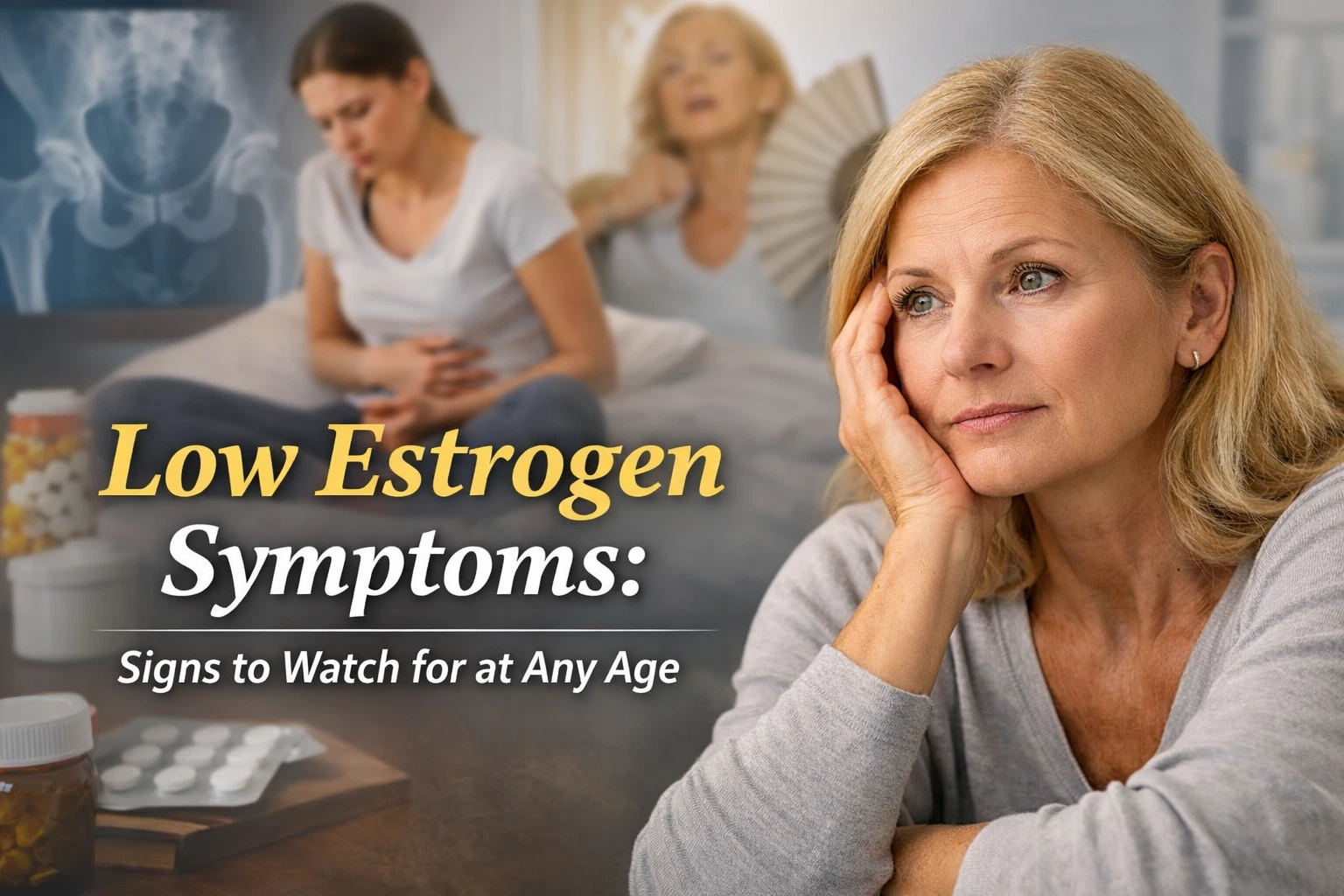
Low estrogen symptoms may include irregular or missed periods, hot flashes, night sweats, vaginal dryness, low libido, mood swings, fatigue, brain fog, sleep problems, headaches, thinning hair, and reduced bone density.
Symptoms can vary depending on age, health history, and the cause of hormonal changes.
Common symptoms of low estrogen include:
- Irregular or missed periods
- Hot flashes and night sweats
- Vaginal dryness or discomfort
- Mood swings, anxiety, or depression
- Brain fog and trouble concentrating
- Fatigue and low energy
- Sleep problems
- Low libido
- Headaches
- Thinning hair and dry skin
Let’s look what causes these low estrogen symptoms and whether hormone therapy may be right for you!
GET HELP WITH YOUR LOW ESTROGEN SYMPTOMS
What Is Low Estrogen?
Estrogen is a key hormone that supports reproductive health, brain function, bone strength, cardiovascular health, and skin elasticity.
While estrogen levels naturally fluctuate throughout life, consistently low levels can affect both physical and emotional well-being.
Low estrogen can occur during perimenopause and menopause, but it can also affect younger women due to stress, excessive exercise, certain medical conditions, medications, or hormonal imbalances.
Early Signs of Low Estrogen
Early signs of low estrogen are often subtle and easy to overlook.
Many women first notice changes in mood, sleep, or energy levels before physical symptoms appear.
Common early symptoms may include:
- Increased fatigue despite adequate rest
- Mood changes or irritability
- Difficulty concentrating
- Trouble sleeping
- Mild vaginal dryness
- Irregular menstrual cycles
Because these symptoms overlap with stress and lifestyle factors, hormone testing is often needed for confirmation.
Symptoms of Low Estrogen by Body System
Let’s look at how low estrogen can affect different parts of your body:
Reproductive Health
Some of the most common symptoms of low estrogen involve menstrual and sexual health.
These may include irregular periods, skipped cycles, vaginal dryness, pain during intercourse, and reduced libido.
When estrogen drops, vaginal tissues become thinner and less elastic, which may lead to dryness, irritation, burning, or discomfort during intimacy.
Brain and Mood
Estrogen helps regulate neurotransmitters like serotonin and dopamine.
Low estrogen symptoms in women often include mood swings, anxiety, depression, and brain fog.
Many women also notice forgetfulness or difficulty concentrating.
Why Low Estrogen Causes Anxiety and Brain Fog
Lower estrogen levels can disrupt neurotransmitter balance and reduce blood flow to the brain.
Sleep disturbances caused by hormone fluctuations may also contribute to cognitive changes.
Sleep and Energy
Low estrogen can interfere with temperature regulation and sleep cycles.
Many women experience insomnia, night sweats, or frequent waking.
Poor sleep often leads to fatigue, low motivation, and reduced daytime energy.
Why Low Estrogen Causes Sleep Problems
Estrogen supports melatonin production and temperature stability during sleep.
When levels drop, night sweats and hormonal shifts may disrupt normal sleep patterns.
Skin and Hair
Estrogen supports collagen production and skin hydration.
Signs of low estrogen in women may include dry skin, reduced elasticity, fine lines, and thinning hair.
Bone and Joint Health
Estrogen plays an important role in preserving bone density.
Over time, low levels may contribute to joint discomfort and increase the risk of osteopenia or osteoporosis.
Signs of Low Estrogen in Women by Age Group
Let’s take a look at different signs of low estrogen across different age groups:
Teens and Young Adults
In younger women, symptoms of low estrogen may include irregular or absent periods, fatigue, acne changes, and difficulty maintaining a healthy weight.
Intense athletic training, restrictive eating, or chronic stress often contribute.
Women in Their 20s and 30s
Hormonal birth control changes, thyroid disorders, postpartum shifts, and chronic stress may lead to fatigue, mood changes, and irregular cycles.
Perimenopause
During perimenopause, estrogen levels fluctuate unpredictably.
Many women notice hot flashes, night sweats, anxiety, heavier or irregular periods, and sleep disturbances.
Menopause
After menopause, estrogen levels remain consistently low.
Vaginal dryness, reduced libido, hot flashes, bone density changes, and skin thinning are especially common.
Low Estrogen Symptoms Without Menopause
Low estrogen does not always mean menopause.
Many younger women experience symptoms due to stress, medical conditions, or lifestyle factors.
Common non-menopause causes include:
- Excessive exercise
- Low body fat
- Chronic stress and elevated cortisol
- Thyroid disorders
- Pituitary or ovarian conditions
- Certain medications
- Postpartum hormonal changes
Understanding the cause helps guide treatment and symptom relief.
What Causes Low Estrogen?
Low estrogen may occur for several reasons, including natural aging and underlying medical factors.
Common causes include:
- Perimenopause or menopause
- Intense physical training
- Eating disorders or significant weight loss
- Chronic illness
- Hormonal disorders
- Certain medications or treatments
Because symptoms overlap with other conditions, a proper evaluation is important.
What Does Low Estrogen Feel Like?
Many women describe low estrogen as feeling “off” or unlike themselves.
You might feel persistently tired, emotionally sensitive, or mentally foggy.
Others notice physical discomfort such as dryness, headaches, or joint aches.
Symptoms often develop gradually and may worsen over time if hormone levels remain low.
How Do You Know If Estrogen Is Low?
If you experience persistent symptoms like irregular cycles, hot flashes, fatigue, mood changes, or vaginal dryness, low estrogen may be a possibility.
Because symptoms overlap with other conditions, hormone testing is usually needed to confirm the cause.
When Should You Get Tested?
You may want to consider hormone testing if you experience:
- Ongoing irregular periods
- Frequent hot flashes or night sweats
- Vaginal dryness or discomfort
- Mood changes or brain fog
- Persistent fatigue without a clear cause
Testing may also be recommended if symptoms interfere with daily life or do not improve with lifestyle changes.
SEE IF HORMONE IMBALANCE IS CAUSING YOUR SYMPTOMS
How Low Estrogen Is Diagnosed
Diagnosis typically begins with a review of symptoms, medical history, and lifestyle factors.
Providers often use blood testing to evaluate estradiol levels and related hormones such as FSH and LH.
Additional testing may help rule out thyroid disorders or other underlying causes.
Can Low Estrogen Be Treated?
Yes.
Treatment depends on the underlying cause, symptom severity, and overall health goals.
Options may include lifestyle changes, nutritional support, stress management, or hormone therapy.
Many women benefit from a personalized approach tailored to their symptoms and life stage.
When to See a Provider
If symptoms are affecting your sleep, mood, relationships, or daily functioning, it may be time to speak with a provider.
Early evaluation can help identify hormone imbalances and prevent complications such as bone loss.
How Gard Wellness Solutions Can Help
At Gard Wellness Solutions, care begins with a comprehensive evaluation of your symptoms, lifestyle, and hormone levels.
Our team focuses on personalized treatment plans designed to support balance, comfort, and long-term wellness.
For women in Florida experiencing symptoms of low estrogen, individualized care can help you feel more like yourself again.
If you’ve been experiencing symptoms that don’t feel normal for you, understanding your hormone health is often the first step toward feeling better and whether hormone therapy is right for you.
FAQs: Low Estrogen Symptoms
Can you increase estrogen naturally?
In some cases, yes. Lifestyle habits like maintaining a healthy weight, managing stress, getting enough sleep, and eating a balanced diet may support hormone balance. Foods containing phytoestrogens (like soy, flaxseed, and legumes) may help slightly, but they typically do not replace medical treatment when estrogen levels are significantly low.
How does low estrogen make you feel?
Low estrogen often causes fatigue, mood swings, brain fog, sleep problems, and low motivation. Physically, some women experience dryness, headaches, joint discomfort, and hot flashes. Many describe feeling unlike themselves emotionally and mentally.
What to do if you have low estrogen?
If you suspect low estrogen, start by tracking symptoms and speaking with a healthcare provider. Testing can confirm hormone levels. Treatment may include lifestyle adjustments, stress management, nutrition changes, or hormone therapy depending on the cause.
What are the symptoms of low estrogen?
Low estrogen symptoms may include irregular periods, hot flashes, vaginal dryness, mood changes, fatigue, and sleep issues.
How do you know if your body is lacking estrogen?
Common signs include irregular cycles, hot flashes, vaginal dryness, fatigue, mood changes, and sleep disturbances. Blood testing is the most reliable way to confirm low estrogen levels.
What age is too late for estrogen?
There is no single cutoff age, but hormone therapy is typically most beneficial when started closer to menopause. Decisions depend on individual health history and risk factors.
How do doctors fix low estrogen?
Treatment depends on the cause and symptoms. Providers may recommend lifestyle changes, nutritional support, or hormone therapy. Care plans are usually individualized to each patient’s needs.
How do I know if I need estrogen?
If you have ongoing symptoms like hot flashes, fatigue, sleep issues, vaginal dryness, or irregular cycles, testing may help determine whether estrogen therapy is appropriate. A healthcare provider can guide this decision.