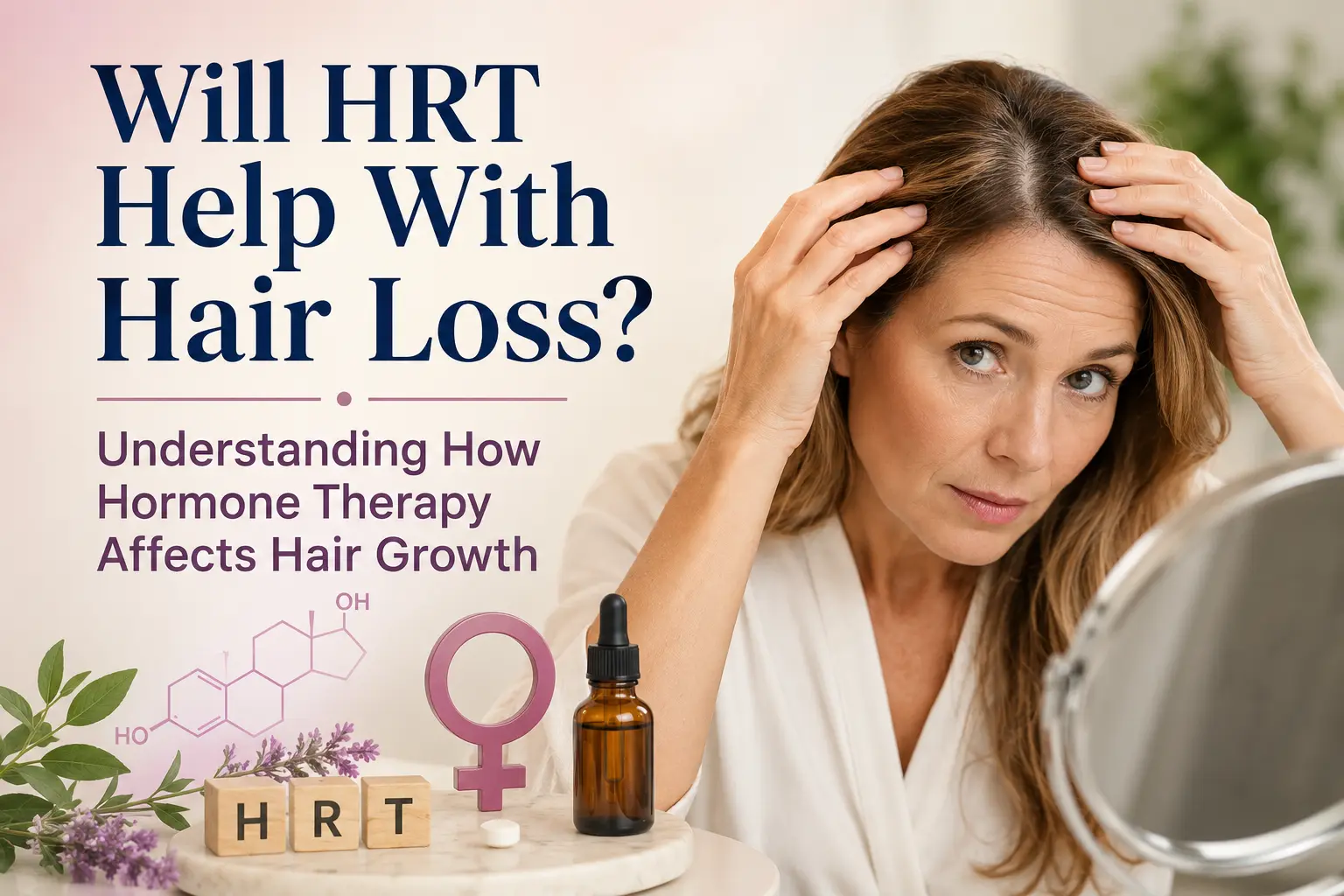
Hair loss is one of the most common yet often overlooked symptoms of perimenopause and menopause.
Many women notice increased shedding, a widening part, reduced hair volume, or thinning around the crown as hormone levels begin to change.
If you’ve been asking, “Will HRT help with hair loss?”
The answer is that it can, but only when hormonal changes are contributing to the problem.
Hormone replacement therapy (HRT) may help reduce menopause-related hair thinning by restoring declining estrogen levels and supporting a healthier hair growth cycle.
However, it is not a cure for every type of hair loss, and the results vary depending on the underlying cause.
Understanding the connection between hormones and hair health can help you determine whether HRT may be an effective part of your treatment plan.
The Short Answer: Does HRT Help Hair Loss?
Yes, HRT may help hair loss in women experiencing hormonal changes related to perimenopause or menopause.
As estrogen and progesterone levels decline, hair follicles can become more susceptible to thinning and shedding.
By restoring hormone levels, HRT may help reduce excessive hair loss, improve hair quality, and support healthier growth patterns.
That said, HRT is not considered a primary hair loss treatment.
It works best when hormonal fluctuations are a major factor contributing to hair thinning.
If hair loss is caused by genetics, nutritional deficiencies, thyroid disorders, stress, or other medical conditions, hormone therapy alone may not provide significant improvement.
Why Hair Loss Happens During Perimenopause and Menopause
Hormones play a significant role in regulating the hair growth cycle.
Every hair follicle goes through a continuous cycle of growth, rest, shedding, and regrowth.
Changes in hormone levels can disrupt this process and affect both the quantity and quality of hair growth.
The Role of Estrogen in Hair Growth
Estrogen helps support healthy hair by extending the anagen phase, which is the active growth stage of the hair cycle.
When estrogen levels are higher, hair typically remains in the growth phase longer.
This contributes to fuller, thicker hair and reduced shedding.
As estrogen declines during perimenopause and menopause, hair follicles may spend less time growing and more time shedding.
This can lead to:
- Increased hair loss
- Thinner hair strands
- Reduced hair density
- Slower hair growth
- More visible scalp
Many women first notice these changes around their hairline, temples, or part line.
The Role of Progesterone
Progesterone may also influence hair health.
Some research suggests progesterone can help reduce the activity of enzymes that convert testosterone into dihydrotestosterone (DHT), a hormone associated with hair follicle miniaturization.
When progesterone levels decline, hair follicles may become more sensitive to androgen-related hair thinning.
Testosterone and DHT
Women naturally produce testosterone, but hormonal shifts during menopause can change the balance between estrogen and androgens.
DHT is a byproduct of testosterone that can shrink hair follicles in genetically susceptible individuals.
Over time, follicles produce finer and shorter hairs until visible thinning occurs.
This process is often responsible for female pattern hair loss, which commonly appears as diffuse thinning across the top of the scalp.
How HRT May Help Improve Hair Growth
HRT does not directly stimulate hair follicles like some hair loss treatments.
Instead, it helps create a hormonal environment that may support healthier hair growth.
Reducing Hormone-Related Shedding
When estrogen levels stabilize, some women experience less hair shedding and improved retention of existing hair.
Because fewer hairs enter the shedding phase at the same time, hair may gradually appear fuller over several months.
Supporting Longer Growth Cycles
Estrogen helps keep follicles in the active growth phase longer.
By restoring estrogen levels, HRT may help promote a healthier growth cycle and slow further thinning.
Improving Overall Hair Quality
Some women report improvements in:
- Hair texture
- Hair strength
- Moisture retention
- Shine
- Manageability
While these improvements may not occur in everyone, they can contribute to the appearance of healthier, fuller hair.
Addressing Other Menopause Symptoms That Affect Hair Health
Poor sleep, chronic stress, fatigue, and mood changes are common during menopause and may indirectly affect hair growth.
By helping improve overall well-being, HRT may also create conditions that support healthier hair over time.
Will HRT Help Every Type of Hair Loss?
No.
The effectiveness of HRT depends on the underlying cause of hair loss.
This is why a thorough evaluation is important before assuming hormones are solely responsible for hair loss.
Can HRT Regrow Lost Hair?
Some women experience modest hair regrowth after starting HRT, but expectations should remain realistic.
If hair follicles are still active and healthy, hormone optimization may improve growing conditions and support new hair production.
However, if follicles have been inactive for extended periods or have undergone significant miniaturization, regrowth may be limited.
In many cases, HRT helps stabilize hair loss and preserve existing hair density rather than completely reversing years of thinning.
Can HRT Cause Hair Loss?
Yes, in some situations HRT can contribute to temporary or ongoing hair shedding.
This possibility often surprises women who begin hormone therapy hoping to improve thinning hair.
Potential reasons include:
- Temporary hormonal fluctuations during treatment initiation
- Individual sensitivity to specific hormone formulations
- Changes in androgen activity
- Underlying genetic hair loss becoming more noticeable
Not all hormone therapies affect hair the same way.
Some women may respond better to certain formulations, dosages, or delivery methods than others.
If hair loss worsens after starting HRT, it is important to speak with your healthcare provider rather than discontinuing treatment on your own.
How Long Does It Take for HRT to Help Hair Loss?
Hair growth is a slow process, which means improvements are rarely immediate.
Most women who notice positive changes report gradual improvements over several months.
Because hair grows approximately half an inch per month, patience is essential when evaluating results.
HRT vs Other Hair Loss Treatments
HRT is only one option for managing thinning hair.
HRT vs Minoxidil
Minoxidil is one of the most commonly recommended treatments for female pattern hair loss.
While HRT addresses hormonal contributors, minoxidil works directly on the follicles to encourage growth.
For women experiencing menopause-related hair thinning, a healthcare provider may recommend both approaches together.
HRT vs PRP Therapy
Platelet-rich plasma (PRP) therapy uses growth factors from a patient’s own blood to stimulate hair follicles.
PRP may be beneficial for some women with thinning hair and can sometimes complement hormone optimization strategies.
HRT vs Hair Supplements
Hair supplements may help if nutritional deficiencies are contributing to hair loss.
Common nutrients associated with hair health include:
- Iron
- Vitamin D
- Zinc
- Protein
- Biotin
However, supplements alone may not address hormone-related hair thinning when declining estrogen levels are a major factor.
Other Causes of Hair Loss Women Should Consider
One of the biggest misconceptions about menopause hair loss is assuming hormones are always the sole cause.
Several other conditions can contribute to thinning hair.
Thyroid Disorders
Both hypothyroidism and hyperthyroidism can disrupt the hair growth cycle and lead to excessive shedding.
Iron Deficiency
Low iron levels are among the most common causes of hair loss in women, especially after periods of heavy menstrual bleeding.
Nutritional Deficiencies
Inadequate intake of protein, vitamin D, zinc, and other nutrients can negatively affect hair growth.
Chronic Stress
Stress-related hair loss, known as telogen effluvium, can occur several months after a significant physical or emotional stressor.
Certain Medications
Some medications may contribute to hair thinning as a side effect.
Genetics
Female pattern hair loss often runs in families and may develop independently of menopause or hormone levels.
Who Is Most Likely to Benefit From HRT for Hair Loss?
Women may be more likely to see improvements from HRT if they:
- Are experiencing perimenopause or menopause
- Notice hair thinning that began around the same time as hormonal symptoms
- Have symptoms such as hot flashes, night sweats, sleep disturbances, or mood changes
- Have ruled out other common causes of hair loss
- Still have active hair follicles capable of producing healthy hair
A comprehensive evaluation can help determine whether hormone therapy may be beneficial.
When to Talk to a Healthcare Provider About Hair Loss
If you’re experiencing significant hair thinning, don’t assume it’s simply a normal part of aging.
Hair loss can be a symptom of hormone changes, but it may also signal underlying health concerns that require treatment.
You should consider speaking with a healthcare provider if you experience:
- Sudden or severe hair shedding
- Noticeable thinning around the crown or part line
- Hair loss alongside menopause symptoms
- Scalp irritation or inflammation
- Hair loss that continues to worsen over time
Identifying the cause early may help improve treatment outcomes and preserve existing hair density.
Final Thoughts: Will HRT Help With Hair Loss?
HRT may help reduce hair loss and improve hair health when hormonal changes related to perimenopause or menopause are contributing to thinning hair.
By restoring estrogen levels and supporting a healthier hair growth cycle, hormone therapy may reduce shedding and help maintain fuller-looking hair over time.
However, HRT is not a universal solution for every type of hair loss.
Factors such as genetics, thyroid disorders, nutritional deficiencies, stress, and certain medical conditions can all contribute to thinning hair and may require additional treatment.
If you’re concerned about hair loss and suspect hormones may be involved, working with an experienced healthcare provider can help identify the underlying cause and determine the most appropriate treatment options for your needs.
FAQs: Will HRT Help With Hair Loss
Will HRT help me regrow hair?
HRT may help some women regrow hair if their hair loss is primarily caused by declining estrogen levels during perimenopause or menopause. More commonly, HRT helps reduce shedding and slow further thinning rather than producing dramatic regrowth. Results depend on factors such as age, genetics, overall health, and how long hair follicles have been affected.
What hormone are you lacking if your hair is falling out?
Several hormone imbalances can contribute to hair loss, but low estrogen is one of the most common causes in women during perimenopause and menopause. Thyroid hormone deficiencies can also lead to thinning hair. In some cases, changes in progesterone, testosterone, or increased sensitivity to DHT may contribute to hair loss as well.
Which HRT is best for hair loss?
There is no single HRT option that is considered best for hair loss. The most effective treatment depends on your symptoms, hormone levels, medical history, and individual response to therapy. Healthcare providers often recommend personalized hormone treatment plans designed to address the underlying hormonal changes contributing to symptoms, including hair thinning.
What does low estrogen hair loss look like?
Low estrogen hair loss often appears as diffuse thinning across the top of the scalp, a widening part line, reduced hair volume, and increased shedding during brushing or washing. Unlike some forms of hair loss that create bald patches, low estrogen hair loss is usually more gradual and spread evenly across the scalp.
How do you fix female hormonal hair loss?
Treating female hormonal hair loss typically involves addressing the underlying hormonal imbalance. This may include hormone replacement therapy, lifestyle modifications, stress management, nutritional support, and hair growth treatments such as minoxidil. Because hormonal hair loss can have multiple contributing factors, a personalized treatment plan is often the most effective approach.