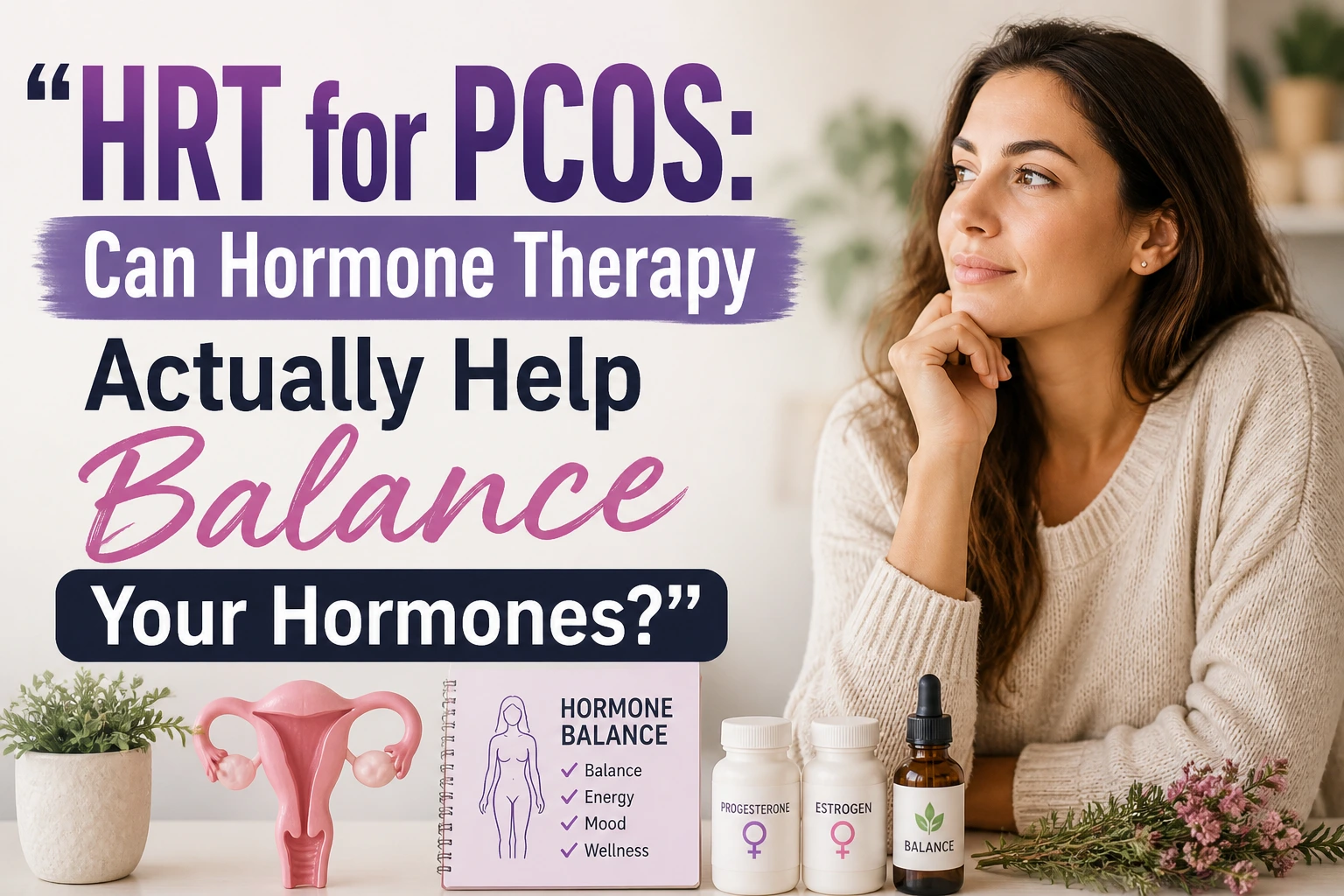
If you’re dealing with PCOS and feel like your hormones are constantly working against you, it’s normal to start looking into different treatment options, including hormone replacement therapy (HRT).
But here’s the reality: HRT isn’t the standard first-line treatment for PCOS.
That said, in the right situation, it can be a powerful tool to help improve symptoms and restore balance.
The key is understanding when it makes sense, what it actually does, and how it fits into the bigger picture of PCOS treatment.
What Is PCOS (and Why Hormones Feel So Off)?
PCOS (polycystic ovary syndrome) is a hormonal and metabolic condition, not just a reproductive one.
Most people with PCOS experience a mix of:
- Elevated androgens (which can lead to acne, hair growth, or hair thinning)
- Irregular or absent ovulation
- Insulin resistance
- Low or inconsistent progesterone levels
This combination is why symptoms can feel unpredictable:
- Irregular or missed periods
- Weight gain or difficulty losing weight
- Fatigue or brain fog
- Mood swings
- Skin and hair changes
Because multiple systems are involved, treatment needs to go deeper than just “balancing hormones.”
What Is HRT?
Hormone replacement therapy (HRT) is designed to restore or optimize hormone levels when your body isn’t producing enough, or when levels are out of balance.
Depending on your needs, HRT may include:
- Estrogen
- Progesterone
- Testosterone (in select cases)
Some providers also use bioidentical hormone therapy (BHRT), which is tailored to your individual hormone levels using testing and customized dosing.
Is HRT a Standard Treatment for PCOS?
No, at least not for most people early on.
Typical first-line treatments for PCOS include:
- Birth control pills to regulate cycles
- Lifestyle changes like nutrition, exercise, and sleep
- Medications that improve insulin sensitivity
However, these don’t always fully address underlying hormone imbalances.
That’s where more targeted hormone support may come in.
When HRT May Help with PCOS
HRT becomes more relevant in specific situations, not as a blanket solution.
1. Low Progesterone from Irregular Ovulation
If you’re not ovulating regularly, your body likely isn’t producing enough progesterone.
This can lead to:
- Irregular or heavy periods
- Sleep issues
- Mood swings
Targeted progesterone therapy may help support more balanced cycles and improve symptoms tied to low progesterone.
2. Perimenopause or Menopause with PCOS
PCOS doesn’t go away with age, but your hormones continue to shift.
As estrogen levels decline, you may notice:
- Increased abdominal weight gain
- Worsening insulin resistance
- New symptoms like hot flashes layered onto existing PCOS symptoms
In this stage, estrogen and progesterone therapy may help stabilize hormone levels and improve overall quality of life.
3. Persistent Symptoms Despite Other Treatments
If you’ve already worked on nutrition, movement, and standard therapies but still feel off, your hormone levels may need a more targeted approach.
This is where individualized hormone therapy may be considered.
Types of Hormone Therapy for PCOS
Not all hormone therapy works the same way.
The right approach depends on your specific hormone patterns.
Progesterone Therapy
Often used when progesterone is low.
May help with:
- More regular cycles
- Better sleep
- Mood stability
Estrogen + Progesterone Therapy
More commonly used during perimenopause or menopause.
May help with:
- Hot flashes
- Mood swings
- Bone health
Testosterone Therapy (Selective Cases)
While PCOS is often linked to higher androgens, some individuals, especially later in life, may experience low testosterone.
In carefully selected cases, this may support:
- Energy levels
- Muscle mass
- Libido
Bioidentical Hormone Therapy (BHRT)
A personalized approach that uses lab testing to tailor hormone levels specifically to your body’s needs.
HRT vs. Birth Control for PCOS
These two are often confused, but they work very differently.
Birth Control:
- Suppresses your natural hormone production
- Regulates cycles artificially
- Helps manage symptoms like acne and irregular periods
HRT:
- Aims to restore or optimize hormone levels
- Focuses on underlying imbalances
- Typically used when there’s a deficiency or later in life
Understanding this difference is important when deciding what approach fits your goals.
What HRT Does NOT Fix
HRT can be helpful, but it’s not a cure.
It does not:
- Cure PCOS
- Reverse insulin resistance on its own
- Replace the need for healthy lifestyle habits
PCOS is a whole-body condition.
Hormone therapy works best when it’s part of a bigger plan that includes:
- Nutrition that supports blood sugar balance
- Regular movement
- Quality sleep
- Stress management
Risks and Safety of HRT for PCOS
HRT can be safe when used appropriately and under proper guidance, but it’s not risk-free.
Potential risks may include:
- Increased risk of blood clots (depending on the individual and type of therapy)
- Hormone-sensitive conditions
- Side effects related to dosing or hormone type
This is why personalization matters.
The goal is to use the lowest effective dose based on your individual needs.
Is HRT Right for You?
You may want to explore hormone therapy if:
- Your symptoms haven’t improved with basic treatments
- You suspect a hormone deficiency (like low progesterone)
- You’re entering perimenopause or menopause
- You want a more targeted approach to hormone balance
The most important step is getting proper testing and working with a provider who understands how PCOS and hormones interact.
A Smarter Way to Approach PCOS Treatment
The most effective approach to PCOS isn’t about choosing one treatment, it’s about understanding your body and layering the right strategies.
For some people, that may include hormone therapy.
For others, it may not.
What matters most is:
- Identifying your specific hormone imbalances
- Addressing metabolic health
- Creating a plan that actually fits your body
Final Thoughts: HRT for PCOS
HRT for PCOS isn’t a one-size-fits-all solution, but in the right context, it can help improve symptoms, support hormone balance, and make day-to-day life feel more manageable.
If you’ve tried standard approaches and still don’t feel like yourself, it may be time to look deeper at your hormones and explore whether a more personalized approach makes sense.
FAQ: HRT for PCOS
Can hormone therapy balance PCOS hormones?
It can help rebalance specific hormones like progesterone or estrogen, but it does not address every aspect of PCOS, particularly insulin resistance.
What is the best hormone therapy for PCOS?
The best option depends on your individual hormone levels and symptoms. Some people benefit from progesterone therapy, while others may need a combination of hormones.
Does HRT help with PCOS weight gain?
HRT may support weight stability by improving hormone balance, but it does not directly cause weight loss. Lifestyle factors still play a major role.
Can you take HRT with PCOS?
Yes, in certain situations. It’s important to have proper hormone testing and guidance to determine if it’s appropriate for you.
Is HRT better than birth control for PCOS?
They serve different purposes. Birth control suppresses hormones to manage symptoms, while HRT focuses on restoring or optimizing hormone levels when there is a deficiency.