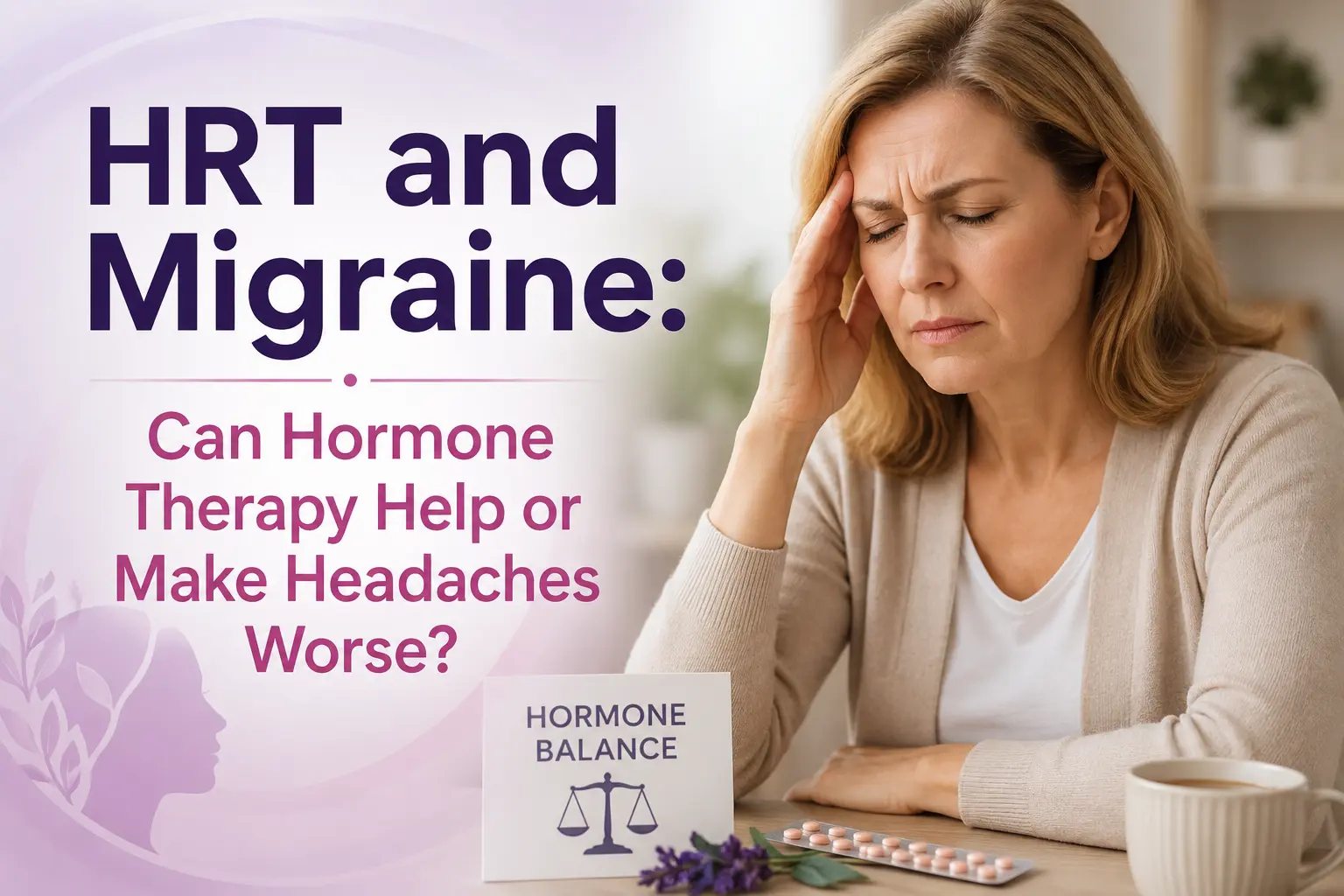
Migraines and hormones are closely connected.
For many women, migraines become more frequent during perimenopause and menopause because estrogen levels begin fluctuating more dramatically.
Some women who rarely had headaches earlier in life suddenly start dealing with migraines in their 40s or 50s, while others notice their existing migraines becoming more severe.
This is one reason many women start researching the connection between HRT and migraine symptoms.
Hormone replacement therapy (HRT) may help stabilize hormone levels, which can reduce migraines for some women.
At the same time, certain types of HRT may actually trigger headaches or make migraines worse in others.
The relationship between migraines and hormone therapy can feel frustrating because the same treatment that helps one woman may worsen symptoms for another.
The key is understanding how hormone fluctuations affect the brain and finding an approach that supports more stable hormone levels.
What Is the Connection Between HRT and Migraines?
Hormones, especially estrogen, influence chemicals in the brain involved in pain regulation.
One of the biggest factors is how estrogen affects serotonin, a neurotransmitter connected to mood, pain sensitivity, and migraine activity.
When estrogen levels rise or fall suddenly, migraines can develop.
This is why migraines are commonly linked to:
- menstrual cycles
- pregnancy
- perimenopause
- menopause
- hormonal medications
Many women experience migraines around their period because estrogen levels drop quickly before menstruation begins.
During perimenopause, hormone levels often become even more unpredictable, which can lead to more frequent hormonal headaches and migraines.
For some women, migraines improve after menopause once hormones stabilize naturally.
Others continue to experience symptoms well beyond menopause.
Why Migraines Often Get Worse During Perimenopause
Perimenopause is one of the most common times for migraines to worsen.
During this stage, estrogen levels can swing dramatically from week to week or even day to day.
These hormone fluctuations can make the nervous system more sensitive to migraine triggers.
Women may notice:
- more frequent headaches
- longer-lasting migraines
- worsening PMS symptoms
- migraines around irregular periods
- increased light sensitivity
- nausea
- dizziness
- sleep-related headaches
Other menopause symptoms can also contribute to migraines, including:
- poor sleep
- hot flashes
- anxiety
- night sweats
- increased stress
This is why many women begin looking into HRT for migraines during perimenopause rather than after menopause is complete.
Can HRT Help Migraines?
Yes, HRT can help migraines in some women, especially when headaches are triggered by hormonal fluctuations.
Hormone replacement therapy is designed to support more stable hormone levels during menopause and perimenopause.
For women whose migraines are linked to estrogen drops, stabilizing hormones may reduce headache frequency and severity.
Some women notice:
- fewer migraines
- reduced headache intensity
- better sleep
- improved mood
- less brain fog
- fewer hot flashes
- improved quality of life
Women who experience:
- menstrual migraines
- migraines during perimenopause
- headaches triggered by hormone changes
- migraines connected to sleep disruption
…may be more likely to benefit from properly managed hormone therapy.
However, there is no universal HRT approach that works for everyone.
Can HRT Make Migraines Worse?
It can.
Some women experience more headaches after starting hormone replacement therapy, especially during the first few months.
This usually happens when:
- hormone levels fluctuate too much
- estrogen doses are too high
- oral estrogen creates hormone spikes
- cyclical HRT causes monthly hormone shifts
Migraines generally respond better to stable hormone levels.
If hormone therapy causes rapid changes in estrogen, headaches may become more frequent or more severe.
Some women notice:
- headaches shortly after starting HRT
- migraines during dosage changes
- worsening aura symptoms
- headaches during “off” days in cyclical treatment
- migraines that appear at the same time each month
This does not always mean HRT should be stopped.
In many cases, adjusting the dosage or switching the delivery method can improve symptoms significantly.
Best Types of HRT for Migraine Sufferers
The type of hormone therapy used can make a major difference for women with migraines.
In general, treatments that provide steadier hormone levels are often better tolerated.
Transdermal Estrogen
Transdermal estrogen includes:
- patches
- gels
- sprays
These methods deliver estrogen through the skin instead of through digestion.
This often creates more consistent hormone levels, which may help reduce migraine triggers.
Many providers prefer transdermal estrogen for women with migraines because it may:
- reduce hormone fluctuations
- avoid large estrogen spikes
- provide steadier symptom relief
- lower clotting risk compared to oral estrogen
For many women, estrogen patches or gels are easier on migraines than pills.
Oral Estrogen
Oral estrogen may worsen migraines in some women because hormone levels can fluctuate more during digestion and metabolism.
Some women tolerate oral HRT well, while others notice:
- more headache days
- increased migraine intensity
- nausea
- worsening aura symptoms
Continuous HRT vs Cyclical HRT
Continuous HRT provides hormones consistently throughout the month.
Cyclical HRT changes hormone levels at certain times to mimic the menstrual cycle.
Women with hormonal migraines often tolerate continuous HRT better because it avoids sudden hormone shifts.
| Type of HRT | Possible Effect on Migraines |
| Estrogen patch | Often better tolerated due to stable hormone delivery |
| Estrogen gel | May reduce migraine-triggering hormone fluctuations |
| Oral estrogen | Can worsen migraines in some women |
| Continuous HRT | Often preferred for hormonal migraines |
| Cyclical HRT | May trigger headaches during hormone changes |
Migraine With Aura and HRT
Migraine with aura requires additional consideration when discussing hormone therapy.
Aura symptoms may include:
- flashing lights
- blind spots
- blurred vision
- tingling sensations
- numbness
- temporary vision changes
Women with migraine with aura may have a slightly higher risk of stroke compared to women without aura.
Because of this, certain forms of HRT may not be recommended depending on overall health history and cardiovascular risk factors.
This does not automatically mean HRT is unsafe.
Many women with aura can still use hormone therapy under proper medical guidance.
In many cases:
- low-dose transdermal estrogen may be preferred
- oral estrogen may be avoided
- blood pressure and cardiovascular health should be monitored
- smoking history and clotting risk should be reviewed carefully
A personalized treatment plan is especially important when migraine aura is involved.
Signs Your HRT May Be Triggering Migraines
Some headaches are temporary while the body adjusts to hormone therapy.
Others may signal that the treatment plan needs adjustment.
Possible signs include:
- migraines beginning after starting HRT
- worsening headaches after increasing dosage
- migraines occurring during certain phases of treatment
- increased aura symptoms
- headaches becoming more intense than before
- headaches appearing after missed doses
Sometimes changing the form of HRT can help.
For example, switching from oral estrogen to a patch may reduce hormone fluctuations.
Other times, lowering the estrogen dosage or changing progesterone types may improve symptoms.
Tips to Reduce Migraines While on HRT
Lifestyle habits still play a major role in migraine management, even when hormones are involved.
These strategies may help reduce migraines while using HRT.
Keep Hormone Levels Consistent
Missing doses or changing medication schedules frequently can increase hormone fluctuations.
Taking HRT consistently may help reduce migraine triggers.
Prioritize Sleep
Poor sleep is one of the biggest migraine triggers during menopause.
Helpful habits may include:
- maintaining a regular sleep schedule
- reducing screen time before bed
- limiting caffeine later in the day
- creating a cooler sleep environment
Stay Hydrated
Dehydration can worsen headaches quickly, especially during hot flashes or night sweats.
Track Migraine Patterns
A migraine journal may help identify:
- food triggers
- stress triggers
- hormone-related patterns
- sleep disruptions
- medication timing issues
Tracking symptoms may also help determine whether HRT is improving or worsening headaches over time.
Reduce Stress
Stress can intensify hormonal migraines.
Activities like walking, stretching, yoga, meditation, and breathing exercises may help reduce migraine frequency.
Watch Common Migraine Triggers
Hormonal migraines may become worse when combined with other triggers such as:
- alcohol
- processed foods
- dehydration
- skipped meals
- excess caffeine
- poor sleep
Reducing overall trigger exposure may help improve migraine control.
When to Talk to a Healthcare Provider
You should speak with a healthcare provider if:
- migraines suddenly worsen
- headaches change in pattern
- aura symptoms appear for the first time
- migraines interfere with daily life
- HRT seems to trigger severe headaches
- over-the-counter medications stop helping
New or severe headaches should never be ignored, especially during menopause or after starting hormone therapy.
How Gard Wellness Solutions Can Help With HRT
At Gard Wellness Solutions, hormone therapy is approached with personalization in mind.
Women experiencing migraines during perimenopause or menopause may benefit from evaluating hormone balance, symptom patterns, lifestyle factors, and overall health history.
Because migraines can be influenced by hormone fluctuations, treatment plans sometimes require adjustments over time to support better symptom management and overall wellness.
Personalized care may include:
- hormone evaluations
- individualized hormone therapy
- symptom monitoring
- lifestyle guidance
- ongoing treatment adjustments
Final Thoughts on HRT and Migraines
HRT and migraines have a complex relationship because hormones directly affect brain chemistry, pain sensitivity, and the nervous system.
For some women, hormone replacement therapy can reduce migraines by stabilizing estrogen levels during menopause.
For others, certain forms of HRT may worsen headaches if hormone fluctuations increase.
Many women find that transdermal estrogen and steady hormone delivery are easier on migraines than treatments that create hormone swings.
If migraines are becoming more frequent during perimenopause or menopause, working with a qualified healthcare provider may help you find a safer and more effective approach to symptom management.
FAQs: HRT and Migraines
Can HRT make migraines worse?
Yes, HRT can make migraines worse in some women, especially if hormone levels fluctuate too much. Oral estrogen and cyclical hormone therapy are more likely to trigger headaches because they can create sudden changes in estrogen levels. Some women notice migraines improving after switching to a lower dose or using transdermal estrogen like patches or gels.
How to get rid of estrogen migraine?
Reducing estrogen migraines often involves stabilizing hormone levels and avoiding sudden hormone fluctuations. Some women benefit from hormone replacement therapy, especially transdermal estrogen patches or gels that provide steadier hormone delivery. Other helpful strategies may include improving sleep, staying hydrated, managing stress, avoiding migraine triggers, and maintaining consistent meal schedules.
What are signs of too much estrogen in HRT?
Signs of too much estrogen during HRT may include headaches, migraines, breast tenderness, bloating, nausea, mood swings, irritability, and heavy spotting or bleeding. Some women also notice worsening migraines when estrogen levels become too high or fluctuate rapidly. Adjusting the dosage or delivery method may help improve symptoms.
What is the best HRT for migraine sufferers?
Many women with migraines tolerate transdermal estrogen best because patches, gels, and sprays provide steadier hormone levels than oral estrogen pills. Continuous HRT is also often preferred over cyclical HRT because it avoids monthly hormone fluctuations that may trigger headaches. The best option varies depending on migraine type, hormone sensitivity, and overall health history.
How long do estrogen migraines last?
Estrogen migraines may last anywhere from a few hours to several days. Hormonal migraines linked to menstrual cycles or menopause often last longer than regular headaches and may be more difficult to treat. Duration can vary depending on hormone levels, stress, sleep quality, hydration, and other migraine triggers.