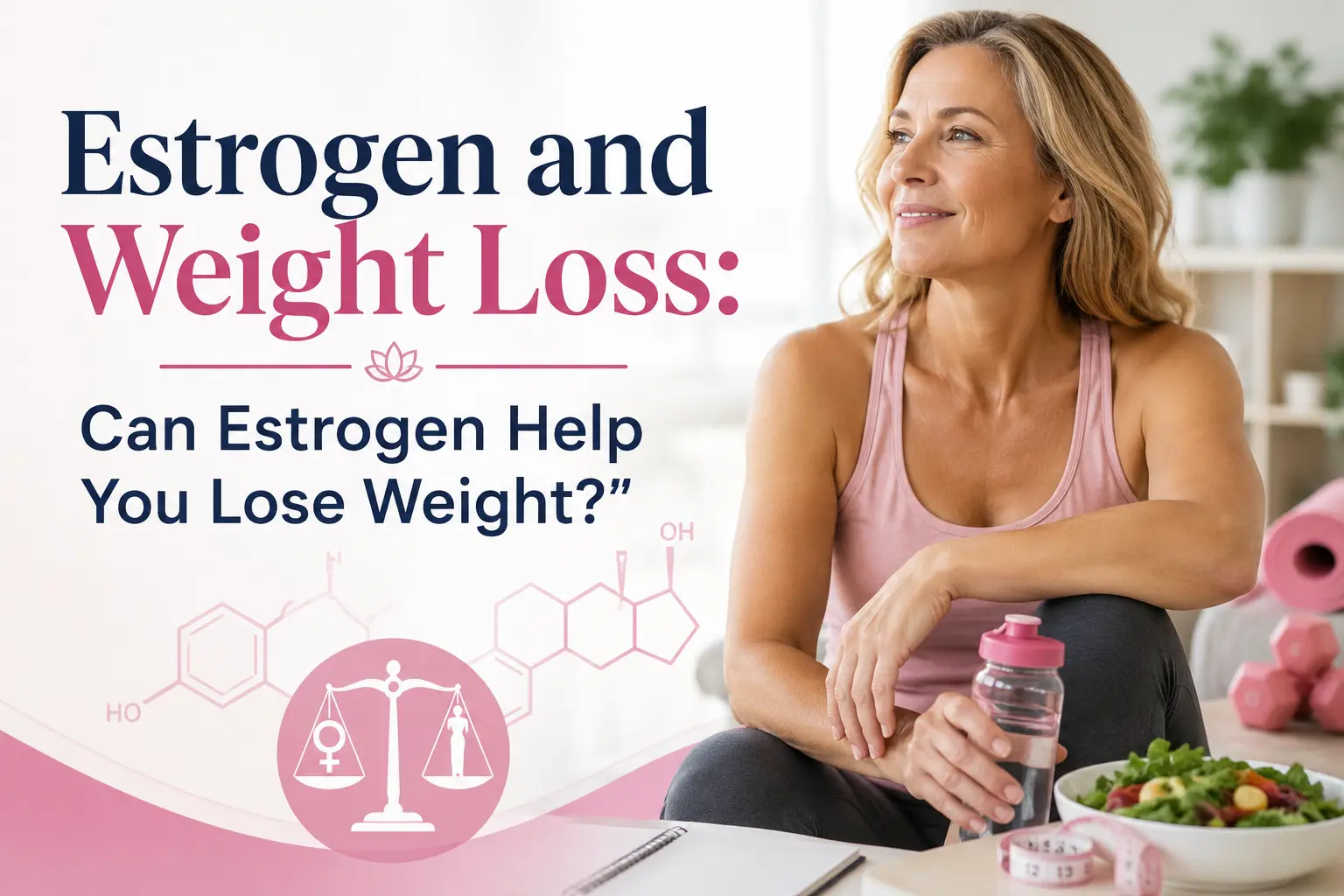
If you’ve noticed weight gain around menopause or you’re struggling to lose weight despite eating well and exercising, you may be wondering whether hormones are part of the problem.
More specifically, many women ask about the connection between estrogen and weight loss.
Estrogen plays a much bigger role in body weight than most people realize.
Beyond its effects on reproductive health, estrogen helps regulate metabolism, fat distribution, appetite, insulin sensitivity, and muscle mass.
When estrogen levels decline, particularly during perimenopause and menopause, many women experience changes in their weight and body composition.
But does estrogen help you lose weight?
Can low estrogen cause weight gain?
And can hormone replacement therapy (HRT) make it easier to reach your weight-loss goals?
Let’s take a closer look at what the research says and how estrogen affects your ability to maintain a healthy weight.
SEE IF HRT CAN HELP YOUR WEIGHT LOSS JOURNEY
Quick Answer: Does Estrogen Help With Weight Loss?
Estrogen is not a weight-loss medication, but healthy estrogen levels support many processes involved in weight management.
Low estrogen can contribute to weight gain, increased belly fat, reduced muscle mass, and a slower metabolism.
For some women, restoring hormone balance may help make weight loss easier when combined with healthy nutrition, exercise, sleep, and lifestyle habits.
What Is Estrogen?
Estrogen is one of the body’s primary sex hormones.
Although both men and women produce estrogen, women have significantly higher levels.
Most people associate estrogen with the menstrual cycle and fertility, but the hormone affects nearly every major system in the body.
Estrogen helps regulate:
- Metabolism
- Blood sugar control
- Fat storage
- Cholesterol levels
- Bone density
- Brain function
- Mood
- Muscle maintenance
- Cardiovascular health
Estrogen levels naturally fluctuate throughout life.
They begin declining during perimenopause and continue decreasing after menopause.
These hormonal changes can have a significant impact on body weight and overall health.
How Estrogen Affects Weight
Weight gain is rarely caused by a single factor.
Instead, it often results from a combination of hormones, aging, lifestyle habits, genetics, sleep quality, and stress levels.
Estrogen influences several of these factors simultaneously.
Estrogen Helps Regulate Metabolism
Metabolism refers to all of the chemical processes that convert food into energy.
Research suggests that estrogen helps maintain metabolic efficiency by influencing how the body uses carbohydrates, fats, and proteins.
When estrogen levels decline, the body may burn fewer calories throughout the day.
This doesn’t mean metabolism suddenly shuts down during menopause, but even a modest decrease in calorie expenditure over time can contribute to gradual weight gain.
Estrogen Supports Insulin Sensitivity
Insulin helps move glucose from the bloodstream into cells where it can be used for energy.
Healthy estrogen levels appear to support insulin sensitivity.
When estrogen declines, some women become more insulin resistant, meaning the body requires more insulin to regulate blood sugar levels.
Insulin resistance is associated with:
- Weight gain
- Increased belly fat
- Sugar cravings
- Difficulty losing weight
- Higher risk of type 2 diabetes
This is one reason weight management often becomes more challenging during menopause.
Estrogen Influences Appetite and Hunger Signals
Hormones don’t just affect how many calories you burn.
They also affect how hungry you feel.
Estrogen interacts with hormones that regulate appetite, including leptin and ghrelin.
When estrogen levels are balanced, hunger and fullness signals may function more effectively.
As estrogen declines, some women notice:
- Increased appetite
- More cravings
- Reduced feelings of fullness
- Greater difficulty controlling portions
These changes can contribute to gradual weight gain over time.
Estrogen Helps Preserve Muscle Mass
Muscle tissue burns more calories than fat tissue, even when you’re at rest.
Estrogen plays a role in maintaining lean muscle mass throughout adulthood.
As estrogen levels decline, age-related muscle loss can accelerate.
This loss of muscle tissue can lower your resting metabolic rate and make weight loss more difficult.
Maintaining muscle through strength training and adequate protein intake becomes increasingly important during perimenopause and menopause.
Can Low Estrogen Cause Weight Gain?
Low estrogen does not automatically cause weight gain, but it can create conditions that make gaining weight easier and losing weight harder.
Women with low estrogen often experience several metabolic changes simultaneously, including:
- Increased fat storage
- Reduced muscle mass
- Lower energy expenditure
- Increased insulin resistance
- Changes in appetite regulation
Together, these factors can make weight management significantly more difficult.
Many women notice these changes during:
- Perimenopause
- Menopause
- Surgical menopause
- After hysterectomy with ovary removal
- Certain hormonal disorders
Symptoms of Low Estrogen
Weight gain is only one possible symptom of estrogen deficiency.
Other common signs include:
- Hot flashes
- Night sweats
- Mood changes
- Fatigue
- Brain fog
- Sleep disturbances
- Vaginal dryness
- Irregular periods
- Reduced libido
- Joint discomfort
- Dry skin
If you’re experiencing several of these symptoms along with unexplained weight changes, hormone testing may help identify an underlying imbalance.
Estrogen and Belly Fat: Why Weight Shifts During Menopause
One of the most frustrating changes many women notice is that weight seems to move toward the abdomen.
Before menopause, women tend to store more fat around the hips and thighs.
After menopause, body fat often shifts toward the midsection.
This change occurs partly because estrogen helps regulate where fat is stored throughout the body.
As estrogen levels decline:
- Abdominal fat increases
- Lean muscle mass decreases
- Overall body composition changes
This is why some women feel like they’re gaining inches around their waist even when the scale hasn’t changed dramatically.
Why Belly Fat Matters
Abdominal fat isn’t only a cosmetic concern.
Higher levels of visceral fat, the fat stored around internal organs, have been associated with increased risks of:
- Heart disease
- High blood pressure
- Type 2 diabetes
- Metabolic syndrome
Maintaining healthy hormone levels and a healthy lifestyle may help reduce these risks.
Estrogen and Weight Gain During Perimenopause
Many women associate hormone-related weight gain with menopause, but changes often begin years earlier during perimenopause.
Perimenopause is the transitional period leading up to menopause.
During this time, estrogen levels can fluctuate significantly before eventually declining.
These fluctuations may contribute to:
- Increased cravings
- Changes in appetite
- Fatigue
- Poor sleep
- Weight gain around the abdomen
- Reduced exercise recovery
Many women notice weight gain during perimenopause even though they haven’t yet reached menopause.
Understanding this connection can help explain why previously successful weight-loss strategies may become less effective.
Does Estrogen Dominance Cause Weight Gain?
Some women wonder whether high estrogen levels can also contribute to weight gain.
The term “estrogen dominance” is often used to describe a situation where estrogen levels are high relative to progesterone levels.
Potential symptoms may include:
- Bloating
- Breast tenderness
- Mood swings
- Heavy periods
- Water retention
While estrogen itself is not always the cause of weight gain, hormone imbalances involving estrogen and progesterone can affect appetite, energy levels, and fluid retention.
A comprehensive hormone evaluation can help determine whether an imbalance may be contributing to symptoms.
Why Menopause Often Leads to Weight Gain
Many women assume menopause directly causes weight gain.
The reality is more complex.
Several factors tend to occur at the same time during midlife.
Hormonal Changes
Declining estrogen can affect metabolism, appetite, and fat storage.
Loss of Muscle Mass
Adults naturally lose muscle as they age.
Since muscle burns more calories than fat, losing muscle can slow metabolism.
Reduced Physical Activity
Busy schedules, joint discomfort, injuries, and fatigue can make it harder to stay active.
Sleep Disruption
Night sweats and insomnia are common during menopause and may contribute to weight gain by disrupting appetite-regulating hormones.
Increased Stress
Chronic stress increases cortisol, a hormone linked to abdominal fat accumulation and increased cravings.
For many women, these factors work together to create a perfect storm for weight gain.
Does Estrogen Increase Metabolism?
Estrogen helps support metabolic health, but it does not dramatically increase metabolism on its own.
Instead, estrogen contributes to several metabolic processes that help the body function efficiently.
Healthy estrogen levels may support:
- Better blood sugar regulation
- Improved insulin sensitivity
- Greater muscle preservation
- Healthier fat distribution
- More stable energy levels
When estrogen levels fall, these processes can become less efficient, making weight loss more challenging.
Can Hormone Replacement Therapy Help With Weight Loss?
One of the most common questions women ask is whether HRT can help them lose weight.
Hormone replacement therapy is not designed as a weight-loss treatment.
However, it may indirectly support weight management in some women.
By restoring hormone levels, HRT may help improve:
- Sleep quality
- Energy levels
- Exercise tolerance
- Muscle maintenance
- Insulin sensitivity
- Menopausal symptoms
When women feel better overall, they may find it easier to stay active, eat well, and maintain healthy habits.
Some studies suggest HRT may help reduce abdominal fat accumulation and support healthier body composition, although results vary from person to person.
What HRT Can and Cannot Do
HRT may help address symptoms related to declining estrogen, but it is important to have realistic expectations.
HRT may:
- Support healthy body composition
- Improve energy levels
- Improve sleep
- Reduce hot flashes and night sweats
- Make exercise feel easier
HRT will not:
- Automatically cause weight loss
- Replace healthy eating habits
- Replace regular exercise
- Eliminate all menopause-related changes
The best results typically occur when hormone optimization is combined with healthy lifestyle strategies.
How to Support Weight Loss During Hormonal Changes
While hormones matter, lifestyle habits remain the foundation of healthy and sustainable weight loss.
Focus on Protein
Protein helps preserve muscle mass and supports satiety.
Many experts recommend consuming approximately 25 to 35 grams of protein per meal to support muscle maintenance and appetite control.
Strength Train Regularly
Resistance training helps maintain and build muscle, which can support metabolism as estrogen levels decline.
Even two to three weekly sessions can make a significant difference.
Prioritize Sleep
Poor sleep can increase hunger hormones and make healthy food choices more difficult.
Most adults should aim for seven to nine hours of sleep each night.
Manage Stress
Chronic stress can increase cortisol levels and contribute to emotional eating and abdominal fat gain.
Helpful strategies include:
- Walking
- Yoga
- Meditation
- Deep breathing
- Spending time outdoors
Stay Physically Active
In addition to strength training, regular walking, cycling, swimming, and other forms of movement can help support calorie expenditure and overall health.
Consider Hormonal Evaluation
If healthy habits aren’t producing the results you expect, hormonal imbalances may be contributing to the problem.
Comprehensive testing can provide valuable insights into what’s happening beneath the surface.
When Should You Get Your Hormones Checked?
Consider speaking with a healthcare provider if you’re experiencing:
- Unexplained weight gain
- Difficulty losing weight
- Hot flashes
- Night sweats
- Fatigue
- Mood swings
- Brain fog
- Sleep problems
- Changes in menstrual cycles
Testing can help identify whether low estrogen or other hormonal imbalances may be affecting your health and weight.
How Gard Wellness Solutions Can Help With HRT
If you’re struggling with weight gain, menopause symptoms, or signs of hormonal imbalance, professional guidance can help you identify the underlying causes.
At Gard Wellness Solutions, we take a personalized approach to hormone therapy and wellness.
Our team evaluates your symptoms, medical history, lifestyle factors, and hormone levels to create an individualized treatment plan.
Whether you’re exploring hormone replacement therapy, medical weight loss support, or a comprehensive wellness program, we can help you better understand the connection between hormones and overall health.
Final Thoughts on Estrogen and Weight Loss
The relationship between estrogen and weight loss is more significant than many people realize.
Estrogen helps regulate metabolism, insulin sensitivity, appetite, muscle maintenance, and fat distribution.
When estrogen levels decline, maintaining a healthy weight can become more challenging.
While estrogen alone is not a weight-loss solution, addressing hormonal imbalances may help support your overall wellness and make it easier to achieve your health goals.
If you’re experiencing unexplained weight gain, increased belly fat, or symptoms of low estrogen, speaking with a qualified healthcare provider may help you identify the best path forward.
FAQs: Estrogen and Weight Loss
Does estrogen help you lose weight?
Estrogen is not a weight-loss treatment, but it supports several functions involved in maintaining a healthy weight. Healthy estrogen levels can help regulate metabolism, insulin sensitivity, appetite, muscle mass, and fat distribution. When estrogen levels decline, losing weight may become more difficult for some women.
Can low estrogen cause weight gain?
Yes, low estrogen can contribute to weight gain. Declining estrogen levels may lead to increased belly fat, reduced muscle mass, slower metabolism, and changes in appetite regulation. These factors can make weight management more challenging, especially during perimenopause and menopause.
Does estrogen increase metabolism?
Estrogen helps support metabolic health by influencing how the body uses energy, regulates blood sugar, and maintains muscle mass. While estrogen does not dramatically boost metabolism, low estrogen levels may contribute to a slower metabolic rate over time.
Why does menopause cause weight gain?
Menopause-related weight gain is often caused by a combination of declining estrogen levels, aging, loss of muscle mass, sleep disturbances, and reduced physical activity. These factors can lead to changes in body composition and make it easier to gain weight, particularly around the abdomen.
Does hormone replacement therapy help with weight loss?
Hormone replacement therapy is not intended as a weight-loss treatment. However, it may help some women manage their weight by improving sleep, energy levels, insulin sensitivity, and other symptoms associated with low estrogen. HRT works best when combined with healthy nutrition and regular exercise.
What are the symptoms of low estrogen?
Common symptoms of low estrogen include hot flashes, night sweats, fatigue, brain fog, mood changes, vaginal dryness, irregular periods, reduced libido, sleep problems, and unexplained weight gain.
Can balancing hormones help you lose weight?
Balancing hormones may help support weight-loss efforts if a hormonal imbalance is contributing to weight gain. Addressing issues such as low estrogen, thyroid dysfunction, or insulin resistance can improve overall health and make healthy lifestyle changes more effective.
At what age does estrogen start to decline?
Estrogen levels typically begin fluctuating and gradually declining during perimenopause, which often starts in a woman’s 40s. Some women may experience hormonal changes earlier, while others may not notice significant changes until closer to menopause.