Peptides are short chains of amino acids that can target specific symptoms like low energy, skin aging, and declining libido, which makes them appealing as women move through perimenopause and menopause.
Some, like GHK-Cu, have real clinical data behind them.
Others, like BPC-157, have far less.
The right fit depends on your symptoms, your hormone levels, and a provider who checks both before recommending anything.
If you have started researching peptides for women, you have probably noticed the same handful of names repeated everywhere: BPC-157, GHK-Cu, CJC-1295, PT-141.
What is harder to find is which ones actually have evidence behind them and which ones matter most once your hormones start shifting in perimenopause or menopause.
This guide breaks down what peptides are, which ones are worth a real conversation with your provider, and where the current research still falls short.
SEE IF PEPTIDE THERAPY IS RIGHT FOR YOU
What Are Peptides and Why Are More Women Trying Them?
Peptides are short chains of amino acids that act like chemical messengers in the body, signaling cells to repair tissue, release hormones, or change how they function.
Women are turning to them because certain peptides target symptoms common in perimenopause and menopause, like low energy, thinning skin, and disrupted sleep, without the broader hormonal shift that comes with traditional hormone therapy.
Interest in peptide therapy has grown fast, partly because peptides promise something hormone therapy does not always offer: a way to target one specific symptom, like joint pain or a sluggish metabolism, without adjusting your overall estrogen or progesterone levels.
But that popularity has outpaced the science in some cases.
One recent analysis found that hype around peptides is outrunning the evidence, especially for compounds with little human trial data.
At the same time, the regulatory picture is shifting.
In 2026, an FDA advisory panel voted to recommend loosening restrictions on several previously restricted peptides, which means access to some compounds may expand even as questions about long-term safety remain open.
What Are the Best Peptides for Women Right Now?
The peptides with the most relevance for women fall into four groups: growth hormone peptides like CJC-1295 and ipamorelin for energy and metabolism, GHK-Cu for skin and hair, BPC-157 for tissue recovery, and PT-141 for low libido.
Each works through a different mechanism, and the evidence behind them varies widely.
- Hormone balance and energy: CJC-1295, ipamorelin, and sermorelin
- Skin, hair, and anti-aging: GHK-Cu
- Recovery and inflammation: BPC-157
- Libido and sexual health: PT-141 (bremelanotide)
Peptides for Hormone Balance and Energy
Growth hormone naturally declines with age, and that drop tends to speed up once women reach their 40s, which is one reason fatigue and a slower metabolism show up around the same time as other perimenopause symptoms.
Peptides like ipamorelin and CJC-1295 work by prompting the pituitary gland to release more of its own growth hormone, rather than introducing synthetic hormone directly.
Sermorelin works through a similar pathway, and choosing between sermorelin and ipamorelin usually comes down to how quickly you want to see results and how your body responds to each.
For women dealing with persistent low energy that does not improve with sleep or diet changes, these peptides are often discussed alongside other causes of chronic fatigue, since fatigue can stem from several overlapping hormone issues at once.
Peptides for Skin, Hair, and Anti-Aging
GHK-Cu is one of the better studied peptides on this list.
A facial cream containing GHK-Cu, tested on 71 women over 12 weeks, produced measurable increases in skin density and thickness while reducing fine lines.
The peptide occurs naturally in the body, but plasma levels drop from around 200 nanograms per milliliter at age 20 to roughly 80 by age 60, which lines up with when skin and hair changes tend to become more noticeable.
Because GHK-Cu also supports tissue repair, some providers pair it with treatments aimed at hair growth in women experiencing thinning related to hormone shifts.
Peptides for Recovery and Inflammation
BPC-157 gets more attention than almost any other peptide, largely for its reputation around joint and tendon healing.
The preclinical animal data is genuinely promising, but human trial data remains thin: one knee pain report included just 16 patients, and a pilot safety trial involved only two healthy adults.
That gap between animal research and human evidence is part of why BPC-157 continues to draw regulatory scrutiny despite its popularity.
None of this means BPC-157 lacks potential benefits; it means the decision to try it should involve a real conversation about what has actually been studied versus what is assumed to carry over from animal research.
Peptides for Libido and Sexual Health
Low libido is one of the most common and least discussed symptoms of perimenopause and menopause.
PT-141, known by its brand name Vyleesi, is the only peptide with FDA approval for a sexual desire indication in women.
In the trials that led to its approval, about 25% of women taking the drug saw a meaningful increase in sexual desire scores, compared to 17% on placebo, a modest but real difference.
Hormone shifts play a role here too.
Since estrogen and testosterone both affect desire, some women find that addressing hormone levels through treatments that increase libido resolves the issue before a peptide is even necessary.
Can Peptides Help With Menopause Symptoms?
Some peptides show real promise for menopause symptoms.
Compounds that target the brain pathway behind hot flashes have reduced them by as much as 90% in early trials, and oral collagen peptides have improved vaginal dryness when combined with other treatments.
But most peptide research in menopause is still early, and results vary by symptom.
Hot Flashes and Night Sweats
Hot flashes and night sweats come from a specific group of neurons in the brain called KNDy neurons, which become overactive when estrogen drops.
Research into blocking this pathway has produced some of the strongest results in the menopause peptide space.
One early trial found a 93% reduction in hot flash frequency compared to a 54% drop with placebo, a signal strong enough that the FDA approved the first drug targeting this pathway for vasomotor symptoms in 2023.
This research is a useful example of how peptides for menopause can work when the target is specific and well understood, rather than a general anti-aging claim.
Vaginal Dryness and Genitourinary Symptoms
Vaginal dryness and discomfort, often grouped under genitourinary syndrome of menopause, respond to more than just topical estrogen.
In a small pilot study of 20 postmenopausal women, those who combined radiofrequency treatment with oral collagen peptides kept improving for months, while the group receiving radiofrequency alone saw their symptom scores worsen again after the initial treatment wore off.
These symptoms often overlap with other signs of declining estrogen, so it is worth getting a full picture of your low estrogen symptoms rather than treating vaginal dryness in isolation.
Low Energy and Metabolism in Perimenopause
Fatigue, joint aches, and a slower metabolism tend to show up together in perimenopause, and it is not always clear which symptom to address first.
Growth hormone peptides are sometimes used alongside treatments for perimenopause body aches, since both issues can stem from the same underlying hormone decline.
Weight changes during this stage are common enough that they deserve their own conversation.
If metabolism is your main concern, it is worth looking separately at how peptides for weight loss work, since the peptides used for fat loss are usually different from the ones used for energy or skin.
How Do You Know Which Peptide Is Right for You?
There is not a single peptide that works the same way for every woman, because the right choice depends on what is actually driving your symptoms.
A provider who takes this seriously will usually start with bloodwork, not a product catalog.
Checking hormone levels, thyroid function, and other relevant markers first helps rule out whether a symptom like fatigue or low libido has a more direct fix before adding a peptide into the mix.
From there, candidacy comes down to your specific goals, your health history, and how your body has responded to other treatments.
Someone managing joint pain after an injury needs a different conversation than someone trying to manage hot flashes or vaginal dryness.
That is also why starting one peptide at a time and tracking how you respond over four to six weeks tends to work better than combining several compounds right away.
How Gard Wellness Solutions Approaches Peptide Therapy for Women
At Gard Wellness Solutions, peptide therapy is never treated as a standalone product.
Women who come to us asking about peptides usually have a cluster of symptoms, not just one, so our providers start by looking at the full picture: hormone levels, metabolic markers, sleep, and stress.
That is the same approach we use in our broader health optimization program, which treats peptide therapy as one tool among several rather than the default answer.
For many women in perimenopause or menopause, peptides end up working best alongside other care, not instead of it.
If labs point to a hormone imbalance as the main driver of your symptoms, we will talk through that directly rather than reaching for a peptide to mask it.
Our goal is to figure out what is actually causing the fatigue, the skin changes, or the low libido, then build a plan around that answer.
Peptides vs. Hormone Replacement Therapy: Do You Need Both?
Peptides and hormone replacement therapy work differently and often address different symptoms.
HRT replaces declining estrogen and progesterone directly, while peptides stimulate the body’s own hormone production or target specific tissues.
Many women use both: HRT to correct the underlying hormone decline, and targeted peptides for symptoms that persist afterward.
If your main symptoms are hot flashes, mood changes, or vaginal dryness tied directly to dropping estrogen, hormone replacement therapy usually addresses the root cause more directly than a peptide would.
Peptides tend to make more sense for symptoms that persist even after hormone levels are corrected, like stubborn joint pain, skin changes, or low energy that does not fully resolve on HRT alone.
For some women, especially those further past menopause, combining both approaches makes sense.
Growth hormone naturally continues to decline even after estrogen replacement stabilizes other symptoms, which is one reason peptides and HRT are often discussed together rather than as competing options.
Getting Started With Peptide Therapy Safely
If you are considering peptide therapy, the first real step is not choosing a peptide, it is getting evaluated.
That usually means bloodwork to check hormone and metabolic markers, a conversation about your symptoms and goals, and a plan that accounts for anything else you are taking.
Results are not instant.
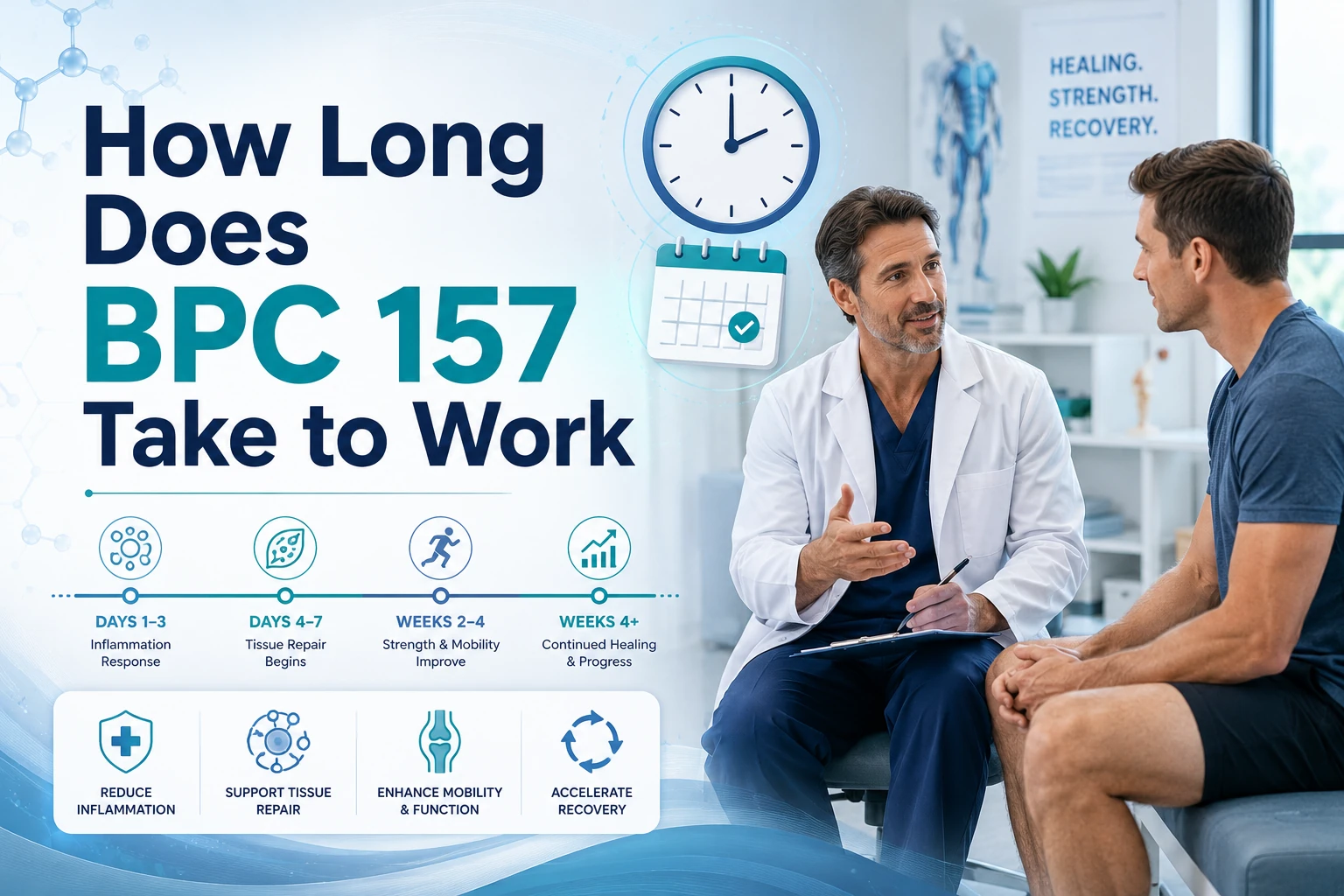
Most women notice initial changes within a few weeks, though how long it takes for peptides to work depends on the specific compound and what you are using it for.
Skin and energy changes tend to show up faster than changes in body composition or joint recovery.
Buying peptides online without a prescription skips every one of these steps, which is part of why the FDA’s concerns about sourcing and purity matter so much.
A legitimate prescription means a provider is tracking your response and watching for side effects, not just shipping a vial.
Peptides can be a genuinely useful part of managing symptoms that show up in perimenopause and menopause, but they work best as part of a plan built around your actual labs and symptoms, not a generic list of the “best” compounds.
If you are in the West Palm Beach or Palm Beach County area and want to figure out whether peptide therapy, hormone replacement, or some combination makes sense for you, Gard Wellness Solutions can walk through your options with a real evaluation first.
FAQs: Peptides for Women
What are the best peptides for women over 40?
The peptides most relevant for women over 40 depend on the symptom. CJC-1295, ipamorelin, and sermorelin target energy and metabolism by boosting growth hormone. GHK-Cu is the best studied option for skin and hair. BPC-157 is used for joint and tissue recovery, though with less human data. PT-141 is the only one with FDA approval specifically for low sexual desire in women.
Can peptides really help with menopause symptoms like hot flashes?
Some can. Peptides and related compounds that target the brain pathway behind hot flashes have shown reductions of up to 90 percent in early trials, which is why the FDA approved the first drug using this mechanism in 2023. Other menopause symptoms, like vaginal dryness, have improved with oral collagen peptides in small studies, though more research is still needed.
Are peptides safe for women to use?
Safety varies by peptide. Topical compounds like GHK-Cu have a long safety record, while others, like BPC-157 and CJC-1295, carry FDA warnings about limited human safety data and immunogenicity risks. Getting a peptide through a licensed provider after bloodwork is safer than buying it online without a prescription.
How long does it take to see results from peptide therapy?
Most women notice early changes within a few weeks, though the timeline depends on the peptide and the goal. Skin and energy improvements tend to show up faster than changes related to joint recovery or body composition, which can take a few months of consistent use.
Do I need a prescription for peptide therapy?
Yes. Peptides used therapeutically through a medical provider require bloodwork and a prescription from a licensed provider, often filled through a compounding pharmacy. Peptides sold online without a prescription skip the evaluation that helps catch interactions or contraindications before you start.
Can you combine peptides with hormone replacement therapy?
Often, yes. Hormone replacement therapy addresses declining estrogen and progesterone directly, while peptides target specific symptoms like energy, skin changes, or joint pain that may persist even after hormones are balanced. Many women use both together as part of one overall treatment plan.