Peptides like BPC-157, TB-500, and collagen peptides are getting a lot of attention for joint pain, and some early research looks promising.
Most of the strongest evidence still comes from animal studies or small human trials, and a few of these peptides are still waiting on a final FDA decision.
If you’re thinking about peptide therapy for joint pain, it helps to know what each peptide actually does, what the evidence shows, and why medical supervision matters.
If your knees ache after a short walk or your fingers feel stiff before you’ve even had coffee, you already know how much joint pain can shrink a day.
Joint pain is incredibly common, and it tends to get more common with age.
Nearly one in three adults with arthritis report severe joint pain, and millions more deal with achy, inflamed joints that have never been formally diagnosed.
That’s one reason peptides for joint pain have become such a popular topic in wellness and sports medicine circles.
These small protein fragments are being studied for their ability to calm inflammation, support tissue repair, and in some cases ease the kind of nagging joint pain that doesn’t respond well to rest or over the counter pain relievers.
This guide breaks down which peptides are actually used for joint pain, what the research says about each one, and what you need to know about safety before trying peptide therapy.
SEE IF PEPTIDE THERAPY IS RIGHT FOR YOU
What Are Peptides and How Could They Help Joint Pain?
Peptides are short chains of amino acids that act like molecular messengers, telling cells how to behave.
For joint pain, researchers are interested in peptides that may calm inflammation, support new blood vessel growth, or help the body make more collagen, the protein that keeps cartilage and connective tissue intact.
Your joints take a beating over time.
Cartilage wears down, tendons get overused, and inflammation builds up in response to injury or just normal wear and tear.
Treatment options like NSAIDs, physical therapy, and cortisone injections help a lot of people, but they don’t work for everyone and they don’t repair damaged tissue.
Peptide therapy is part of a broader shift toward regenerative and preventive medicine.
Instead of just masking pain, the goal is to support the body’s own repair processes.
Researchers believe certain peptides can help repair cells move to the exact spot where tissue is damaged, which is a very different mechanism than a typical pain reliever.
Osteoarthritis alone affects an estimated 32.5 million adults in the United States, and up to 30 percent of adults over 45 have it in their knees.
With numbers like that, it’s no surprise people are looking for new options.
Which Peptides Are Used for Joint Pain?
A handful of peptides show up again and again in joint pain research and clinical use.
Here’s what each one actually does.
BPC-157
BPC-157 is a synthetic peptide based on a protective protein found naturally in the stomach.
It’s the most talked about peptide for joint pain, and for good reason.
Animal research consistently shows it can encourage fibroblast migration and new blood vessel growth at injury sites, both of which matter for healing tendons, ligaments, and joint tissue.
BPC-157’s healing effects aren’t limited to joints.
It’s also been studied for its broader healing profile, including gut repair and general recovery from injury.
The catch is that almost all of this evidence comes from animal studies.
Human research is much thinner, which is worth understanding before you decide whether BPC-157 is right for you.
TB-500
TB-500 is a synthetic version of a naturally occurring protein fragment called thymosin beta-4.
Like BPC-157, it’s believed to help repair cells travel to damaged tissue, and researchers think it works partly by lowering inflammatory signals like TNF-alpha, IL-1beta, and IL-6 that drive joint pain and cartilage breakdown.
TB-500’s regulatory path has been bumpy.
The FDA pulled it from its routine compounding list earlier in 2026, then an advisory committee voted in July 2026 to recommend adding it back alongside BPC-157 and several other peptides.
That recommendation still needs final approval, so TB-500’s legal status for compounding remains unsettled as of this writing.
Collagen Peptides
Collagen peptides work differently than BPC-157 and TB-500.
Instead of an injection, they’re usually taken as an oral supplement, and they have far more human research behind them.
A 2025 randomized, double-blind trial tested this directly.
Researchers gave 80 adults with early knee osteoarthritis either a placebo or 3,000 milligrams of low molecular weight collagen peptides every day for six months.
The collagen group saw a significant drop in pain scores compared to placebo.
Another 2025 trial found that combining two forms of collagen improved both pain and cartilage breakdown markers in people with knee osteoarthritis.
GHK-Cu (Copper Peptide)
GHK-Cu, also called copper peptide, is best known for skin care, but it’s starting to get attention for joint inflammation too.
It appears to work by calming inflammatory cytokines like TNF-alpha and IL-6 while also encouraging collagen production in connective tissue.
The honest caveat here is that most published GHK-Cu research focuses on skin and wound healing, not joints specifically.
It’s a promising mechanism, but the joint-specific evidence is still catching up.
Can Peptides Help With Arthritis Specifically?
Early research suggests some peptides, particularly BPC-157 and collagen peptides, may ease pain and inflammation linked to arthritis, especially osteoarthritis.
The evidence is encouraging but still limited, and autoimmune forms of arthritis need a more cautious approach than general wear and tear joint pain.
Arthritis isn’t one condition.
Osteoarthritis comes from mechanical wear and tear on cartilage, while rheumatoid arthritis is an autoimmune disease where the immune system attacks joint tissue.
If you’re specifically looking into peptides for arthritis, most of today’s research focuses on osteoarthritis rather than autoimmune types like rheumatoid arthritis.
One small, retrospective review of knee pain patients who received BPC-157 injections at a single clinic found that most reported pain relief when contacted by phone afterward.
That’s a useful early signal, but without a control group or blinding, it doesn’t prove BPC-157 caused the improvement.
If arthritis is part of your joint pain picture, BPC-157’s research specifically in arthritic joints goes into more depth on what the evidence shows and how it compares to standard treatments like cortisone.
What Does the Current Research Actually Show?
Stepping back from any one peptide, a clear pattern shows up across the research.
Animal studies on BPC-157 and TB-500 are consistent and encouraging, but neither peptide has been through a published human randomized controlled trial for joint pain.
Collagen peptides are the exception.
They have the most human evidence of any peptide on this list, including a meta-analysis of multiple randomized trials that found a measurable reduction in knee osteoarthritis pain compared to placebo.
None of this means peptides are a guaranteed fix.
It means some peptides have real, growing scientific support, especially for osteoarthritis, while others are still mostly a promising theory backed by lab and animal data.
Knowing the difference matters when you’re deciding what to try.
Are Peptides for Joint Pain Safe and Legal?
Reported side effects for peptides like BPC-157 and TB-500 tend to be mild, including injection site irritation, nausea, and fatigue, but long term human safety data is still limited.
None of these peptides are FDA-approved specifically for joint pain, and their legal status for compounding is still being finalized, so working with a licensed provider matters.
In July 2026, an FDA advisory committee recommended BPC-157, TB-500, and several other peptides for the agency’s compounding bulks list.
That’s a meaningful step, but it’s only a recommendation.
The decision still needs final sign-off from federal regulators before pharmacies can compound these peptides on a routine basis.
Being added to a compounding list also doesn’t mean a peptide is an FDA-approved drug.
It means licensed pharmacies may be allowed to prepare it under medical supervision, which is very different from buying a peptide online without a prescription or any oversight.
This is exactly why working with a licensed medical provider matters so much here.
A provider can check your health history, source peptides from a legitimate pharmacy, and watch for side effects, none of which happens if you order peptides from an unregulated website.
How Is Peptide Therapy for Joint Pain Administered?
Peptides like BPC-157 and TB-500 are typically given as small injections, either under the skin or directly into the joint, with dosing and length of treatment set by a provider based on your specific situation.
Collagen peptides, by contrast, are usually taken daily as an oral supplement.
Because BPC-157 and TB-500 aren’t standardized drugs, dosing protocols vary between providers and depend on factors like the severity of your joint pain and how your body responds.
This isn’t something to figure out on your own.
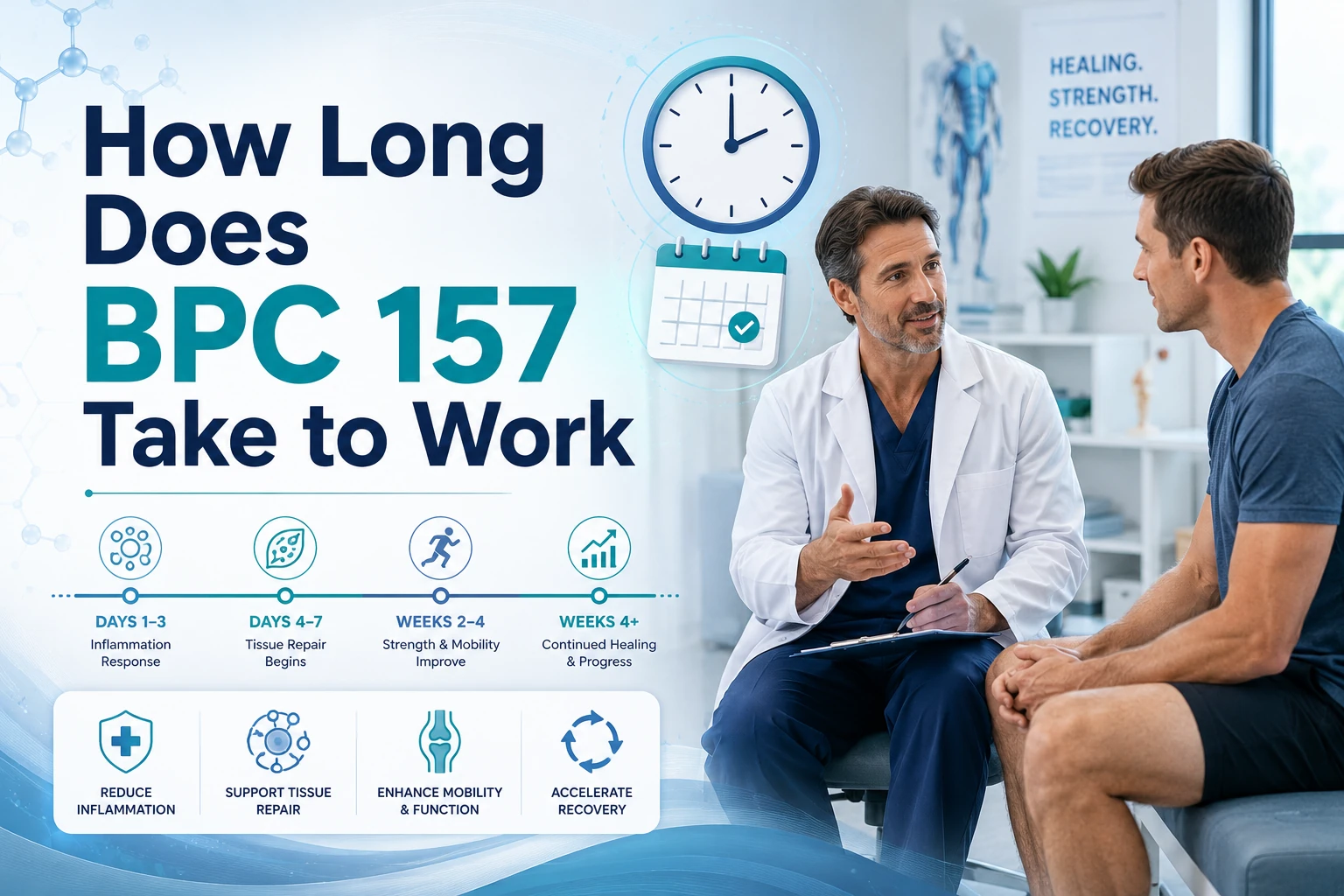
Patients often ask how quickly BPC-157 tends to work, and the honest answer is that it varies.
Some notice changes within a few weeks, while others need a longer course of treatment.
For a broader look at general peptide therapy timelines across different goals, not just joint pain, there’s more detail in that guide.
How Gard Wellness Solutions Approaches Peptide Therapy for Joint Pain
At Gard Wellness Solutions, we don’t believe in handing out the same peptide protocol to everyone who walks in with joint pain.
Your joint pain might come from years of running, a hormone shift, an old injury, or early osteoarthritis, and the right approach depends on which one it actually is.
That starts with a real conversation about your health history, your activity level, and what’s already been tried.
If peptide therapy looks like a good fit, we’ll talk through which option makes sense and what a realistic timeline looks like.
If it isn’t, we’ll say so and point you toward pain and inflammation management options that might serve you better.
Joint pain doesn’t always have an obvious cause, either.
For some patients, especially women in perimenopause or menopause, joint aches are tied to shifting hormone levels rather than wear and tear alone.
In those cases, hormone replacement therapy can sometimes do more for joint comfort than a peptide would on its own.
SEE IF PEPTIDE THERAPY IS RIGHT FOR YOU
Who Should (and Shouldn’t) Consider Peptide Therapy for Joint Pain?
Good candidates are generally adults dealing with osteoarthritis-type wear and tear, old injuries, or joint pain that hasn’t responded well to standard treatment.
Peptide therapy is a poorer fit for anyone with an active autoimmune flare, anyone pregnant or nursing, and anyone not willing to work with a licensed provider who can monitor them.
If your joint pain showed up around the same time as hot flashes, mood changes, or irregular periods, it’s worth asking whether joint aches tied to perimenopause might be the real driver.
Addressing hormone-related joint pain directly sometimes resolves symptoms that a peptide alone wouldn’t touch.
Autoimmune arthritis deserves its own note of caution.
Peptides that influence inflammation and immune signaling haven’t been well studied in people with rheumatoid arthritis or similar autoimmune conditions.
If that’s your situation, loop in your rheumatologist before adding peptide therapy to your plan.
Peptides for joint pain are a genuinely interesting area of medicine, not a magic fix, and not snake oil either.
The evidence is strongest for collagen peptides and osteoarthritis, encouraging but still early for BPC-157 and TB-500, and worth exploring with the right guidance either way.
Gard Wellness Solutions offers personalized peptide therapy evaluations for patients in the West Palm Beach and Lantana area who want to find out whether it’s a fit for their joint pain.
FAQs: Peptides for Joint Pain
Can peptides really help with joint pain?
Early research suggests some peptides, especially BPC-157 and collagen peptides, may help reduce inflammation and support tissue repair in joints. Most of the strongest evidence still comes from animal studies or small human trials, so results vary and nothing is guaranteed.
What’s the difference between peptides for joint pain and peptides for arthritis?
Joint pain is a broader symptom that can come from injury, overuse, or wear and tear, while arthritis refers to specific joint diseases like osteoarthritis or rheumatoid arthritis. Peptides studied for general joint pain, like BPC-157 and collagen peptides, overlap with those studied for arthritis, but autoimmune forms of arthritis need extra caution.
How long does it take for peptides to work on joint pain?
Timelines vary widely by peptide and the person using it. Some people report noticing changes within a few weeks of starting BPC-157 or TB-500, while collagen peptide studies typically measure results after several months of daily use.
Are peptides for joint pain safe?
Reported side effects for peptides like BPC-157 and TB-500 tend to be mild, such as injection site irritation, nausea, or fatigue, but long-term human safety data is still limited. Working with a licensed provider who can monitor your health is important.
Can people with rheumatoid arthritis or autoimmune conditions use peptide therapy?
This is an area where extra caution is needed. Peptides that influence inflammation and immune activity haven’t been well studied in people with autoimmune arthritis, so anyone with rheumatoid arthritis or a similar condition should talk with their rheumatologist before considering peptide therapy.