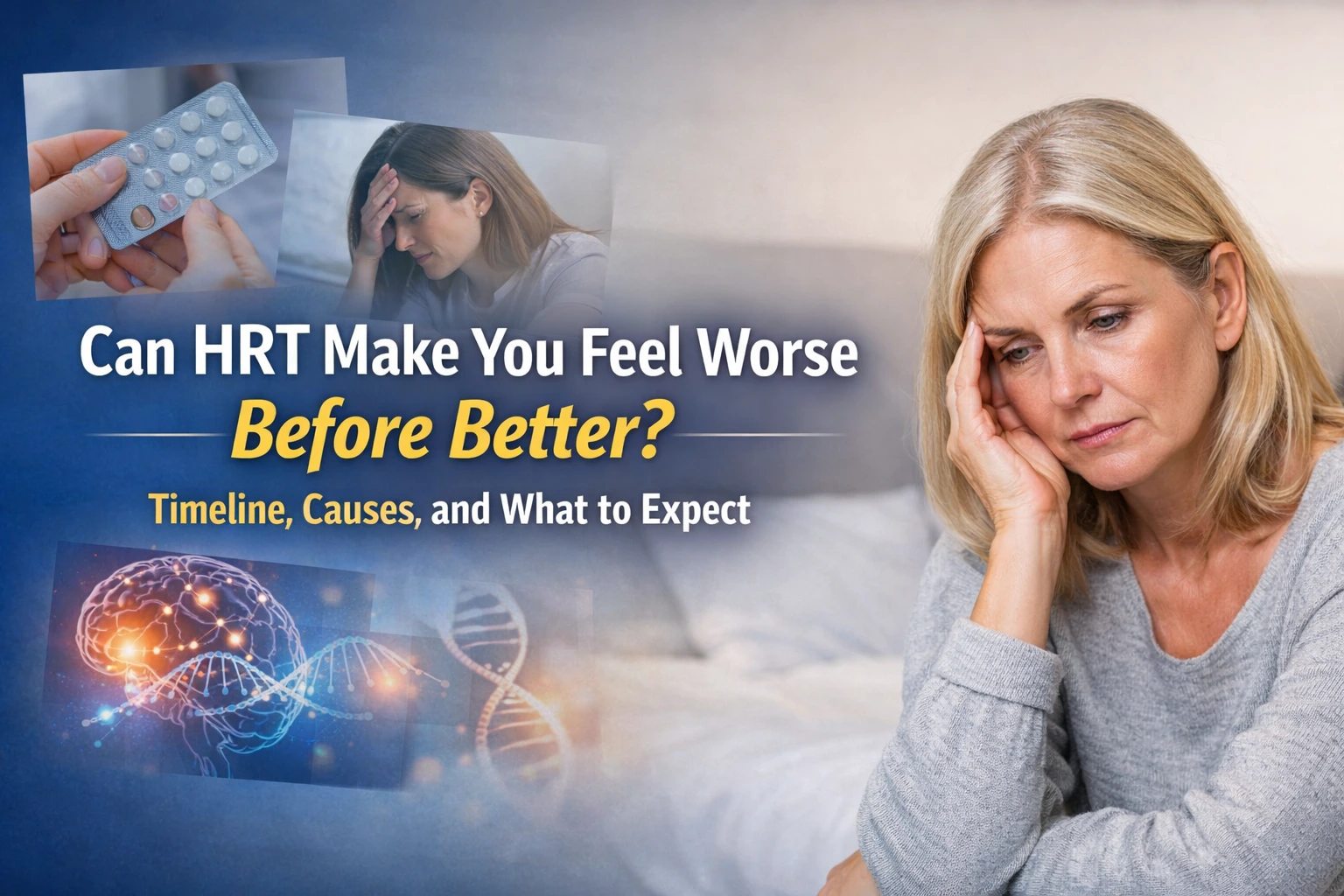
Starting hormone replacement therapy (HRT) can be life-changing for many people struggling with menopause symptoms like hot flashes, fatigue, mood swings, brain fog, and sleep disruption.
But if you’ve recently started treatment and feel worse instead of better, you may be wondering if something is wrong.
The truth is, HRT can make you feel worse before you feel better.
This happens because your body needs time to adjust to changing hormone levels.
During this adjustment period, symptoms like fatigue, headaches, mood changes, or sleep disruption may temporarily worsen before improving as hormone levels stabilize.
For most people, this adjustment phase lasts between 2 and 12 weeks, with full benefits often appearing within 3 to 6 months.
SEE HOW HRT CAN IMPROVE YOUR SYMPTOMS
Is It Normal to Feel Worse After Starting HRT?
Yes, it is normal for some people to feel worse temporarily after starting hormone replacement therapy.
Your body has likely been functioning with low or declining hormone levels for months or years.
When HRT reintroduces estrogen, progesterone, or testosterone, your body must adapt to these changes.
This adjustment process affects your brain, nervous system, metabolism, and hormone receptors.
As these systems recalibrate, symptoms may fluctuate before stabilizing and improving.
Temporary worsening does not necessarily mean HRT is not working.
In many cases, it is a normal part of the adjustment period.
Why Do I Feel Worse After Starting Hormone Replacement Therapy?
There are several biological reasons why symptoms may temporarily worsen after starting HRT.
Your Hormone Levels Are Rapidly Changing
Hormones influence nearly every system in your body.
When you begin HRT, hormone levels increase from previously low levels, which can temporarily disrupt your body’s equilibrium.
This transition may cause symptoms such as:
- Fatigue
- Mood swings
- Headaches
- Breast tenderness
- Sleep disruption
- Anxiety or irritability
These symptoms often improve as hormone levels stabilize.
Your Brain Needs Time to Adjust to Hormone Changes
Estrogen plays a key role in regulating neurotransmitters like serotonin and dopamine, which affect mood, energy, and mental clarity.
When hormone levels change, your brain must recalibrate its response.
During this period, you may notice:
- Increased emotional sensitivity
- Brain fog
- Mood fluctuations
- Changes in sleep quality
As your brain adapts, these symptoms typically improve.
Your Hormone Receptors Must Become Responsive Again
Your cells contain estrogen and progesterone receptors that respond to hormone signals.
After prolonged hormone deficiency, these receptors may become less responsive.
When HRT begins, receptors gradually regain sensitivity.
This process takes time, and symptoms may fluctuate until receptor function stabilizes.
Your Dose May Still Be Adjusting
Hormone therapy is highly individualized.
Factors like metabolism, hormone deficiency severity, and delivery method affect how your body responds.
It may take time to find the ideal dose and delivery method for your body.
How Estrogen Affects Your Brain, Mood, and Energy
Estrogen is essential for brain function.
It helps regulate:
- Serotonin, which supports mood stability
- Dopamine, which affects motivation and energy
- Cortisol, which regulates stress response
- Sleep-wake cycles
When estrogen levels increase with HRT, the brain must adapt to these changes.
During this adjustment phase, temporary fatigue, mood changes, or sleep disruption may occur.
As hormone levels stabilize, many people experience improved mental clarity, better mood stability, and increased energy.
How Long Does the HRT Adjustment Period Last?
The adjustment period varies from person to person, but most people follow a predictable timeline.
Week-by-Week HRT Adjustment Timeline
Let’s take a look at how long it typically takes to adjust to HRT:
Weeks 1–2: Early adjustment phase
Possible symptoms:
• Fatigue
• Mood swings
• Headaches
• Breast tenderness
• Sleep disruption
Weeks 3–6: Hormone stabilization begins
Possible changes:
• Symptoms fluctuate
• Some improvements in sleep or mood
• Reduced severity of hot flashes for some people
Weeks 6–12: Noticeable improvements
Common benefits:
• Increased energy
• Improved mood stability
• Better sleep quality
• Reduced hot flashes
3–6 months: Full therapeutic benefits
Expected results:
• Stable energy levels
• Improved mental clarity
• Improved mood balance
• Maximum symptom relief
Most side effects improve significantly during this time.
Common Symptoms That May Temporarily Worsen After Starting HRT
It is common for certain symptoms to temporarily worsen before improving.
These may include:
- Fatigue
- Mood swings
- Anxiety
- Breast tenderness
- Headaches
- Bloating
- Sleep disturbances
- Mild nausea
- Irregular bleeding or spotting
These symptoms typically improve as hormone levels stabilize.
Signs Your HRT Is Working
Even if you experience temporary side effects, there are positive signs that HRT is helping your body rebalance.
Signs HRT is working include:
- Reduced hot flashes
- Improved sleep quality
- Increased energy
- Improved mood stability
- Reduced anxiety
- Improved mental clarity
- Improved libido
Some benefits appear within weeks, while others take several months.
Signs Your HRT Dose May Need Adjustment
While temporary side effects are normal, persistent symptoms may indicate your dose needs adjustment.
Signs your dose may be too low or too high include:
- Persistent fatigue beyond 3 months
- Continued hot flashes
- Ongoing mood instability
- Persistent brain fog
- No noticeable improvement in symptoms
Hormone therapy often requires adjustments to achieve optimal results.
When Feeling Worse Is Normal and When to Seek Help
Temporary worsening symptoms are normal during the adjustment phase.
However, symptoms should gradually improve.
Feeling worse is usually normal if:
- Symptoms started soon after beginning HRT
- Symptoms fluctuate rather than worsen steadily
- You notice gradual improvement over time
You should speak with your provider if:
- Symptoms worsen significantly
- Symptoms persist beyond 3 months
- You experience severe side effects
- You notice no improvement at all
Adjustments to your treatment plan can often resolve these issues.
Factors That Affect How Quickly You Feel Better on HRT
Several factors influence your adjustment timeline.
Hormone Type
Different hormones affect the body differently.
Delivery Method
Options include:
- Creams or gels
- Patches
- Oral medications
- Pellets
- Injections
Some methods provide more stable hormone levels.
Dose
Finding the correct dose may require adjustments.
Individual Biology
Factors such as metabolism, receptor sensitivity, and hormone deficiency severity all influence response time.
Emotional Reassurance: Feeling Worse at First Does Not Mean HRT Is Failing
Many people feel discouraged if symptoms worsen after starting HRT.
This can cause concern that the treatment is not working.
In reality, hormone therapy works gradually.
Your body needs time to restore balance after prolonged hormone deficiency.
Temporary symptoms are often followed by meaningful improvements in:
- Energy
- Mood
- Sleep
- Cognitive function
- Overall well-being
Patience during the adjustment period can lead to long-term benefits.
How Gard Wellness Solutions Helps Optimize Hormone Therapy
Gard Wellness Solutions provides personalized hormone therapy for patients throughout Florida, helping ensure treatment is tailored to each individual’s needs.
Customized treatment plans help:
- Minimize side effects
- Optimize hormone balance
- Improve symptom relief
- Support long-term wellness
Careful monitoring and dose adjustments help patients achieve the best possible results safely and effectively.
Key Takeaways: Can HRT Make You Feel Worse Before Better
Yes, HRT can make you feel worse before better.
This adjustment period typically lasts 2 to 12 weeks with full benefits often appearing within 3 to 6 months.
Hormone therapy is a gradual process, but it can provide meaningful improvements in quality of life.
FAQs: Can HRT Make You Feel Worse Before Better
What are signs of too much estrogen in HRT?
Signs of too much estrogen during hormone replacement therapy may include breast tenderness, bloating, headaches, nausea, irritability, and mood swings. Some people may also experience fluid retention or increased anxiety. If these symptoms persist, your provider may need to adjust your dose to restore proper hormone balance.
What happens in the first few weeks of HRT?
During the first few weeks of HRT, your body begins adjusting to new hormone levels. You may experience temporary side effects such as fatigue, mood changes, headaches, or sleep disruption. Some symptoms may improve quickly, while others take longer to stabilize as your hormone receptors and nervous system adapt.
Does it take time for your body to adjust to HRT?
Yes, it typically takes time for your body to adjust to hormone replacement therapy. Most people experience an adjustment period lasting between 2 and 12 weeks, with full benefits often appearing within 3 to 6 months as hormone levels stabilize and receptors respond properly.
How to tell if HRT is too strong?
If your HRT dose is too strong, you may experience symptoms such as breast tenderness, headaches, bloating, irritability, anxiety, or nausea. Persistent side effects or feeling overstimulated may indicate your hormone levels are too high and may require adjustment.
What are the symptoms of not enough estrogen in HRT?
Symptoms of insufficient estrogen may include fatigue, hot flashes, night sweats, brain fog, low mood, poor sleep, and low energy levels. If symptoms do not improve after several weeks of treatment, your provider may need to adjust your dose.
What are the first signs that HRT is working?
The first signs that HRT is working often include improved sleep, reduced hot flashes, better mood stability, and increased energy levels. Some people notice improvement within a few weeks, while full benefits may take several months.
How do you know if your HRT needs adjusting?
Your HRT may need adjustment if symptoms persist beyond 3 months, worsen significantly, or fail to improve. Signs may include ongoing fatigue, mood instability, hot flashes, or persistent side effects. Adjusting the dose or delivery method can often improve results.
Is it normal to be tired when first starting HRT?
Yes, fatigue is a common temporary side effect when starting HRT. Your body needs time to adjust to changing hormone levels, and energy levels usually improve as hormone balance stabilizes.
What should you avoid while on HRT?
While on HRT, it is important to avoid skipping doses, inconsistent use, and unmanaged stress, which can affect hormone balance. Maintaining healthy sleep, nutrition, and regular follow-up care can help improve treatment effectiveness.