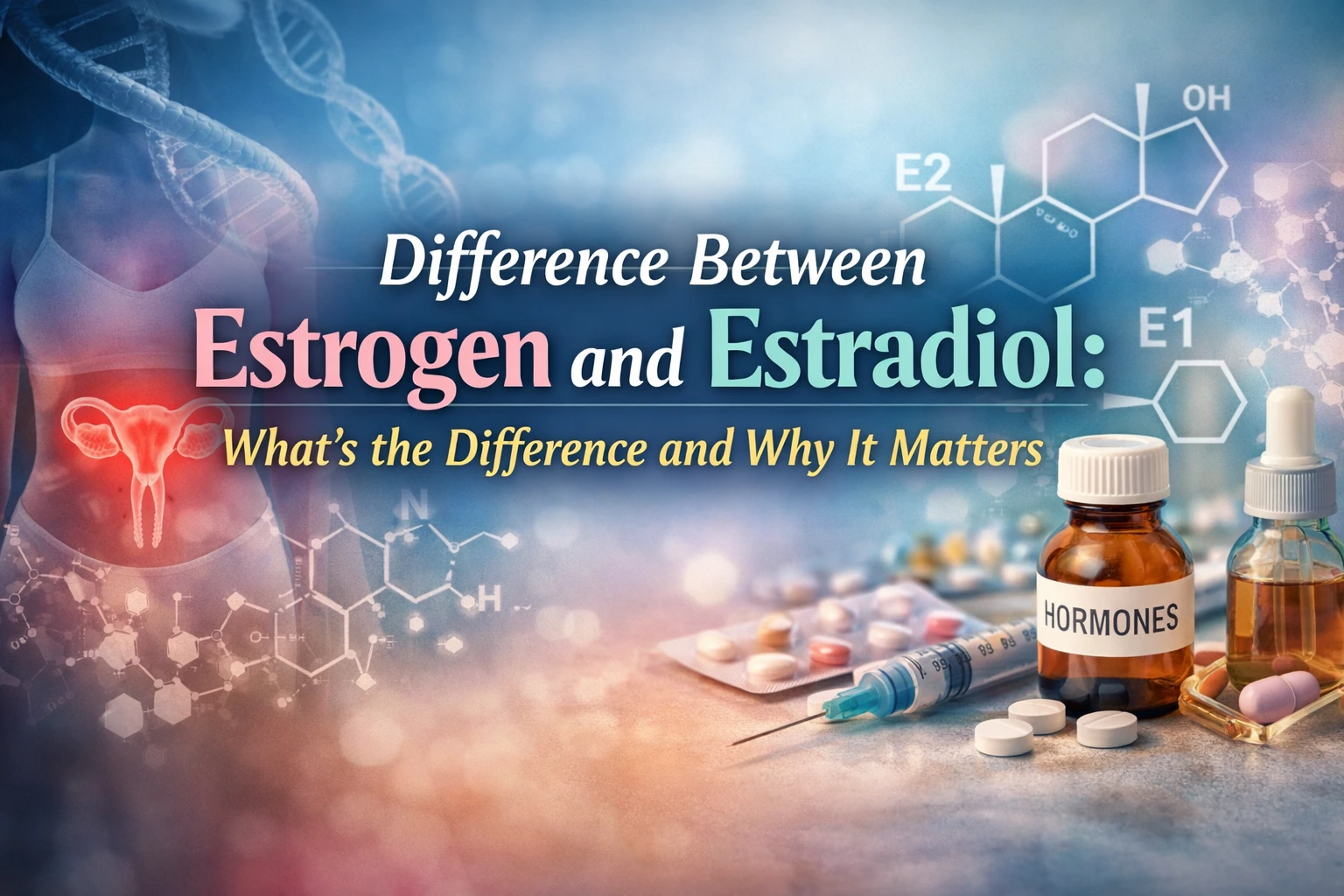
If you’ve ever had hormone testing done or looked into hormone therapy, you may have noticed the terms estrogen and estradiol used almost interchangeably.
While they’re closely related, they are not the same thing, and understanding the difference can help make sense of symptoms, lab results, and treatment options.
Quick Answer: Estrogen vs Estradiol
Estrogen is a group of hormones, while estradiol is one specific type of estrogen.
Estradiol is the most powerful and biologically active form and is the estrogen most often measured in lab tests and used in hormone therapy.
Put simply, estrogen is the category, estradiol is the most influential member of that category.
What Is Estrogen?
Estrogen refers to a family of hormones that play a key role in many systems throughout the body, including:
- Reproductive health
- Bone strength
- Brain and mood regulation
- Cardiovascular health
- Metabolism
Rather than being a single hormone, estrogen is made up of three main types, each with different roles and levels of activity.
The Three Main Types of Estrogen
Let’s look at the three main types of estrogen:
Estradiol (E2)
Estradiol is the strongest and most active estrogen.
It dominates during reproductive years and has the greatest impact on estrogen receptors throughout the body.
Estrone (E1)
Estrone is a weaker estrogen that becomes more prominent after menopause.
It is produced mainly in fat tissue and continues to provide some estrogen activity when estradiol levels decline.
Estriol (E3)
Estriol is the weakest form of estrogen and is most abundant during pregnancy.
Outside of pregnancy, it exists in very small amounts.
What Is Estradiol?
Estradiol is a specific estrogen hormone, not a separate category.
Because it is the most potent form, estradiol has a major influence on how estrogen functions in the body.
Estradiol plays a central role in:
- Regulating the menstrual cycle
- Supporting ovulation and fertility
- Maintaining bone density
- Influencing mood and cognitive function
- Supporting heart and blood vessel health
When estradiol levels rise or fall, the effects are often noticeable.
Estradiol vs Estrogen: What’s the Difference?
The difference comes down to scope and specificity.
| Estrogen | Estradiol |
| A group of hormones | One specific estrogen |
| Includes estradiol, estrone, and estriol | The most biologically active form |
| General term | Commonly measured in lab tests |
| Varies by life stage | Dominant in reproductive years |
In everyday conversations, people often say “estrogen” when they really mean estradiol.
Estradiol vs Estrone vs Estriol: How They Compare
Understanding how these estrogens differ can help clarify hormone test results and symptoms.
- Estradiol (E2): Most powerful, most active, strongest effect on symptoms
- Estrone (E1): Weaker, more common after menopause
- Estriol (E3): Weakest, highest during pregnancy
Each form serves a purpose, but estradiol tends to drive how estrogen feels and functions in the body.
How Estrogen and Estradiol Are Produced
Estrogen production starts with cholesterol and involves several conversion steps.
Estradiol is mainly produced in the ovaries, with smaller amounts made in fat tissue, adrenal glands, and the brain.
After menopause, the body produces far less estradiol and relies more on converting other hormones into estrone.
This shift explains many hormonal symptoms later in life.
What Do Estrogen and Estradiol Do in the Body?
Let’s take a look at how estrogen and estradiol affect your body:
Reproductive Health
Estradiol regulates ovulation, menstrual cycles, and uterine health.
Bone Health
Estradiol helps slow bone breakdown.
When levels drop, bone loss accelerates.
Brain and Mood
Estrogen influences neurotransmitters linked to mood, focus, and memory.
Heart Health
Estrogen supports blood vessel flexibility and healthy cholesterol balance.
Estrogen in Men
Men also produce estrogen, including estradiol.
It supports bone density, libido, and sperm production.
Balance is key.
Estradiol Levels Throughout Life
Estradiol naturally fluctuates across different life stages:
- Puberty: Levels rise as development begins
- Reproductive years: Levels fluctuate throughout the menstrual cycle
- Pregnancy: Estriol becomes dominant
- Perimenopause: Estradiol becomes irregular
- Menopause: Estradiol drops significantly
These shifts often explain symptoms like hot flashes, sleep issues, mood changes, and weight fluctuations.
Symptoms of Low or Imbalanced Estradiol Levels
When estradiol levels are too low or unstable, symptoms may include:
- Hot flashes or night sweats
- Mood swings or anxiety
- Irregular or missed periods
- Fatigue
- Sleep problems
- Brain fog
- Vaginal dryness or low libido
Symptoms vary by individual, which is why personalized evaluation matters.
Testing Estrogen vs Estradiol Levels
Most hormone tests measure estradiol specifically, not total estrogen.
Estradiol levels give clearer insight into how estrogen is functioning in the body.
Estradiol testing is commonly used to evaluate:
- Menopause and perimenopause
- Fertility concerns
- Hormonal symptoms
- Hormone therapy response
Knowing exactly what’s being measured helps avoid confusion.
Estradiol in Hormone Therapy
When estrogen therapy is prescribed, it often uses estradiol, because it closely matches the estrogen naturally produced by the body before menopause.
Estradiol may be delivered through:
- Patches
- Creams or gels
- Oral medications
The goal is balance, supporting symptom relief while minimizing unwanted effects.
How Gard Wellness Solutions Can Help
At Gard Wellness Solutions in Florida, hormone health is evaluated with a personalized, whole-body approach.
By looking at estradiol, estrogen balance, and related hormones together, their team helps patients better understand symptoms and explore individualized HRT options for support.
Final Thoughts: Difference Between Estrogen and Estradiol
The difference between estrogen and estradiol is simple once it’s clearly explained.
Estrogen is a group of hormones, while estradiol is the most powerful and active form within that group.
Understanding this distinction can make hormone testing, symptoms, and treatment conversations far easier, and help you feel more confident about your health decisions.
FAQs
Are estrogen and estradiol the same thing?
No. Estrogen is a group of hormones, while estradiol is one specific type of estrogen. Estradiol is the most biologically active form and the one most often measured in lab tests.
Is estradiol stronger than estrogen?
Estradiol is considered the strongest and most potent form of estrogen. When people refer to estrogen being “strong,” they are usually talking about estradiol specifically.
What are the first signs of low estrogen?
Early signs of low estrogen may include irregular periods, hot flashes, night sweats, mood changes, sleep problems, vaginal dryness, and fatigue.
What are the downsides of estradiol?
Potential downsides of estradiol can include bloating, breast tenderness, fluid retention, headaches, or increased risk of certain conditions when levels are too high or not properly balanced.
Does estradiol affect weight?
Yes, estradiol can affect weight by influencing metabolism, fat distribution, and insulin sensitivity. Low estradiol levels are often associated with weight gain, especially around the abdomen.
How does a lack of estrogen make you feel?
A lack of estrogen can lead to fatigue, mood swings, anxiety, brain fog, poor sleep, low libido, and hot flashes. Symptoms vary from person to person.
How do I know if I need more estradiol?
Symptoms combined with blood test results help determine whether estradiol levels may be too low. A healthcare provider can evaluate both to guide next steps.
How to naturally boost estrogen?
Estrogen levels may be supported naturally through balanced nutrition, healthy body fat levels, stress management, regular exercise, and adequate sleep. Some plant-based foods contain phytoestrogens, which may offer mild support.
What happens to a woman’s body when her estrogen is low?
When estrogen is low, women may experience hot flashes, bone loss, mood changes, vaginal dryness, changes in skin and hair, and shifts in metabolism. Over time, low estrogen can affect bone and heart health as well.