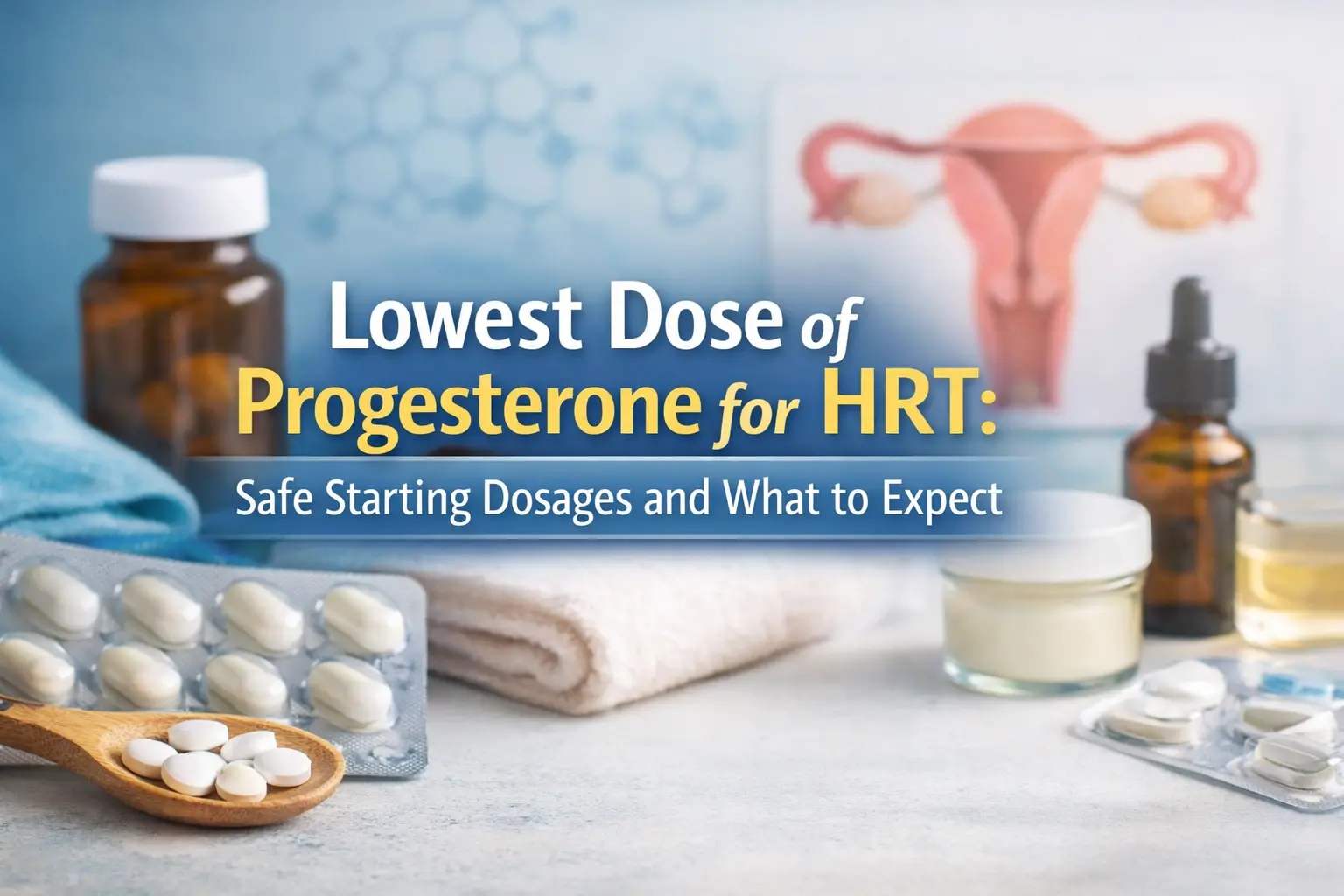
Hormone replacement therapy (HRT) often includes progesterone to help balance estrogen and protect the uterine lining.
Many women want to know the lowest dose of progesterone for HRT that is still effective while minimizing side effects.
The right dose depends on factors like whether you are taking estrogen, your symptoms, and whether you are in perimenopause or menopause.
In many cases, providers aim for the lowest effective dose, meaning the smallest amount that still delivers benefits.
This guide explains common low-dose progesterone options, typical starting ranges, and how providers determine the right dose for each individual.
What Is the Lowest Dose of Progesterone for HRT?
The lowest commonly prescribed progesterone dose for HRT is typically 100 mg daily of oral micronized progesterone.
Some individuals may start as low as 50 mg, especially when using compounded progesterone or when symptoms are mild.
Typical lowest dose ranges include:
| Purpose | Typical Lowest Dose |
| Endometrial protection with estrogen | 100 mg daily |
| Sleep support | 50–100 mg nightly |
| Perimenopause symptom support | 50–200 mg daily |
| Cyclical HRT therapy | 200 mg for 10–14 days per month |
| Progesterone cream (topical) | 10–40 mg daily |
The goal is to find the lowest effective dose that improves symptoms while maintaining hormone balance and protecting overall health.
What Is Progesterone in Hormone Replacement Therapy?
Progesterone is a naturally occurring hormone that plays a key role in regulating the menstrual cycle, supporting sleep, and balancing estrogen levels.
During perimenopause and menopause, progesterone levels often decline, which can contribute to symptoms such as:
- trouble sleeping
- mood swings
- anxiety
- irregular periods
- hot flashes
- night sweats
- estrogen dominance symptoms
When estrogen therapy is used, progesterone is often included to help support the uterine lining and maintain hormone balance.
Many individuals prefer starting with a low dose to reduce the chance of side effects such as fatigue, dizziness, or breast tenderness.
Typical Progesterone Dosage Ranges for HRT
Progesterone dosing varies depending on whether therapy is continuous or cyclical, as well as the individual’s symptoms and hormone levels.
Continuous progesterone therapy
Progesterone is taken daily alongside estrogen to maintain stable hormone levels.
Typical ranges are 100–200 mg daily.
Cyclical progesterone therapy
Progesterone is taken for part of the month, often to mimic the body’s natural hormonal rhythm.
Typical ranges are 200 mg daily for 10–14 days per month.
Low dose progesterone HRT
Lower doses may be used when symptoms are mild or when gradually introducing hormone therapy.
Typical ranges are 50–100 mg daily.
Providers often start with a conservative dose and adjust gradually based on symptom response.
100 mg vs 200 mg Progesterone for HRT
Many individuals wonder whether 100 mg progesterone is enough or if 200 mg is necessary.
| Dose | When Commonly Used | Notes |
| 50 mg | mild symptoms, compounded therapy | may not provide sufficient endometrial support with estrogen |
| 100 mg | low-dose continuous HRT | common starting dose for many women |
| 200 mg | cyclical therapy or moderate symptoms | often used 10–14 days monthly |
Both doses are commonly prescribed depending on treatment goals.
Lowest Effective Progesterone Dose by Treatment Goal
The lowest effective dose often depends on the reason progesterone is being prescribed.
Sleep support
Studies show progesterone has calming properties that may support deeper sleep.
Typical starting dose is 50–100 mg at night.
Endometrial support with estrogen therapy
Women taking estrogen therapy typically require adequate progesterone to maintain balance.
Typical starting dose is 100–200 mg daily.
Mood stability and anxiety support
Progesterone interacts with neurotransmitters that influence mood regulation.
Typical starting dose is 50–100 mg daily.
Perimenopause hormone balance
Hormone fluctuations during perimenopause can cause irregular cycles and mood changes.
Typical starting dose is 50–200 mg daily.
Each individual may respond differently to therapy.
Lowest Progesterone Dose by Menopause Stage
Hormone needs often vary depending on where a person is in the menopause transition.
Perimenopause
Hormone levels fluctuate significantly, and progesterone may help regulate cycles and support mood.
Typical lowest dose is 50–100 mg daily.
Menopause
Progesterone is often used alongside estrogen therapy.
Typical lowest dose is 100–200 mg daily.
Postmenopause
Progesterone dosing often depends on estrogen therapy and symptom management goals.
Typical lowest dose and 100 mg daily.
Treatment plans are often adjusted based on symptom response.
Does Estrogen Dose Affect Progesterone Requirements?
Progesterone dosage is often influenced by the amount of estrogen used in HRT.
Higher estrogen levels typically require adequate progesterone to maintain hormonal balance.
For example:
- low-dose estrogen therapy may pair with 100 mg progesterone daily
- moderate estrogen therapy may require 200 mg progesterone daily
Balancing both hormones helps support comfort and symptom stability.
Continuous vs Cyclical Progesterone Dosing
Two common dosing approaches are used in hormone therapy.
Continuous dosing
Progesterone is taken daily.
Possible benefits include:
- stable hormone levels
- fewer fluctuations
- consistent symptom support
Cyclical dosing
Progesterone is taken for part of the month.
Possible benefits include:
- mimicking natural hormone rhythms
- predictable hormone patterns
Both approaches can be effective depending on treatment goals.
Is 100 mg Progesterone Enough for HRT?
For many individuals, 100 mg progesterone daily provides adequate support when combined with low-dose estrogen therapy.
However, some individuals may require higher doses depending on:
- symptom severity
- hormone levels
- sensitivity to hormonal changes
- response to treatment
Hormone therapy is personalized, and dosage adjustments are common.
Is Lower Dose Progesterone Safer?
Using the lowest effective dose may help reduce the likelihood of side effects such as:
- fatigue
- dizziness
- bloating
- breast tenderness
- headaches
However, taking too little progesterone when estrogen therapy is used may not provide adequate hormonal balance.
This is why individualized dosing is important.
Signs Your Progesterone Dose May Be Too Low
Symptoms of insufficient progesterone may include:
- trouble sleeping
- anxiety or irritability
- irregular spotting
- heavy cycles during perimenopause
- persistent hormone imbalance symptoms
- breast tenderness
- mood changes
If symptoms persist, a provider may recommend adjusting dosage.
Who May Need More Than the Lowest Dose?
Some individuals may require higher progesterone doses depending on:
- higher estrogen levels
- more severe menopause symptoms
- ongoing sleep difficulties
- sensitivity to hormone fluctuations
- persistent symptoms despite therapy
Dosing adjustments are a normal part of hormone therapy.
Lowest Effective Progesterone Dose Summary
| Situation | Lowest Typical Dose |
| With estrogen therapy | 100 mg daily |
| Sleep support | 50–100 mg nightly |
| Mild symptoms | 50 mg compounded |
| Cyclical therapy | 200 mg for 10–14 days |
| Progesterone cream | 10–40 mg daily |
How Providers Determine the Right Progesterone Dose
Healthcare providers consider several factors when determining progesterone dosage:
- symptom severity
- whether estrogen therapy is included
- menopause stage
- sensitivity to hormone changes
- treatment goals
- overall health history
Gard Wellness Solutions provides individualized hormone therapy programs designed to help patients achieve balanced hormone levels while minimizing unwanted side effects.
Personalized treatment allows dosage adjustments as the body responds to therapy.
How Long Does It Take to Notice Effects from Low Dose Progesterone?
Some individuals notice improvements in sleep or mood within a few days to a few weeks.
Other benefits may take longer as hormone levels stabilize.
Typical timelines may include:
- sleep improvements within 1–2 weeks
- mood balance within several weeks
- cycle regulation within 1–3 months
- overall hormone stability within a few months
Consistency is important when evaluating results.
Can You Start Too Low with Progesterone?
Starting too low may delay symptom relief or fail to provide adequate hormonal support when estrogen therapy is included.
Providers typically aim for the lowest effective dose while monitoring symptom response.
Adjustments can be made gradually if needed.
When to Talk to a Provider About Progesterone Dosage
You may want to consult a provider if you experience:
- persistent menopause symptoms
- poor sleep despite treatment
- irregular spotting
- unwanted side effects
- concerns about hormone balance
Hormone therapy is most effective when dosing is tailored to the individual.
Conclusion: Lowest Dose of Progesterone for HRT
The lowest dose of progesterone for HRT is typically 100 mg daily, although some individuals may begin at 50 mg depending on symptoms and formulation.
The appropriate dosage depends on estrogen use, menopause stage, and individual response to treatment.
Working with a qualified provider allows progesterone therapy to be adjusted safely over time, helping support symptom relief, improve sleep, and promote overall hormone balance while using the lowest effective dose possible.
FAQ: Lowest Dose of Progesterone for HRT
What is the lowest dose of progesterone for HRT?
The lowest commonly prescribed dose of progesterone for HRT is typically 100 mg daily of oral micronized progesterone. Some individuals may start as low as 50 mg, especially when using compounded formulations or when symptoms are mild. The appropriate dose depends on whether estrogen therapy is included, symptom severity, and individual response to treatment.
Can you take too little progesterone with estrogen therapy?
Taking too little progesterone when using estrogen therapy may not provide adequate hormonal balance. Progesterone is often included in HRT to complement estrogen and support overall hormone regulation. Providers typically aim for the lowest effective dose that still provides the intended benefits.
What is the lowest dose of bioidentical progesterone?
Bioidentical progesterone, often prescribed as oral micronized progesterone, typically starts at 100 mg daily. Some compounded formulations may allow starting doses as low as 50 mg depending on symptoms and treatment goals.
What progesterone dose is typically used with estrogen HRT?
When estrogen therapy is part of treatment, progesterone is commonly prescribed at 100–200 mg daily. The exact amount depends on estrogen dosage, symptom severity, and individual response to therapy.
Does progesterone dosage depend on menopause stage?
Yes, progesterone dosing often varies depending on whether a person is in perimenopause, menopause, or postmenopause. Hormone levels fluctuate more during perimenopause, while menopause treatment often focuses on maintaining stable hormone balance.
Can low dose progesterone help with sleep?
Progesterone is commonly used to support sleep due to its calming effects on the nervous system. Many individuals notice sleep improvements with doses between 50–100 mg taken in the evening.
How long does it take for progesterone to start working?
Some people notice improvements in sleep or mood within the first one to two weeks. Other benefits, such as cycle regulation or overall hormone balance, may take several weeks or a few months as hormone levels stabilize.