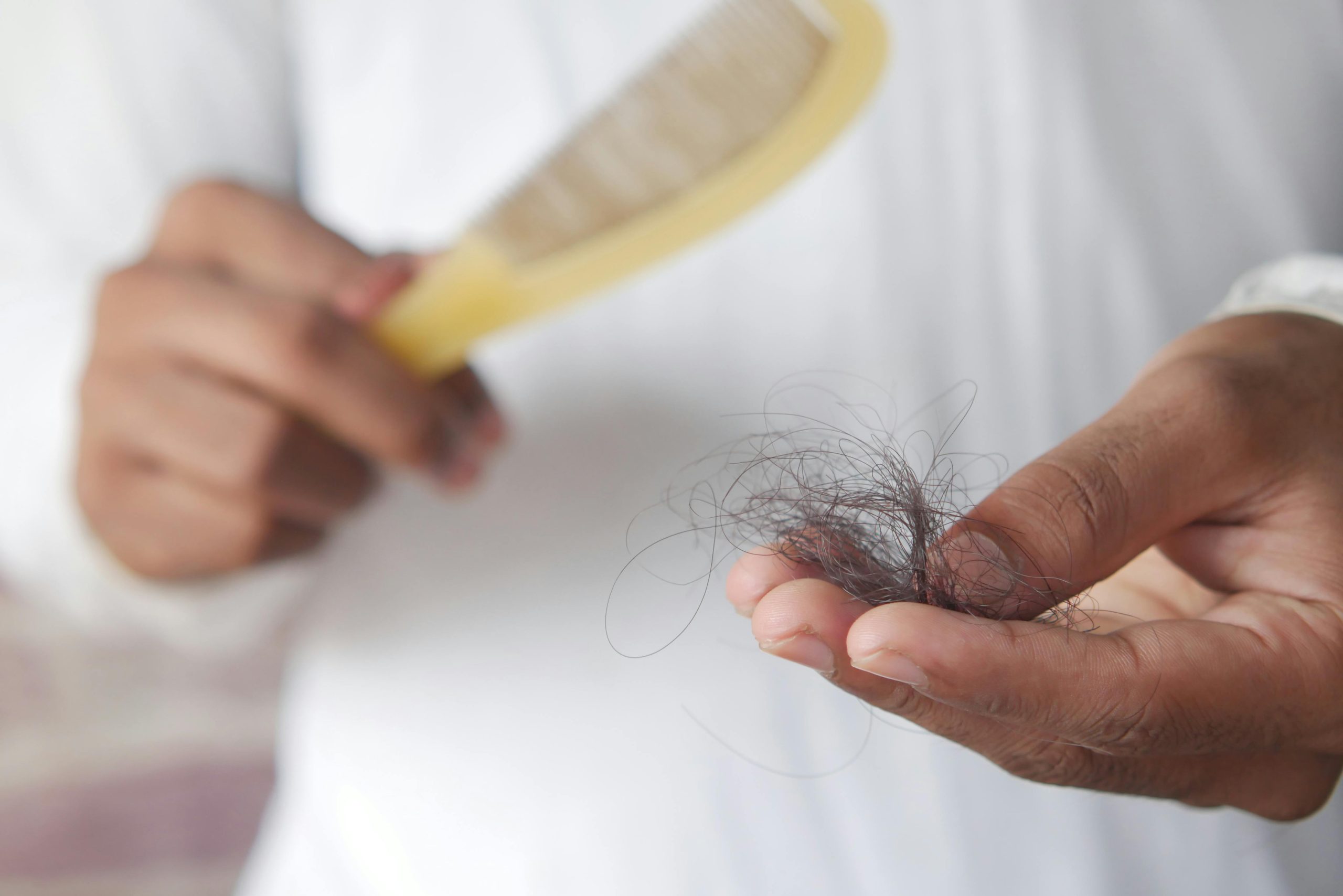
If you’ve started noticing extra hair in your brush, on your pillow, or in the shower drain, you’re not imagining it.
Perimenopause hair loss is a real and common issue, one that affects thousands of women as their hormones begin to change.
The good news?
You can take steps to slow shedding, strengthen your hair, and even encourage regrowth.
Let’s look at why it happens and what you can do about it.
GET HELP WITH YOUR PERIMENOPAUSE HAIR LOSS
What Happens to Your Hormones During Perimenopause
Perimenopause marks the transition before menopause, a time when your estrogen and progesterone levels fluctuate and gradually decline.
These hormones don’t just affect mood and menstrual cycles; they also play a big role in hair growth and thickness.
When estrogen levels drop, the growth phase of your hair (anagen) shortens, and more strands enter the shedding phase (telogen).
At the same time, androgens like testosterone and DHT (dihydrotestosterone) become more dominant.
DHT can shrink hair follicles, leading to thinner, weaker strands over time.
This hormonal shift is the main reason many women experience hair loss during perimenopause, especially along the crown or part line.
Causes of Hair Loss in Perimenopause at a Glance
| Cause | How It Affects Hair |
| Estrogen decline | Shortens the growth phase and increases shedding |
| Progesterone decline | Reduces protection against androgens |
| Increased DHT | Shrinks follicles, leading to finer hair |
| Stress (high cortisol) | Pushes follicles into resting phase |
| Nutrient deficiencies | Weakens follicles and slows growth |
| Thyroid imbalance | Disrupts hair cycle and metabolism |
These factors often overlap, which is why perimenopausal hair loss can feel unpredictable, some days seem normal, others bring noticeable shedding.
Does Perimenopause Cause Hair Loss?
Yes.
Perimenopause can cause hair loss directly through hormonal fluctuations.
Estrogen normally supports full, strong hair by keeping follicles in a prolonged growth phase.
As estrogen drops and DHT rises, follicles miniaturize, meaning they produce thinner and shorter hairs.
This type of hair loss is called androgenic alopecia or female pattern thinning, and perimenopause can make it more visible even if you have a genetic predisposition.
For many women, this process starts slowly, a widening part line, more visible scalp, or less volume when styling.
What Hair Loss During Perimenopause Looks Like
You may notice:
- Gradual thinning on the top or crown of the head
- A wider part when you style your hair
- Increased hair in your brush or shower drain
- Baby hairs that never seem to grow longer
- Loss of fullness, especially near the front hairline
Unlike autoimmune or patchy hair loss, perimenopause hair loss is typically diffuse, meaning it spreads evenly rather than forming bald spots.
Other Factors That Can Make Hair Loss Worse
Hormones aren’t the only culprit.
During perimenopause, several lifestyle and health changes can intensify hair loss, including:
- Chronic stress: Raises cortisol levels and can trigger telogen effluvium (shedding)
- Thyroid imbalances: Hypothyroidism and hyperthyroidism are more common at this stage
- Iron deficiency: Low ferritin levels weaken follicles
- Nutrient gaps: Low vitamin D, zinc, and protein intake reduce hair strength
- Certain medications: Birth control changes, antidepressants, and beta-blockers can contribute to shedding
Addressing these underlying causes can make a huge difference, especially when combined with hormonal support.
Can Perimenopause Cause Permanent Hair Loss?
Not usually.
In most cases, hair loss during perimenopause is temporary or reversible, especially if you address hormonal imbalance early.
However, prolonged follicle shrinkage can lead to slower regrowth or permanent thinning if left untreated.
That’s why the goal isn’t just to stop shedding, it’s to protect follicles and stimulate new growth before the hair cycle is disrupted long term.
How to Treat Perimenopause Hair Loss
The most effective approach combines medical, nutritional, and lifestyle support.
1. Medical and Topical Therapies
- Minoxidil (2–5%): It extends the growth phase of hair follicles.
- Low-Level Laser Therapy (LLLT): At-home laser caps improve scalp circulation and cellular energy.
- PRP (Platelet-Rich Plasma) Therapy: Injections from your own blood platelets stimulate dormant follicles naturally.
- Hormone Therapy (HRT): Personalized hormone therapy can restore estrogen and progesterone balance, supporting healthier hair growth.
2. Nutritional Support
Your follicles are living structures that rely on nutrients to grow.
Focus on:
- Protein and iron: Essential for keratin production
- Omega-3 fatty acids: Support scalp circulation
- Vitamin D and zinc: Key for follicle metabolism
- Biotin and B vitamins: Strengthen hair strands
3. Stress and Lifestyle Management
Chronic stress worsens hormonal imbalance and increases shedding.
Try:
- Mindful breathing or yoga to lower cortisol
- Regular exercise to improve blood flow
- 7–8 hours of sleep for hormonal recovery
4. Scalp Health & Care
A healthy scalp is the foundation for healthy hair.
- Use sulfate-free shampoos to avoid irritation
- Massage your scalp regularly to stimulate circulation
- Avoid tight hairstyles and harsh heat tools
Can Hair Grow Back After Perimenopause?
Yes, hair can regrow after perimenopause, especially when hormonal balance, nutrition, and scalp health are addressed early.
Regrowth takes time (usually 3–6 months), and consistency is key.
Follicles that are still active can return to thicker growth once the internal environment improves.
Natural Remedies for Hair Loss in Perimenopause
If you prefer a natural approach, these options may complement your routine:
- Saw Palmetto: Shown to block DHT and reduce follicle miniaturization
- Pumpkin Seed Oil: May improve hair density over several months
- Rosemary Oil: Comparable to minoxidil in studies for stimulating growth
- Collagen Peptides: Strengthen hair structure and elasticity
Always check with your healthcare provider before starting new supplements, especially if you’re on medication.
When to See a Professional
If you’re shedding more than 100 hairs a day, noticing rapid thinning, or seeing scalp through your part, it’s time to seek evaluation.
A comprehensive lab panel may include:
- Estrogen, progesterone, and testosterone levels
- DHEA and DHT
- Thyroid hormones (TSH, Free T4, Free T3)
- Ferritin and iron
- Vitamin D
These results help identify the exact cause of your hair loss so you can treat it effectively, not just symptomatically.
Supporting Hair and Hormone Health Naturally
At Gard Wellness Solutions, we specialize in holistic care for perimenopause and hormonal balance.
Our personalized programs combine:
- Hormone therapy (HRT) for restoring balance
- Nutritional guidance for hair and overall vitality
- Regenerative therapies that promote growth and wellness
Our integrative approach goes beyond temporary fixes, we focus on helping your body regain balance so your hair, skin, and energy thrive naturally.
Key Takeaways
- Perimenopause can cause hair loss due to fluctuating estrogen and progesterone levels
- Thinning hair is usually reversible when addressed early
- A mix of medical, nutritional, and lifestyle support helps slow shedding and promote regrowth
- Focus on whole-body wellness, not just topical treatments, for lasting results
Conclusion
Perimenopause brings a lot of changes, and while hair loss can be one of the most frustrating, it’s also one of the most manageable with the right approach.
By understanding how your hormones impact your hair and addressing the root causes, from stress and nutrient deficiencies to hormonal imbalance, you can regain control and confidence.
Hair regrowth takes time, but your body is resilient.
With patience, consistency, and the right support, healthy, fuller hair is absolutely within reach.
If you’re struggling with perimenopause hair loss, our team at Gard Wellness Solutions is here to help you rebalance your hormones, nourish your body, and restore your sense of well-being, from the inside out.
FAQs
How do you treat perimenopause hair loss?
Treatment focuses on balancing hormones, supporting nutrition, and stimulating follicles. Options include minoxidil, PRP therapy, BHRT, scalp massage, stress management, and a protein-rich diet to encourage regrowth.
Will hair loss in menopause grow back?
Yes, hair can grow back after menopause if follicles are still active. With the right treatment, such as hormone support, topical therapies, and nutritional care, many women experience thicker, healthier hair over time.
Can you reverse hormonal hair loss?
Hormonal hair loss can often be reversed when underlying imbalances are addressed early. Balancing estrogen and progesterone, improving nutrient intake, and supporting scalp health are key steps to restoring hair growth.
What vitamin am I lacking if my hair is falling out?
Hair loss can result from low levels of iron, vitamin D, zinc, and B vitamins. Iron deficiency (low ferritin) is especially common among women and can cause excessive shedding and thinning.
What is the best supplement for perimenopause hair loss?
Supplements that support hormone balance and follicle strength, such as biotin, collagen peptides, omega-3s, vitamin D, and saw palmetto, can help. It’s best to test nutrient levels before starting supplements.
How to thicken hair in perimenopause?
Focus on scalp care, hormone balance, and consistent treatment. Use volumizing shampoos, stimulate follicles with scalp massage or PRP therapy, and nourish your hair from within through a balanced, nutrient-rich diet.
How long does hair loss last in perimenopause?
Hair loss may fluctuate throughout perimenopause and often improves once hormones stabilize. With early treatment and consistent care, shedding typically lessens within 3–6 months.