If you’re dealing with fatigue, weight gain, mood swings, sleep problems, or changes in your menstrual cycle, you may be wondering whether hormones are involved and more importantly, when you should actually test them.
Hormone levels naturally rise and fall throughout the day, across the menstrual cycle, and during life stages like perimenopause and menopause.
Testing at the wrong time can lead to confusing or misleading results.
Understanding the right timing helps ensure your results accurately reflect what’s happening in your body and if hormone therapy can help you.
GET HELP UNDERSTANDING YOUR HORMONAL IMBALANCE
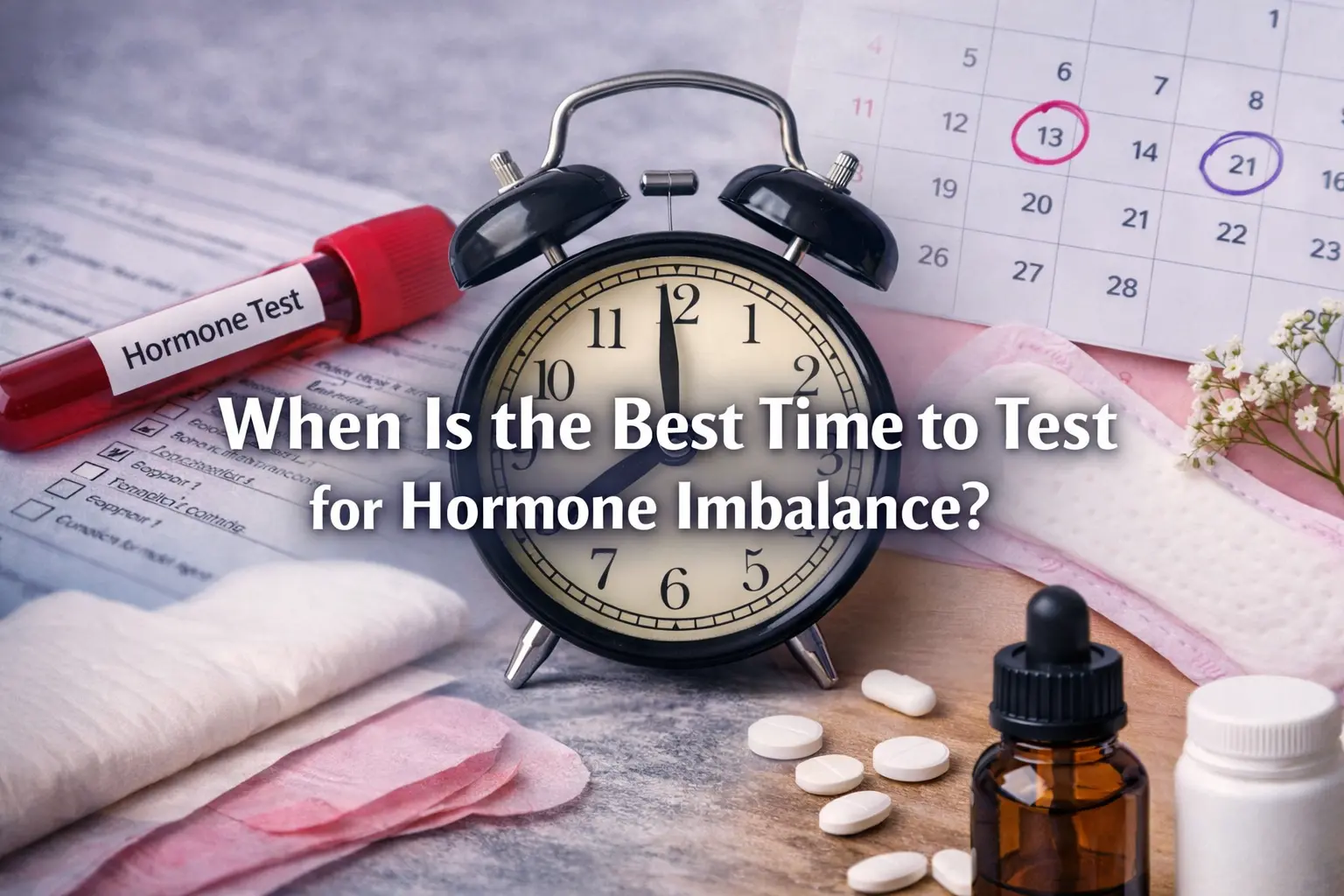
When Is the Best Time to Test for Hormone Imbalance? (Quick Answer)
For most people, the best time to test for hormone imbalance is in the morning between 7 a.m. and 10 a.m.
Women who still have menstrual cycles often need testing on specific cycle days, while those in perimenopause or menopause may benefit from symptom-based testing rather than strict calendar timing.
Can Hormone Levels Be Tested Anytime?
Hormones can technically be tested at any time, but results are most accurate when testing follows natural hormone patterns.
Many hormones fluctuate throughout the day or month, meaning poorly timed testing may appear normal even when symptoms are present.
Proper timing helps providers interpret results correctly and avoid unnecessary repeat testing.
Why Does Timing Matter When Testing Hormones?
Hormones constantly change based on:
- Time of day
- Sleep quality
- Stress levels
- Menstrual cycle phase
- Age and reproductive stage
- Medications or birth control use
For example, cortisol peaks shortly after waking, progesterone rises only after ovulation, and testosterone levels are highest in the morning.
Testing outside these windows can produce misleading results.
What Is the Best Time of Day to Test Hormones?
Most hormone testing is performed in the early morning.
Morning Testing (7–10 a.m.)
Morning testing is recommended for evaluating:
- Cortisol
- Testosterone
- Thyroid hormones
- DHEA
Hormone reference ranges are typically based on morning values, making this the most reliable testing window.
Should You Fast Before Hormone Testing?
Some hormone panels require fasting, while others do not.
Providers may recommend avoiding food, caffeine, supplements, or intense exercise beforehand to prevent temporary hormone fluctuations.
When Should Hormones Be Tested During Your Menstrual Cycle?
For women with regular menstrual cycles, hormone testing often depends on cycle phase.
Cycle Day 3 Testing (Early Follicular Phase)
Often used to evaluate:
- Estrogen (Estradiol)
- Follicle-stimulating hormone (FSH)
- Luteinizing hormone (LH)
This timing provides baseline hormone levels before ovulation.
Post-Ovulation Testing (Luteal Phase)
Progesterone testing is typically performed 5–7 days after ovulation, usually around day 19–23 of a 28-day cycle.
This helps confirm ovulation and evaluate symptoms such as PMS, fertility concerns, or mood changes.
What Is the Best Time to Check Hormone Levels for Perimenopause?
Perimenopause is one of the most challenging times to test hormones because levels fluctuate significantly.
Cycles may become shorter, longer, or skipped altogether.
Ovulation may not occur every month, making fixed testing days less reliable.
During perimenopause:
- Morning testing is still recommended
- Testing may be guided by symptoms instead of cycle days
- Repeat testing may sometimes be needed
Common symptoms that lead people to seek testing include:
- Hot flashes or night sweats
- Anxiety or mood changes
- Sleep disruption
- Brain fog
- Weight gain
- Low energy or libido changes
Hormone Testing Timing Chart
| Hormone | Best Time of Day | Best Cycle Timing | Why Timing Matters |
| Cortisol | 7–9 a.m. | Any day | Follows daily stress rhythm |
| Testosterone | Morning | Any day | Peaks early in the day |
| Estrogen | Morning | Cycle Day 3 | Establishes baseline ovarian function |
| Progesterone | Morning | 5–7 days after ovulation | Confirms ovulation |
| Thyroid Hormones | Morning | Any day | Allows consistent comparison |
| FSH & LH | Morning | Cycle Day 3 | Evaluates ovarian reserve |
| DHEA | Morning | Any day | Influenced by adrenal activity |
When Should You Test Hormones If Your Periods Are Irregular or Missing?
Hormone testing can still be helpful even without predictable cycles.
Testing may be appropriate if you have:
- Irregular periods
- PCOS
- Recently stopped birth control
- Postpartum hormone changes
- Menopause
- No menstrual cycle
In these cases, providers typically base testing on symptoms and overall health history rather than calendar timing alone.
Does Hormone Testing Timing Matter for Men?
Yes.
Hormone timing matters for men as well.
Testosterone naturally declines throughout the day, which is why testing is usually performed in the early morning.
Afternoon testing may falsely suggest low levels.
Men often pursue hormone testing due to:
- Persistent fatigue
- Reduced muscle mass
- Low libido
- Brain fog
- Mood changes
- Reduced motivation or energy
How Do I Know When I Should Test My Hormones?
You may want to consider hormone testing if symptoms persist despite healthy lifestyle habits.
Common signs include:
- Ongoing fatigue
- Unexplained weight gain
- Mood swings or irritability
- Poor sleep
- Low libido
- Hair thinning
- Irregular or heavy periods
- Hot flashes or night sweats
- Difficulty concentrating
Testing helps determine whether hormonal changes may be contributing to these symptoms.
How Often Should You Test Hormone Levels?
The frequency of hormone testing depends on individual health needs and symptoms.
Many people benefit from testing:
- When new symptoms develop
- During perimenopause or menopause transitions
- After significant lifestyle or health changes
- Periodically to monitor hormone-related treatment plans
Some individuals may only need occasional testing, while others benefit from follow-up evaluations to track changes over time.
Common Mistakes That Can Affect Hormone Test Results
Several factors can influence hormone measurements and lead to inaccurate results.
Common mistakes include:
- Testing at the wrong cycle phase
- Poor sleep before testing
- High stress levels
- Recent illness
- Intense exercise beforehand
- Taking supplements or hormones without guidance
Proper preparation and timing help ensure results accurately reflect hormone function.
How Professional Hormone Evaluation Improves Accuracy
Hormone testing is most useful when results are interpreted alongside symptoms, lifestyle factors, and medical history.
At Gard Wellness Solutions in Lantana, Florida, hormone evaluations focus on understanding the full picture rather than relying on a single lab value.
Providers consider timing, symptom patterns, and individual health goals to better identify potential hormonal imbalances.
This personalized approach helps patients gain clearer insight into their health and next steps.
Final Thoughts: When Is the Best Time to Test for Hormone Imbalance
So, when is the best time to test for hormone imbalance?
For most people, morning testing combined with proper menstrual cycle timing, or symptom-based timing during perimenopause and menopause, provides the most accurate results.
Because hormone levels naturally fluctuate, choosing the right testing window can make the difference between unclear answers and meaningful insight into your health.
Properly timed hormone testing is often the first step toward understanding ongoing symptoms, if HRT is right for you, and restoring balance.
FAQs: When Is the Best Time to Test for Hormone Imbalance
What are the signs of a hormone imbalance?
Common signs of hormone imbalance include fatigue, unexplained weight gain or weight loss, mood swings, anxiety, poor sleep, low libido, irregular periods, hot flashes, brain fog, hair thinning, and difficulty concentrating. Symptoms often develop gradually and may vary depending on which hormones are affected.
What should you not do before a hormone test?
Before hormone testing, it’s generally recommended to avoid intense exercise, alcohol, caffeine, poor sleep, and taking supplements or hormones unless instructed otherwise. These factors can temporarily influence hormone levels and affect accuracy.
What time of day should hormone levels be tested?
Most hormone levels should be tested in the morning, typically between 7 a.m. and 10 a.m. Hormones like cortisol and testosterone peak early in the day, making morning testing the most reliable for accurate results.
How do I fix my hormonal balance?
Improving hormonal balance often involves addressing sleep quality, stress management, nutrition, physical activity, and underlying medical conditions. In some cases, personalized medical treatment or lifestyle adjustments may be recommended after proper evaluation.
What are signs of low estrogen?
Low estrogen may cause symptoms such as hot flashes, night sweats, vaginal dryness, mood changes, brain fog, sleep disturbances, joint discomfort, and irregular or missed periods. These symptoms are common during perimenopause and menopause.
How do I tell if my hormone levels are low?
Persistent symptoms like fatigue, low energy, decreased libido, mood changes, or menstrual irregularities may suggest low hormone levels. Laboratory testing combined with symptom evaluation is the most reliable way to determine whether levels are low.
Is it worth getting my hormone levels checked?
Hormone testing can be helpful when symptoms interfere with daily life or do not improve with lifestyle changes. Properly timed testing may help identify underlying hormonal changes and guide appropriate treatment options.
Will a hormonal imbalance go away?
Some hormone fluctuations resolve naturally, especially those related to stress or temporary life changes. However, ongoing symptoms may require evaluation and targeted support to restore balance and improve overall well-being.