Hair thinning can be frustrating, especially when you feel like you have already tried the usual shampoos, supplements, serums, or scalp treatments without seeing much change.
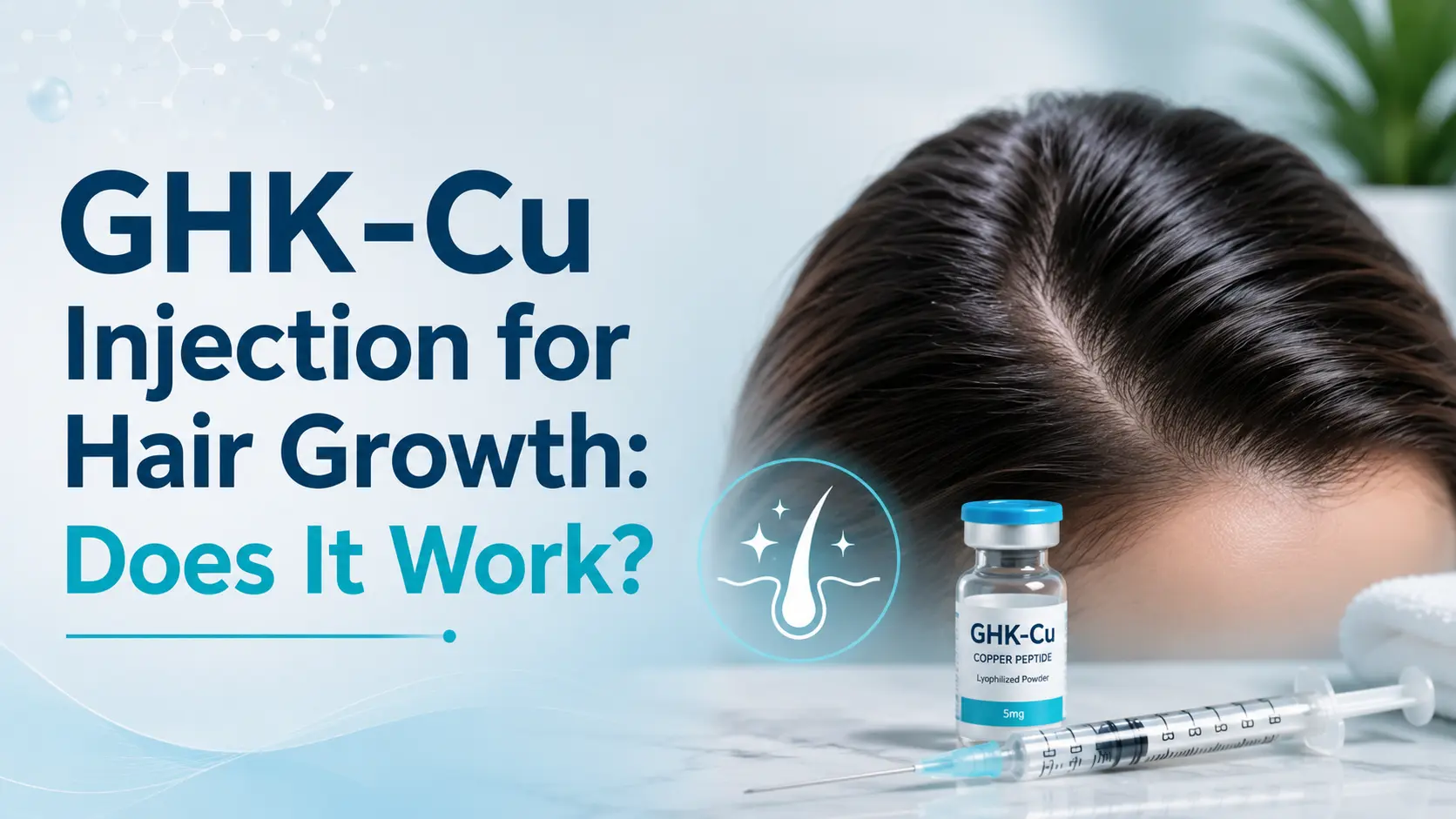
That is why more people are searching for GHK-Cu injection hair growth treatments and wondering whether copper peptides can help with thinning hair, shedding, or weaker hair density.
GHK-Cu is a copper peptide that has gained attention for its role in skin repair, collagen support, inflammation balance, and tissue remodeling.
Because the scalp is skin, and healthy hair growth depends on the condition of the scalp and follicles, GHK-Cu is now being discussed as a possible supportive option for hair restoration.
The honest answer is this: GHK-Cu injections may support hair growth by improving the scalp environment, tissue repair, inflammation balance, circulation, and follicle signaling, but they are not proven to regrow hair for everyone.
GHK-Cu is best viewed as a supportive option within a broader hair restoration plan, not a guaranteed standalone cure for hair loss.
Hair growth is complex.
Hormones, genetics, stress, nutrition, inflammation, aging, medications, and scalp health can all play a role.
For some people, GHK-Cu may be a helpful part of a larger plan.
For others, a different treatment may need to come first.
SEE HOW GHK-CU CAN HELP RESTORE YOUR HAIR
GHK-Cu Injection Hair Growth: What the Evidence Actually Shows
GHK-Cu injections are getting attention because GHK-Cu may influence several biological pathways connected to skin repair, scalp health, and follicle support.
That does not mean injections automatically cause new hair to grow.
The strongest hair-related evidence for GHK-Cu is still limited.
Much of the research focuses on topical delivery, lab models, animal models, or related copper peptides rather than large human trials showing that GHK-Cu injections alone reliably regrow hair.
That distinction matters.
GHK-Cu may help support conditions that are favorable for healthier hair growth, such as improved scalp repair, inflammation balance, antioxidant activity, collagen support, and growth-factor signaling.
But hair loss has many possible causes.
If the main issue is genetics, hormones, thyroid imbalance, low iron, medication side effects, autoimmune disease, or scarring hair loss, GHK-Cu alone may not be enough.
The best way to understand GHK-Cu injection for hair growth is as a supportive therapy that may work best when used as part of a personalized hair restoration plan.
What Is GHK-Cu?
GHK-Cu stands for glycyl-L-histidyl-L-lysine copper.
It is a naturally occurring copper peptide, which means it is made of amino acids bound to copper.
Peptides act like small signaling molecules in the body.
They help communicate with cells and influence certain repair, renewal, and healing processes.
GHK-Cu is often discussed in skin, wellness, and regenerative medicine because of its connection to tissue repair, wound healing, collagen production, antioxidant activity, and inflammation balance.
In hair restoration conversations, GHK-Cu is usually discussed as a scalp-supportive peptide.
The idea is not that it magically creates new hair overnight.
Instead, it may help support the scalp and follicle environment so active follicles have better conditions to function.
Does GHK-Cu Injection Help Hair Growth or Hair Loss?
GHK-Cu injection may help support hair growth indirectly, but it should not be described as a guaranteed hair regrowth treatment.
Hair growth depends on the health of the follicle, blood supply, scalp tissue, hormone environment, immune activity, and hair cycle regulation.
GHK-Cu may be useful because it appears to interact with repair and signaling pathways that can support the tissue around the follicle.
For someone with early thinning, scalp inflammation, weaker hair texture, or active follicles that still have the ability to produce hair, GHK-Cu may be worth discussing with a provider.
For someone with advanced bald areas, long-standing follicle miniaturization, or scarring hair loss, the response may be more limited.
That is why the first step should be understanding the cause of hair loss.
A treatment that helps one person may not work the same way for someone else.
How GHK-Cu May Support Hair Growth
GHK-Cu is not the same as a prescription hair loss medication.
It is usually discussed as a regenerative or supportive peptide.
Its potential benefits for hair growth come from the way it may influence the scalp, tissue repair, and follicle environment.
It May Support Scalp Repair
A healthy scalp gives hair follicles a better environment to function.
If the scalp is irritated, inflamed, dry, or damaged, hair quality may suffer.
GHK-Cu is known for its connection to tissue repair and skin remodeling.
Since the scalp is part of the skin, this is one reason it has become interesting in hair restoration.
Better scalp condition may help support healthier-looking hair over time.
This may be especially relevant for people who notice thinning along with scalp dryness, irritation, sensitivity, or poor hair quality.
It May Help Calm Scalp Inflammation
Inflammation can interfere with normal hair growth.
Some people notice shedding after periods of stress, illness, hormonal shifts, or scalp irritation.
GHK-Cu is often discussed for its anti-inflammatory activity.
While it is not a treatment for every type of inflammatory hair loss, supporting a calmer scalp environment may be helpful for some people.
However, sudden or unexplained shedding should always be evaluated.
It can be linked to thyroid issues, nutrient deficiencies, autoimmune conditions, hormonal changes, recent illness, stress, or medication changes.
It May Support Growth Factor Activity
Hair follicles move through growth, transition, rest, and shedding phases.
Several signaling pathways help control whether follicles stay active or shift into rest.
GHK-Cu has been studied in relation to growth-factor signaling and tissue repair.
Hair-related research has discussed pathways such as VEGF and Wnt/β-catenin, which are involved in blood vessel support and follicle activity.
This does not mean GHK-Cu injections will regrow hair for everyone.
It means there is a biologically reasonable explanation for why copper peptides are being studied in the hair growth space.
It May Support Hair Quality and Density Over Time
Some people are less concerned about bald spots and more concerned about thinner, weaker, duller, or less dense hair.
In those cases, scalp-supportive treatments may be part of a larger plan.
GHK-Cu may support hair quality by improving the surrounding tissue environment.
For patients with active follicles, this may help improve the appearance of thickness, texture, or scalp coverage over time.
GHK-Cu Injection vs Topical GHK-Cu for Hair Growth
One of the biggest questions people ask is whether GHK-Cu injections are better than topical copper peptides for hair growth.
The answer depends on the goal.
Topical GHK-Cu is applied directly to the scalp.
This makes it more targeted to the area where someone wants support.
However, topical absorption can be challenging, which is why improved delivery systems for GHK-Cu have been studied.
GHK-Cu injections are different.
They may create broader peptide exposure, but they are not automatically scalp-specific unless they are part of a provider-guided local treatment plan.
Injection-specific evidence for hair growth is also not as strong as many online claims make it sound.
| Factor | Topical GHK-Cu | GHK-Cu Injection |
| Main purpose | Direct scalp support | Systemic peptide support |
| Hair-specific research | More common in topical and delivery studies | Less direct human hair-growth data |
| Convenience | Easier for routine scalp use | Requires injection comfort and medical guidance |
| Targeting | Applied to the scalp | Not automatically scalp-specific |
| Possible downsides | Scalp irritation or sensitivity | Injection-site irritation, sterility concerns, improper use risks |
| Best fit | People wanting direct scalp support | People using peptides as part of a broader wellness or hair restoration plan |
Neither option should be treated as a guaranteed fix.
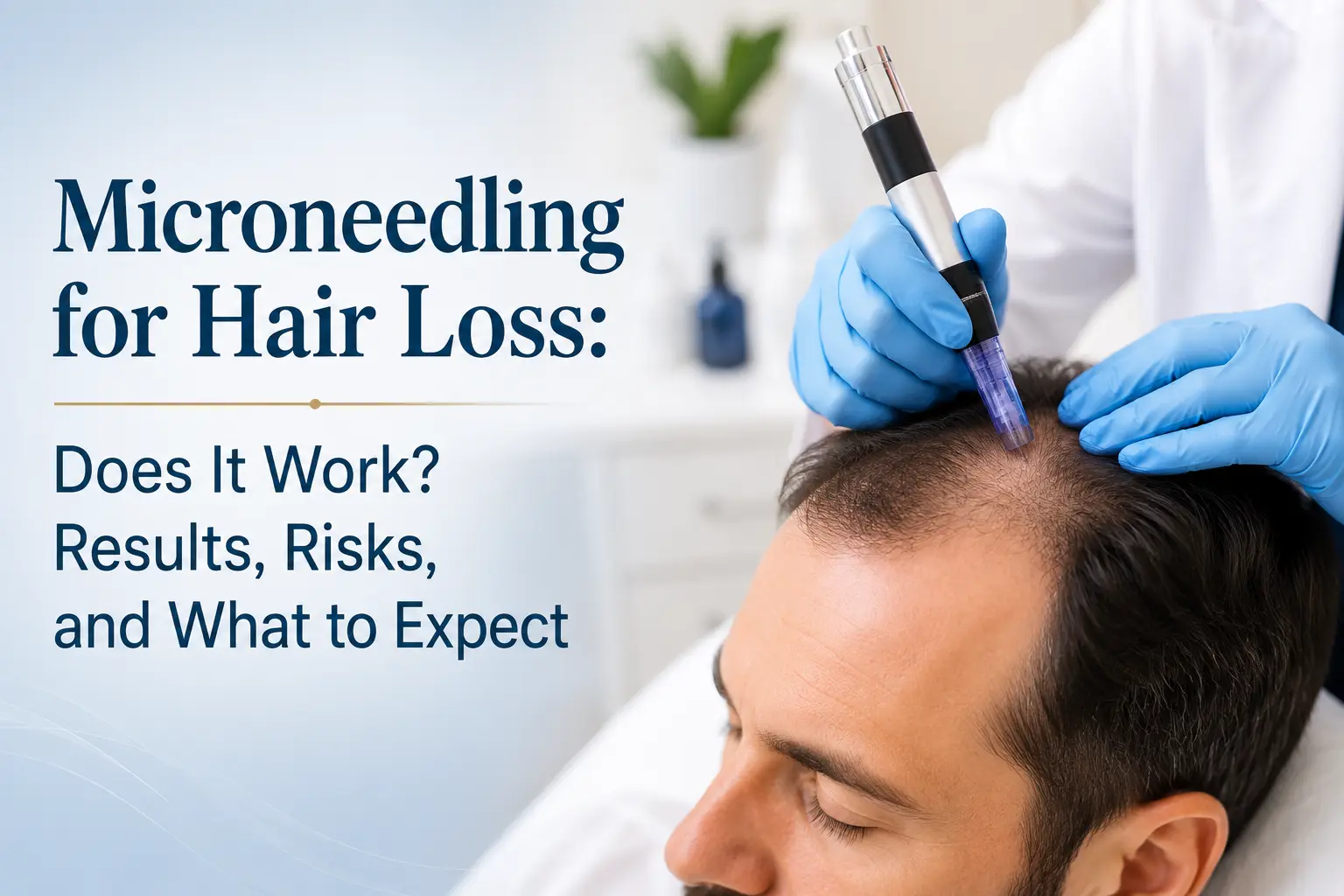
For many people, the best approach may involve a combination of scalp therapy, peptide support, microneedling, PRP, laser hair restoration, nutrition support, or hormone evaluation.
Is GHK-Cu Better Than Minoxidil or Finasteride?
GHK-Cu is different from minoxidil and finasteride.
Minoxidil is commonly used to support hair growth by helping prolong the growth phase of the hair cycle.
Finasteride is often used for androgen-related hair loss because it affects DHT, a hormone linked to male and female pattern hair thinning.
GHK-Cu works differently.
It is not mainly a DHT blocker and is not typically used as a direct replacement for standard hair loss medications.
Instead, it is usually discussed for scalp repair, tissue support, inflammation balance, and follicle environment.
That makes GHK-Cu more of a supportive option than a one-to-one substitute.
Some people may use copper peptides alongside other hair restoration strategies, but this should be done with professional guidance, especially if injections are involved.
GHK-Cu Injection Results: What Can You Realistically Expect?
GHK-Cu injection results can vary widely.
Some people may notice improved scalp comfort, healthier hair texture, or stronger-looking hair before they notice visible density changes.
Others may not see a meaningful change if the main cause of hair loss is not being addressed.
A realistic expectation is gradual support, not overnight regrowth.
| Timeline | What You May Notice |
| First few weeks | Some people may notice changes in scalp comfort, hair texture, or overall hair feel |
| 6–8 weeks | Early changes in hair quality, strength, or scalp condition may become more noticeable |
| 3–6 months | More visible density changes may appear if follicles are responding |
| 6+ months | Ongoing support may be needed to maintain or build on results |
Hair grows in cycles, so results take time.
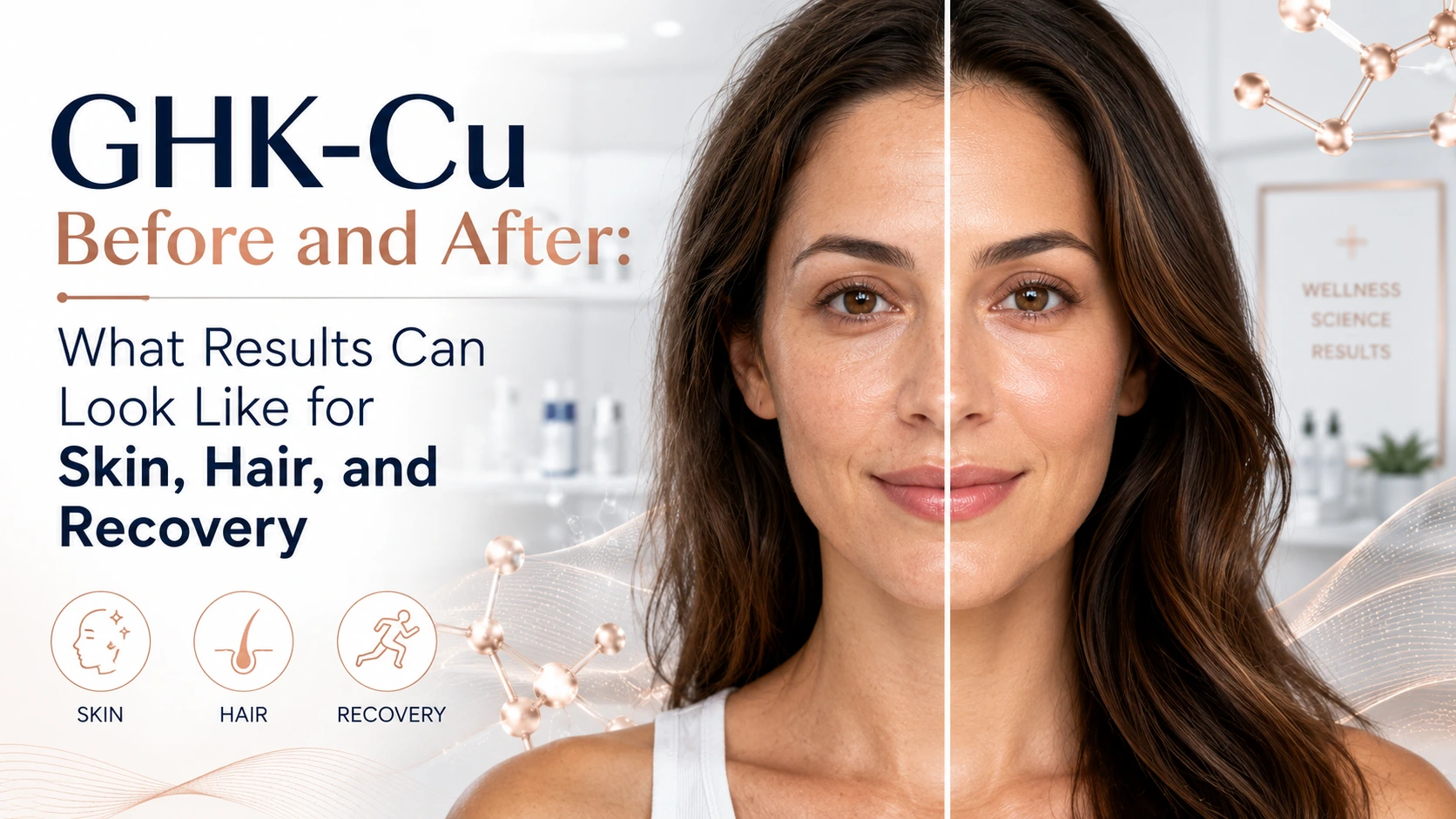
Before-and-after photos taken too early may not show much, even when a treatment is beginning to support the scalp environment.
Results may depend on:
- The cause of hair loss
- How long the thinning has been happening
- Whether follicles are still active
- Hormone balance
- Nutrient status
- Stress and inflammation
- Scalp health
- Consistency with the treatment plan
Whether GHK-Cu is used alone or with other therapies
If someone has early thinning and active follicles, supportive treatments may have more potential.
If the follicles are inactive or the hair loss is advanced, the response may be more limited.
Why GHK-Cu Injection Dosage Should Be Provider-Guided
People searching for GHK-Cu injections often want to know the dosage, protocol, or schedule.
That is understandable, but injectable peptide dosing should not be copied from online forums, social media, or product websites.
GHK-Cu dosage should be provider-guided because each person’s situation is different.
Hair loss pattern, medical history, medications, hormone status, copper metabolism, treatment goals, and other therapies can all affect whether GHK-Cu is appropriate.
With injections, safety also depends on product quality, sterility, handling, and proper administration.
Using peptides without medical guidance may increase the risk of irritation, infection, poor results, or unwanted side effects.
A provider-guided approach can help answer important questions, such as:
Is GHK-Cu appropriate for this type of hair loss?
Should it be used topically, systemically, or as part of another scalp treatment?
Are there underlying issues that need to be addressed first?
Is the person also using PRP, microneedling, laser therapy, or other hair restoration treatments?
Are there health conditions that make injections a poor fit?
For hair growth, the goal is not just to use a peptide.
The goal is to choose the right treatment plan for the reason the hair is thinning.
Can GHK-Cu Regrow Temples?
GHK-Cu may support active follicles, but it cannot guarantee temple regrowth.
Temple thinning is often associated with androgen-related hair loss, also known as pattern hair loss.
In that case, DHT sensitivity, genetics, age, and follicle miniaturization may play a major role.
If the follicles are still active, supportive treatments may help improve the environment around them.
If follicles are no longer active, topical or injectable peptides may have limited impact.
This is why an evaluation matters.
A provider can help determine whether temple thinning is early, moderate, advanced, hormone-related, stress-related, or connected to another cause.
Can GHK-Cu Help With Hair Shedding?
GHK-Cu may help support scalp health, but shedding can happen for many reasons.
Common causes of shedding include:
- Stress
- Recent illness
- Hormonal changes
- Low iron or ferritin
- Thyroid imbalance
- Postpartum changes
- Nutrient deficiencies
- Medication changes
- Autoimmune conditions
- Scalp inflammation
Because shedding can be a symptom of an underlying issue, it is better to identify the cause instead of assuming GHK-Cu is the right solution.
In some cases, peptide therapy may be helpful.
In other cases, labs, hormone support, nutrition changes, or medical treatment may need to come first.
Is GHK-Cu a Standalone Hair Loss Treatment?
Usually, GHK-Cu is better viewed as a supportive tool rather than a standalone hair loss treatment.
Hair restoration often works best when the plan matches the cause of hair loss.
For example, a person with hormone-related thinning may need a different approach than someone with stress-related shedding or scalp inflammation.
A person with nutrient deficiencies may not see meaningful improvement until those deficiencies are addressed.
GHK-Cu may fit into a larger plan that includes:
- Scalp health support
- Peptide therapy
- PRP
- Microneedling
- Laser hair restoration
- Hormone evaluation
- Nutrient testing
- Stress and inflammation support
- Medical wellness support
The goal is not just to chase hair growth.
The goal is to understand why the hair is thinning and create a plan that supports healthier hair from multiple angles.
GHK-Cu Injection Hair Growth Support in Lantana and West Palm Beach, FL
Gard Wellness Solutions is located in Lantana, Florida, and serves patients in the West Palm Beach area and surrounding Palm Beach County communities.
For people interested in GHK-Cu injection hair growth support, the most helpful next step is a personalized evaluation.
Hair thinning can look similar from person to person, but the cause may be very different.
One patient may be dealing with hormone-related thinning, while another may be dealing with stress shedding, inflammation, nutrient issues, or scalp health concerns.
A personalized hair restoration plan may include regenerative support, scalp-focused therapies, peptide options, microneedling, PRP, laser hair restoration, or wellness testing when appropriate.
For patients near Lantana, West Palm Beach, Boynton Beach, Delray Beach, Lake Worth Beach, Boca Raton, or Palm Beach Gardens, working with a provider can help determine whether GHK-Cu belongs in the plan or whether another treatment should come first.
Who May Be a Good Candidate for GHK-Cu Hair Support?
GHK-Cu may be worth discussing with a provider if you are dealing with early thinning, weaker hair quality, diffuse shedding, or scalp health concerns.
Possible candidates may include people who:
- Have early-stage thinning
- Notice weaker or finer hair
- Want non-surgical hair restoration support
- Are interested in peptide therapy
- Have scalp irritation or poor scalp health
- Want to improve hair quality and density over time
- Have active follicles that may still respond to treatment
- Are already using a provider-guided hair restoration plan
A consultation can help determine whether GHK-Cu makes sense or whether another option may be a better fit.
SEE IF GHK-CU IS RIGHT FOR YOU
Who Should Be Careful With GHK-Cu Injections?
GHK-Cu injections are not something to approach casually.
Any injectable treatment should be used with proper guidance, sterile handling, and medical oversight.
People should speak with a provider before considering GHK-Cu injections if they:
- Are pregnant or breastfeeding
- Have a history of copper metabolism disorders
- Have active infections
- Have unexplained hair loss
- Have autoimmune conditions
- Take medications that affect healing or immune function
- Have chronic liver, kidney, or metabolic conditions
- Are using multiple peptides or wellness injections at once
- Are buying peptides online without medical guidance
Online peptide use can be risky because product quality, dosing, sterility, and purity may vary.
Hair loss is also highly individual, so what appears to work for one person may not be right for someone else.
Are There Side Effects of GHK-Cu Injections?
Possible side effects may include injection-site redness, soreness, itching, irritation, bruising, or sensitivity.
Some people may also experience skin reactions or discomfort depending on the product, dose, delivery method, or individual sensitivity.
With injections, sterility matters.
Improper injection practices can increase the risk of infection, irritation, or other complications.
That is one reason provider-guided care is important.
GHK-Cu should also be used carefully in people with copper metabolism concerns or complex medical histories.
More is not always better, especially with compounds that interact with biological pathways.
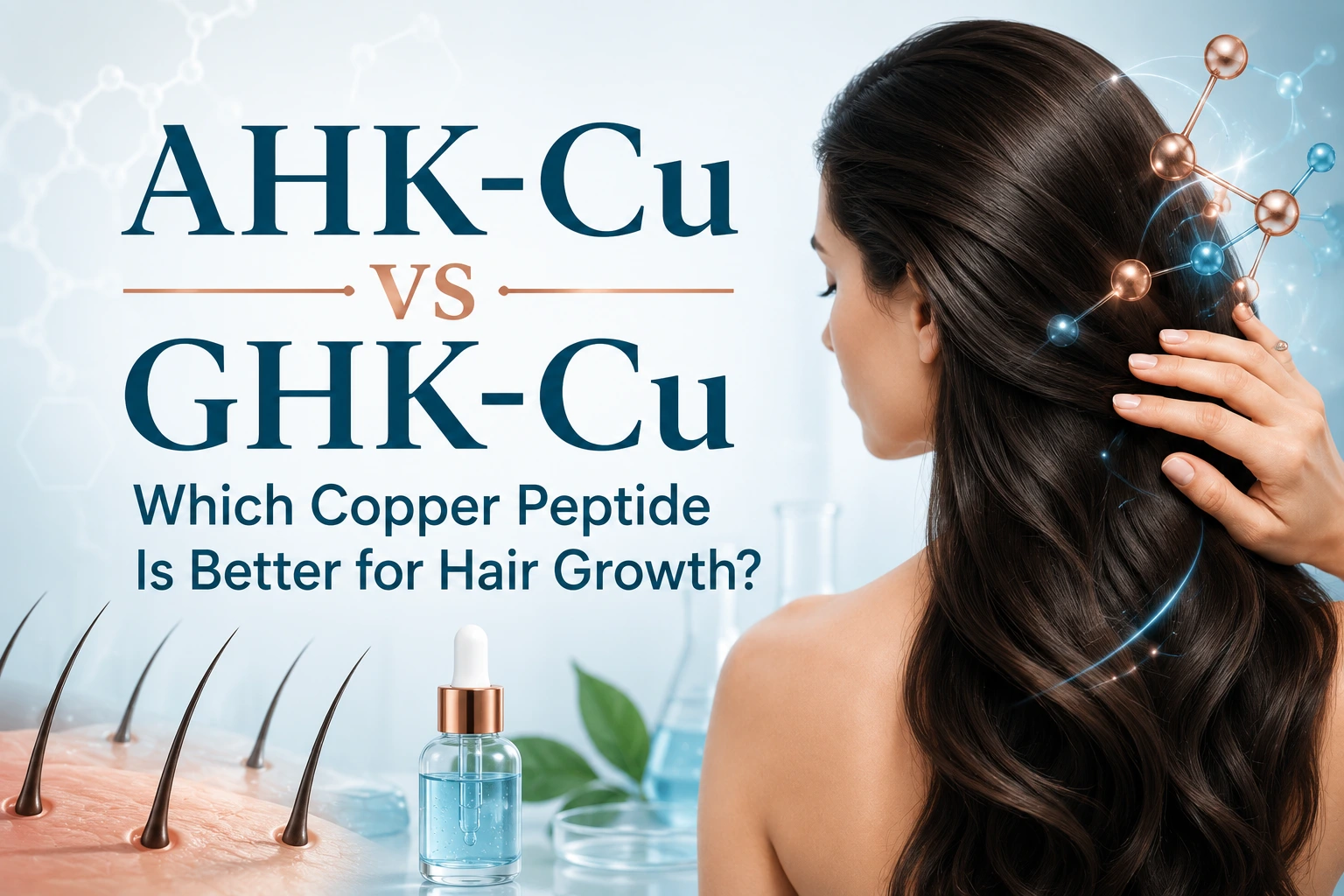
GHK-Cu and AHK-Cu: What Is the Difference for Hair?
GHK-Cu and AHK-Cu are both copper peptides, but they are not exactly the same.
GHK-Cu is commonly discussed for tissue repair, collagen support, inflammation balance, and scalp health.
AHK-Cu is another copper peptide that has been studied in relation to hair follicle activity and dermal papilla cell support in lab settings.
This is why some hair restoration conversations mention both GHK-Cu and AHK-Cu.
They may be used for different but related goals in scalp and follicle support.
Should You Try GHK-Cu Injection for Hair Growth?
GHK-Cu injection may be worth discussing if you are interested in peptide therapy and want to support scalp health, hair quality, and follicle environment.
It may be especially relevant if you are already considering a broader non-surgical hair restoration plan.
However, it should not be treated as a guaranteed solution or a replacement for proper evaluation.
Hair loss can be driven by hormones, genetics, inflammation, nutrition, stress, illness, medications, or scalp conditions.
The right treatment depends on the cause.
At Gard Wellness Solutions in Florida, patients can explore hair restoration and wellness options in a more personalized way.
Rather than guessing with online products or self-directed peptide use, a guided plan can help determine which therapies make sense for your hair, scalp, and overall health.
FAQs
Does GHK-Cu injection help hair growth?
GHK-Cu injections may help support a healthier scalp and follicle environment, but they are not guaranteed to regrow hair. The strongest support for GHK-Cu relates to tissue repair, inflammation balance, scalp health, and hair-growth-related signaling pathways. Injection-specific human research for hair growth is still limited.
Is GHK-Cu injection better than topical GHK-Cu for hair?
Not always. Topical GHK-Cu is applied directly to the scalp, while injections create broader peptide exposure and may not target the scalp in the same way. The best option depends on your goals, hair loss pattern, health history, and whether GHK-Cu is being used alone or with other hair restoration therapies.
How long does GHK-Cu take to work for hair growth?
Some people may notice early changes in hair texture or scalp condition within 6–8 weeks. More visible changes in density, if they happen, may take 3–6 months or longer because hair grows in cycles.
Does GHK-Cu stop hair shedding?
GHK-Cu may support scalp health, but shedding can have many causes, including stress, illness, thyroid changes, low iron, hormone shifts, medications, and nutrient deficiencies. If shedding is sudden, heavy, or unexplained, it is best to identify the cause before choosing a treatment.
Can you use GHK-Cu with PRP or microneedling?
GHK-Cu may be used as part of a broader provider-guided hair restoration plan that includes PRP, microneedling, laser therapy, or other scalp-supportive treatments. The right combination depends on your hair loss pattern and health history.
Is GHK-Cu safe for hair growth?
GHK-Cu is generally discussed as a well-tolerated peptide, but injections come with added considerations, including injection-site reactions, sterility, product quality, and proper use. Anyone considering injectable peptides should do so under medical guidance.