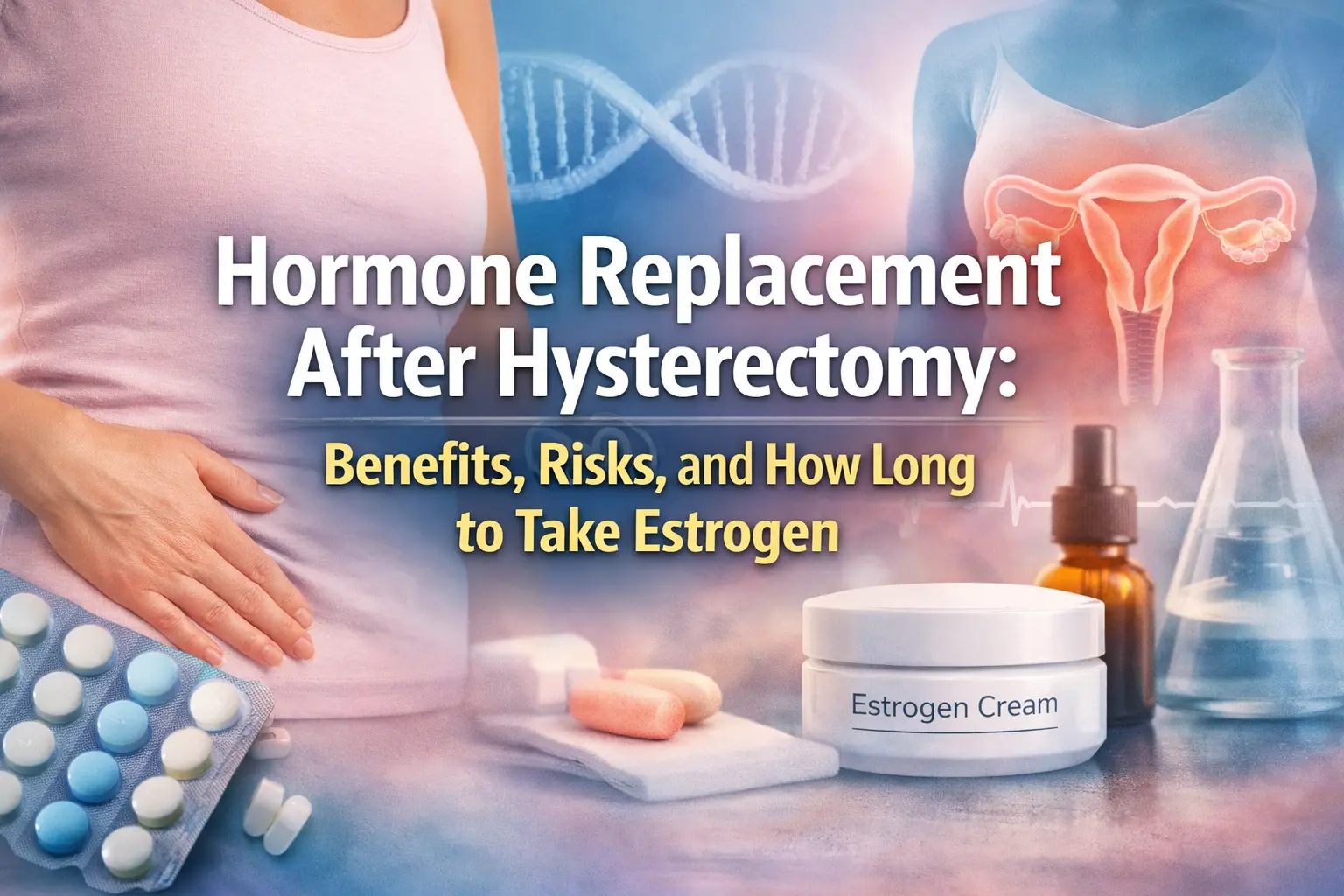
Women who have their ovaries removed may experience immediate menopause symptoms, while others may notice hormonal changes gradually over time.
Hormone replacement therapy (HRT), especially estrogen therapy, can help relieve symptoms such as hot flashes, mood changes, sleep disturbances, and vaginal dryness.
It may also support long-term health by helping protect bone density, brain function, and cardiovascular health.
Understanding how hormones change after hysterectomy can help you make confident decisions about symptom relief, long-term wellness, and overall quality of life.
Do You Need Hormone Replacement After a Hysterectomy?
Not everyone needs hormone replacement therapy after hysterectomy.
Whether treatment is recommended depends largely on whether the ovaries were removed during surgery.
If your ovaries were removed, estrogen levels drop quickly, often triggering surgical menopause.
This sudden hormone change can lead to symptoms that feel more intense than natural menopause.
In many cases, estrogen after hysterectomy helps reduce symptoms and support long-term health.
If the ovaries remain intact, hormone production may continue.
However, some women still experience hormonal symptoms because blood supply to the ovaries may be affected during surgery.
Hormone replacement may be recommended if you experience:
- Frequent hot flashes
- Night sweats
- Vaginal dryness
- Mood changes
- Sleep disruption
- Anxiety or irritability
- Brain fog
- Low libido
- Increased risk of osteoporosis
- Early menopause before age 45
Each individual responds differently, which is why treatment is typically personalized.
What Hppens to Hormones After a Hysterectomy?
Hormonal changes depend on the type of hysterectomy performed.
Hysterectomy Without Ovary Removal
If the ovaries are preserved, they may continue producing estrogen and other hormones.
However, some women experience earlier menopause due to reduced blood flow to the ovaries after surgery.
Hysterectomy With Ovary Removal
When both ovaries are removed, estrogen levels drop rapidly.
This can cause immediate menopause symptoms and may increase risk for bone loss and cardiovascular concerns if hormones are not supported.
Hormones affected may include:
- Estrogen
- Progesterone
- Testosterone
- DHEA
Estrogen plays an important role in many body systems, including bone strength, skin health, cognitive function, and cardiovascular health.
What Hormones Are Replaced After a Hysterectomy?
The main hormone replaced after hysterectomy is estrogen.
Estrogen therapy helps reduce menopause symptoms and supports overall health.
Progesterone is typically not required if the uterus has been removed, although it may still be used in certain situations depending on symptoms and medical history.
Some treatment plans may also evaluate testosterone levels, especially if symptoms such as fatigue, low libido, or reduced motivation occur.
Hormones that may be evaluated include:
- Estrogen
- Progesterone (in some cases)
- Testosterone
- DHEA
Treatment is customized based on symptoms, lab results, and individual health goals.
Estrogen After Hysterectomy: Why It May Be Important
Estrogen after hysterectomy can help restore balance when hormone levels decline.
Estrogen therapy is commonly used to reduce menopause symptoms and improve quality of life.
Potential benefits of estrogen therapy include:
- Reduced hot flashes and night sweats
- Improved sleep quality
- Improved mood stability
- Reduced anxiety
- Improved focus and mental clarity
- Increased vaginal comfort
- Improved skin elasticity
- Support for bone density
- Reduced risk of osteoporosis
- Support for heart health when started early
- Improved sexual wellness
Women experiencing surgical menopause often notice meaningful symptom improvement once hormone levels are supported.
How Long Should You Take Estrogen After a Hysterectomy?
One of the most common questions is how long estrogen therapy should continue after hysterectomy.
Many women take estrogen until reaching the average age of natural menopause, typically around age 51.
This helps provide hormone support during years when the body would normally still produce estrogen.
Some women continue therapy longer if symptoms persist or if the benefits outweigh potential risks.
Others gradually reduce their dosage with guidance from a qualified provider.
Factors that influence treatment duration include:
- Age at time of hysterectomy
- Severity of symptoms
- Bone density concerns
- Cardiovascular health
- Family medical history
- Lifestyle factors
- Personal comfort and quality of life goals
Treatment length varies from person to person and should be reviewed regularly.
Signs You May Need Hormone Replacement After Hysterectomy
Symptoms of low estrogen after hysterectomy can appear shortly after surgery or develop gradually over time.
Common signs include:
- Hot flashes
- Night sweats
- Vaginal dryness
- Discomfort during intimacy
- Mood swings
- Anxiety
- Irritability
- Brain fog
- Fatigue
- Joint discomfort
- Sleep difficulties
- Low libido
- Dry skin
- Thinning hair
Hormone therapy may help reduce these symptoms and improve daily comfort.
Benefits of Hormone Replacement After Hysterectomy
Hormone therapy can provide both immediate symptom relief and long-term health benefits.
Short-term benefits
- Fewer hot flashes
- Improved sleep
- Improved mood
- Reduced anxiety
- Better concentration
- Increased comfort during intimacy
Long-term benefits
- Bone density support
- Reduced fracture risk
- Cardiovascular support when started early
- Support for cognitive health
- Reduced complications linked to early menopause
For many women, treatment helps restore a sense of normalcy and wellbeing.
Timeline: What to Expect After Starting Estrogen Therapy
Each individual responds differently, but many women notice gradual improvements after starting estrogen therapy.
Weeks 1–2
- Reduced frequency of hot flashes
- Improved sleep quality
- Reduced night sweats
1–3 months
- Improved mood stability
- Improved vaginal comfort
- Improved mental clarity
- Increased energy levels
3–6 months
- Bone health support begins
- Improved skin hydration
- Improved overall hormonal balance
Symptom improvement timelines vary based on dosage, delivery method, and individual hormone sensitivity.
Risks and Considerations of Estrogen Therapy
Estrogen therapy may not be appropriate for everyone, and treatment decisions should consider personal health history.
Factors that may influence treatment decisions include:
- History of blood clots
- Certain cancers
- Cardiovascular health conditions
- Individual hormone sensitivity
- Family medical history
Modern hormone therapy approaches often focus on personalized dosing and regular monitoring to help balance benefits and potential risks.
Many women use estrogen therapy safely under the supervision of a qualified provider.
Types of Hormone Replacement Therapy After Hysterectomy
Hormone therapy can be delivered in several forms based on personal preference and medical considerations.
Estrogen-only therapy
Often recommended when the uterus has been removed because progesterone may not be necessary.
Estrogen patches
Provide consistent hormone delivery and may be well tolerated.
Oral estrogen
Convenient and commonly used option.
Estrogen creams or gels
Often used to support vaginal tissue health and comfort.
Bioidentical hormone therapy
Hormones designed to closely match the body’s natural hormones.
Pellet therapy
Long-lasting hormone delivery inserted beneath the skin.
Treatment type depends on symptoms, lifestyle, and personal goals.
When to Start Hormone Replacement After a Hysterectomy
Some women begin hormone therapy soon after surgery, especially if both ovaries were removed.
Others may wait until symptoms appear.
Starting treatment earlier may help reduce severity of menopause symptoms and support long-term bone and heart health, particularly in women who experience menopause before age 45.
The ideal start time depends on symptoms and individual health factors.
Who May Not Need HRT After Hysterectomy
Hormone therapy may not be necessary for everyone.
Some women may not require treatment if:
- Ovaries remain functional
- Symptoms are mild
- Personal risk factors suggest avoiding hormone therapy
- Lifestyle adjustments adequately support symptom management
Healthy habits such as regular exercise, balanced nutrition, quality sleep, and stress management can also support hormone balance.
Hormone Replacement After Hysterectomy in Your 30s, 40s, or 50s
Age can influence how the body responds to hormone changes after hysterectomy.
Women in their 30s or early 40s
Loss of estrogen at a younger age may increase risk of:
- Bone density loss
- Cardiovascular concerns
- Cognitive decline
- More intense menopause symptoms
Hormone therapy may be more strongly considered in younger individuals to support long-term health.
Women in their late 40s and 50s
Hormone therapy may help manage symptoms that affect daily comfort, sleep quality, and emotional wellbeing.
Individualized care helps determine the most appropriate treatment approach.
Is Hormone Replacement Therapy Safe After Hysterectomy?
Hormone therapy has been widely studied and may be safe for many women when guided by a knowledgeable provider.
Safety depends on several factors, including:
- Age
- Medical history
- Lifestyle habits
- Hormone dosage
- Type of therapy
- Duration of treatment
Regular monitoring and individualized adjustments help support safe and effective treatment.
Estrogen After Hysterectomy and Quality of Life
Hormone changes can affect many aspects of wellbeing, including energy levels, sleep, mood, and physical comfort.
Many women choose estrogen therapy not only to reduce symptoms, but also to maintain a consistent sense of wellbeing and daily functioning.
Balancing hormones may help support both immediate comfort and long-term health.
How Gard Wellness Solutions Can Help
Gard Wellness Solutions provides personalized hormone therapy programs for women experiencing hormonal changes after hysterectomy in Florida.
Care may include:
- Comprehensive hormone evaluation
- Personalized treatment plans
- Symptom monitoring
- Dosage adjustments as needed
- Ongoing guidance for long-term hormone health
Each treatment plan is tailored to individual symptoms, medical history, and wellness goals.
Understanding your options can help you feel more confident when making decisions about hormone replacement after hysterectomy and long-term health.
FAQs: Hormone Replacement After Hysterectomy
What hormones need to be replaced after a hysterectomy?
The primary hormone that may need to be replaced after a hysterectomy is estrogen, especially if the ovaries were removed. Estrogen plays an important role in bone health, brain function, skin elasticity, and cardiovascular health. Some women may also benefit from progesterone or testosterone depending on their symptoms, hormone levels, and individual health goals. Treatment is typically personalized based on lab testing and symptom evaluation.
What are the benefits of HRT after a hysterectomy?
Hormone replacement therapy may help reduce symptoms caused by decreased estrogen levels. Benefits may include fewer hot flashes, improved sleep, better mood stability, improved vaginal comfort, increased libido, improved focus, and reduced risk of bone loss. For women who experience surgical menopause, HRT may also support heart health and cognitive function when started at an appropriate time.
How to tell if you have low estrogen after a hysterectomy?
Common signs of low estrogen include hot flashes, night sweats, vaginal dryness, mood changes, anxiety, sleep difficulties, brain fog, fatigue, low libido, and dry skin. Some women also notice joint discomfort or changes in hair thickness. Hormone testing combined with symptom evaluation can help determine whether estrogen levels may be contributing to these symptoms.
Who cannot take hormone replacement therapy?
Hormone therapy may not be recommended for individuals with certain medical conditions, such as a history of blood clots, certain hormone-sensitive cancers, uncontrolled high blood pressure, or specific cardiovascular concerns. Each person’s situation is unique, so treatment decisions should be based on individual risk factors and medical guidance.
What are the first signs of menopause after a hysterectomy?
The first signs of menopause after hysterectomy often include hot flashes, night sweats, sleep disturbances, mood swings, and vaginal dryness. When the ovaries are removed, symptoms may begin shortly after surgery due to the sudden drop in estrogen levels. Some women also notice fatigue, irritability, or reduced concentration early on.
Can a 65 year old woman start hormone therapy?
Some women may start hormone therapy after age 65, depending on their symptoms and health history. The decision to begin treatment later in life requires careful evaluation of potential benefits and risks. Factors such as bone health, symptom severity, and cardiovascular considerations may influence whether therapy is appropriate.
What are the symptoms of low estrogen?
Low estrogen can affect both physical and emotional wellbeing. Women may experience fatigue, mood swings, anxiety, irritability, hot flashes, night sweats, low libido, brain fog, and sleep difficulties. Some women also notice dry skin, joint stiffness, or reduced motivation. Symptoms can range from mild to more disruptive depending on hormone levels.
How can I get estrogen naturally after a hysterectomy?
Lifestyle factors may help support natural hormone balance. Regular exercise, maintaining a healthy weight, eating nutrient-dense foods, managing stress, and prioritizing sleep may support hormone health. Certain foods such as flaxseeds, soy products, legumes, and whole grains contain plant-based compounds that may support hormonal balance. Natural approaches may help some women, but may not fully replace estrogen if levels drop significantly.